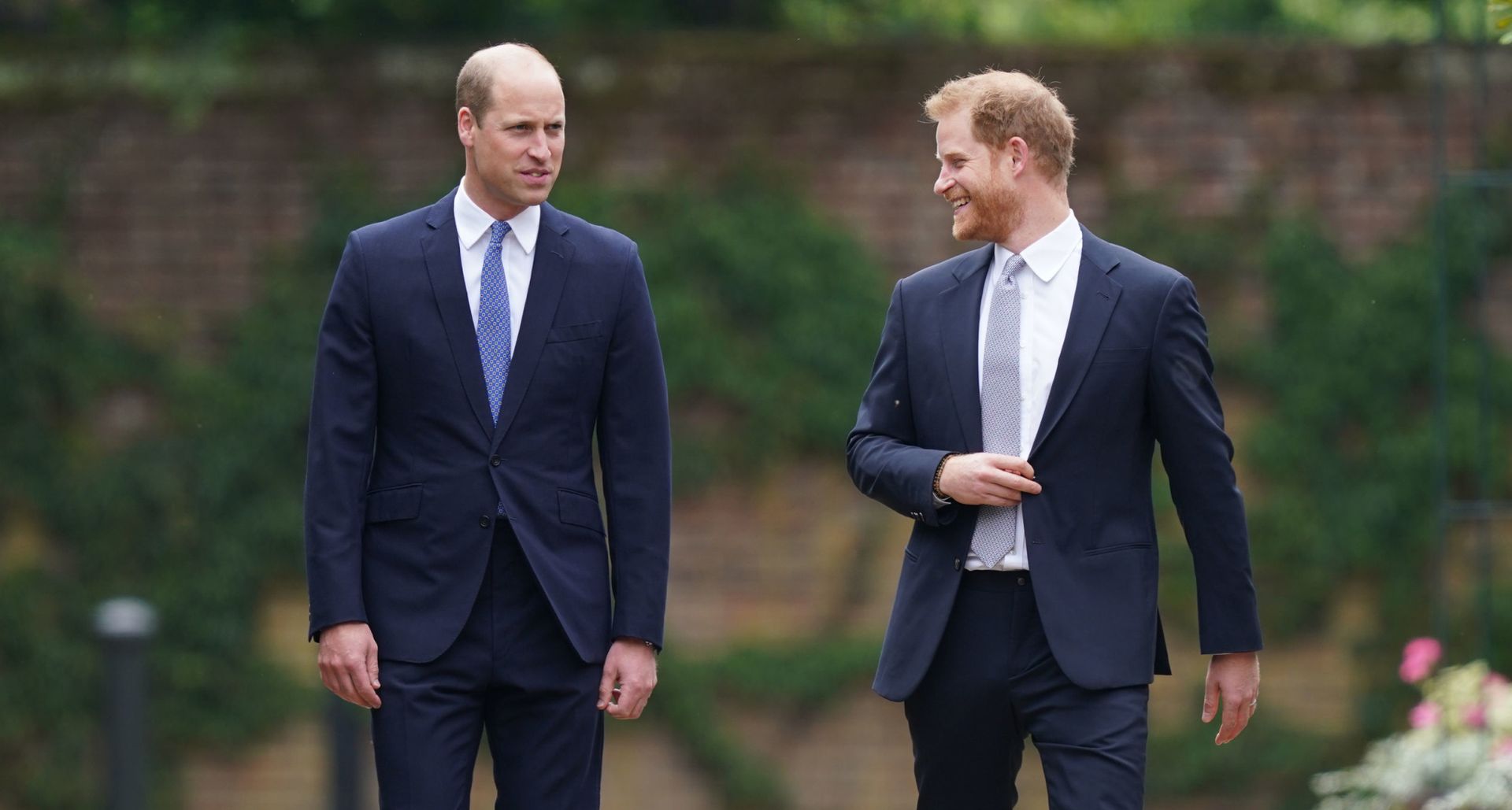
There is something quietly revealing about a man who compares two brothers to helicopters. Jamie Lowther-Pinkerton, the former private secretary to both Prince William and Prince Harry, chose this precise metaphor on Gyles Brandreth's "Rosebud" podcast, and it tells us more about the nature of difference than any tabloid headline ever could. Our take is simple: the comparison is not reductive but illuminating, and it offers a rare lens through which to understand how two people shaped by the same circumstances can evolve into entirely different forces. This matters to our readers because it mirrors a truth we often resist, that proximity does not guarantee similarity, and that understanding someone's trajectory requires looking at their internal architecture, not just their shared history.
Lowther-Pinkerton's insight lands with the kind of understated clarity that feels almost poetic. He knows these men intimately, having worked in their inner circle, and his choice of metaphor, two distinct helicopters, suggests something fundamental about their operating styles. One brother, we can infer, moves with precision and stability, the kind of aircraft designed for steady, visible missions. The other is built for agility, perhaps for navigating tighter airspace or responding to turbulence with sharper reflexes. Neither is wrong; they are simply calibrated differently. This is not a judgment of character but a reading of temperament. In a world that often insists on binaries, good versus bad, responsible versus reckless, Lowther-Pinkerton offers something more nuanced: a recognition that both machines are capable of flight, but they were never meant to fly the same route. We see a parallel in the quiet creative thread running through Royal women in bloom: Kate and Lilibet share a quiet creative thread, where shared lineage does not erase distinct expression.
The practical takeaway for our readers is this: stop expecting people to operate the same way just because they come from the same origin. Lowther-Pinkerton's helicopter analogy is a masterclass in detachment, he describes without dramatizing, observes without condemning. It is a posture we could all borrow. When we stop measuring one brother against the other and start asking what each is built for, we free ourselves from the exhausting cycle of comparison. This is the same emotional intelligence required when navigating love and connection in a world that feels increasingly out of reach, a theme explored thoughtfully in The High Cost of Connection When Love Feels Out of Reach. The question is not who flies higher, but whether each is flying toward what they need.
What we will be watching for is how this metaphor settles into the broader public narrative. For years, the discourse around William and Harry has been shaped by fracture and fallout. Lowther-Pinkerton offers something quieter, a reframing that does not demand reconciliation but simply asks us to see them as they are. That is a rare gift, and one worth holding onto.