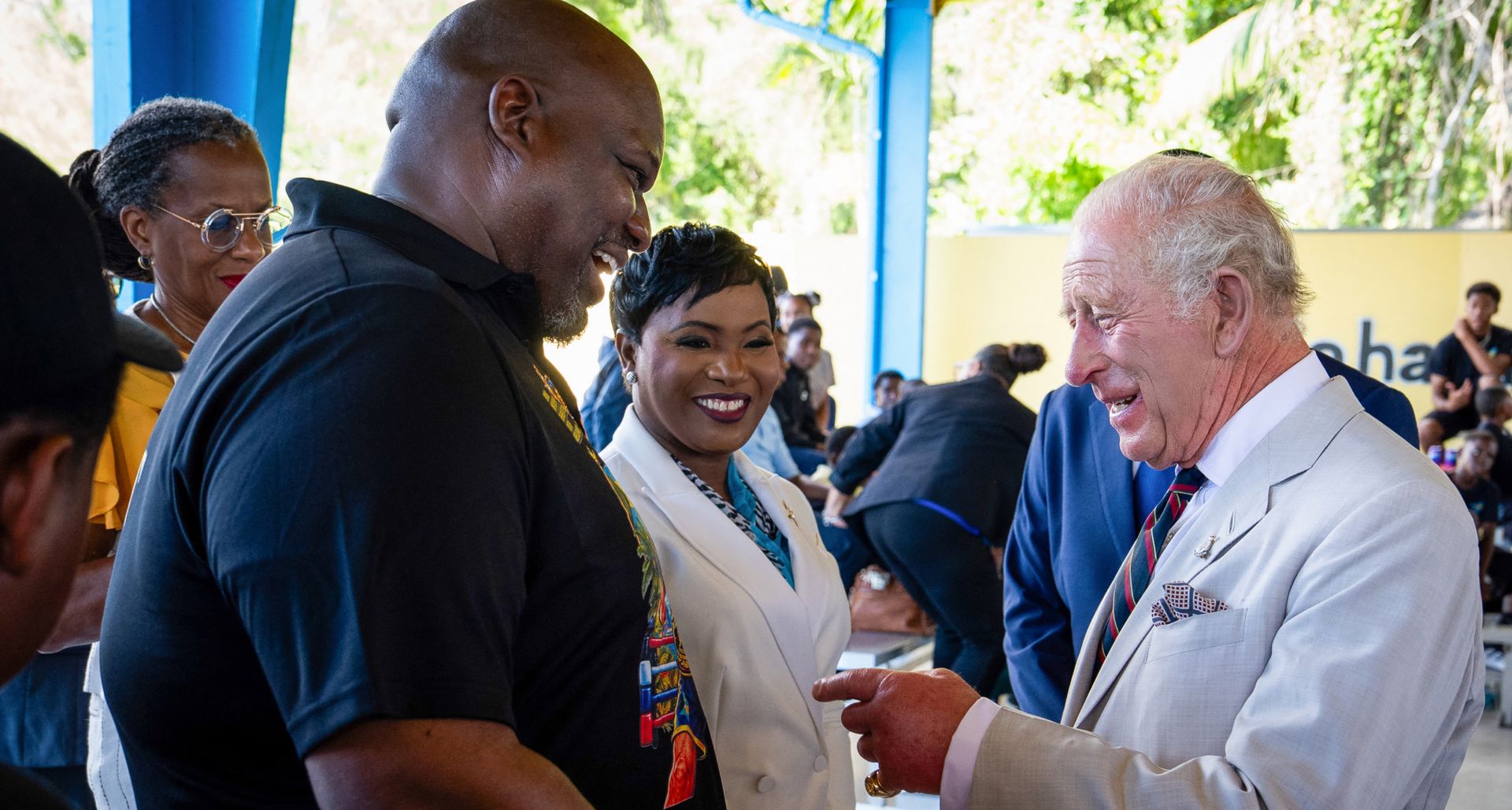
There is something quietly powerful about a king laughing at himself. When King Charles visited the Bahamas Boxing Academy and received a polo shirt printed with his own caricature, crowned, gloved, and grinning like a fighter, he did not stiffen or deflect. He laughed. Then he accepted the gift with a dry "How generous," and the moment became something more than a royal photo op. It became a lesson in the kind of confidence that needs no armor. We often speak of quiet luxury as a visual language, muted tones, intentional fabrics, understated silhouettes, but its truest expression is emotional. The ability to receive something unexpected, even absurd, without flinching is a form of self-possession that no price tag can buy.
This is the same king who recently reflected on the weight of time, admitting in A King Reflects on Time Lost and the Weight of Return that "it's taken me so long to come back here." That candid vulnerability paired with this lighthearted surrender to a joke suggests a man increasingly comfortable in his own skin. For our readers, the takeaway is clear: luxury is not about controlling every variable. It is about being so secure in your own identity that you can welcome imperfection, humor, and spontaneity without losing your center. The boxing coach, Jermaine Gibson, did not present a crystal vase or a ceremonial sword. He offered a shirt that made a monarch look like a cartoon pugilist. And the king, rather than retreating into protocol, played along.
The contrast with the rest of the tour is deliberate. While Why Queen Camilla Is Stepping Back From One Part of Charles's Tour hints at the careful choreography that still surrounds royal life, this moment in Nassau felt unscripted. It reminds us that the most memorable gestures are rarely the most polished. For anyone building a brand, or a life, around refined taste, there is a quiet permission here. You can hold a high standard without holding yourself so tightly that joy cannot seep through. The king shook maracas at a Junkanoo parade. He laughed at his own face on a T-shirt. He let himself be present.
What we are watching is not a departure from dignity but an expansion of it. The question this leaves us with is practical: where in your own life are you holding too firm? Which carefully curated image might breathe easier with a touch of irreverence? King Charles accepted a boxing shirt with his own face printed on it. He did not need to explain it, justify it, or frame it as anything other than what it was, a gift, a joke, a moment. That is the kind of confidence that turns a wardrobe into a worldview.