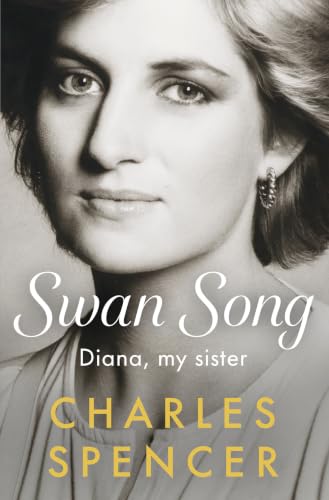
The echoes of history, particularly within families touched by public life, resonate with a quiet power. Charles Spencer's recent revelations in *Swan Song: Diana, My Sister* have offered a trove of royal insights. However, it's the more tender detail – the mirroring of young Charlotte's behavior with that of her grandmother, Princess Diana – that holds a particular fascination. This isn't merely a sweet anecdote; it speaks to the enduring influence of legacy, the subtle transmission of personality across generations, and the quiet grace that can define a family's narrative. We've seen this exploration of familial style and influence before, as exemplified in [A Quietly Elevated Kids' Brand Finds Its NYC Home], where a brand's success is rooted in a carefully cultivated aesthetic that transcends fleeting trends. Similarly, our community often seeks guidance on navigating personal style choices, as highlighted in [Style Queries: Seeking Collective Wisdom for Your Wardrobe], demonstrating a desire to understand how individual expression connects to broader cultural currents.
The significance of this observation lies in its understated elegance. Diana, a figure synonymous with both tragedy and enduring style, wasn't simply a royal icon; she was a young woman navigating an extraordinary life with a certain introspective quality. Spencer's description of Charlotte's similar penchant for quiet observation, for absorbing the world around her rather than demanding attention, suggests a continuation of that essence. It's a counterpoint to the often-performative nature of public figures, a subtle reminder that even within the gilded cage of royalty, there exists a space for genuine, unostentatious selfhood. This resonates deeply with the modern sensibility, a yearning for authenticity and a rejection of superficiality – a feeling we often explore in relation to personal style choices and the pursuit of a refined aesthetic. The story doesn't scream about this connection; it simply presents it, allowing the reader to draw their own conclusions, a tactic aligned with the power of quiet observation itself.
Furthermore, this mirroring speaks to the cyclical nature of family dynamics and the lasting impact of maternal figures. Diana's influence, though tragically cut short, appears to be subtly shaping the next generation, not through direct instruction, but through an unspoken inheritance of character. It's a reminder that legacy isn't always about grand gestures or headline-grabbing moments; it can be found in the quiet habits, the thoughtful pauses, and the innate ability to observe and absorb the world with a discerning eye. The emphasis on this introspective quality aligns perfectly with the current cultural shift towards prioritizing inner wellbeing and mindful living, a theme that also surfaces in our community's thoughtful approach to style, as seen in [Curious About Your Style? Find Guidance in Our Community Q&A]. It's a move away from external validation and towards a deeper understanding of oneself.
Ultimately, the story of Charlotte echoing Diana's childhood is a potent symbol of enduring influence and the quiet power of legacy. It invites us to consider how the past shapes the present, not through explicit replication, but through the subtle transmission of character and perspective. The question remains: as Charlotte grows, will she consciously embrace this inherited introspection, or will her own path lead her in unexpected directions? And perhaps more broadly, how will future generations continue to reinterpret and redefine the legacy of Diana, not through grand pronouncements, but through the quiet choices they make each day?