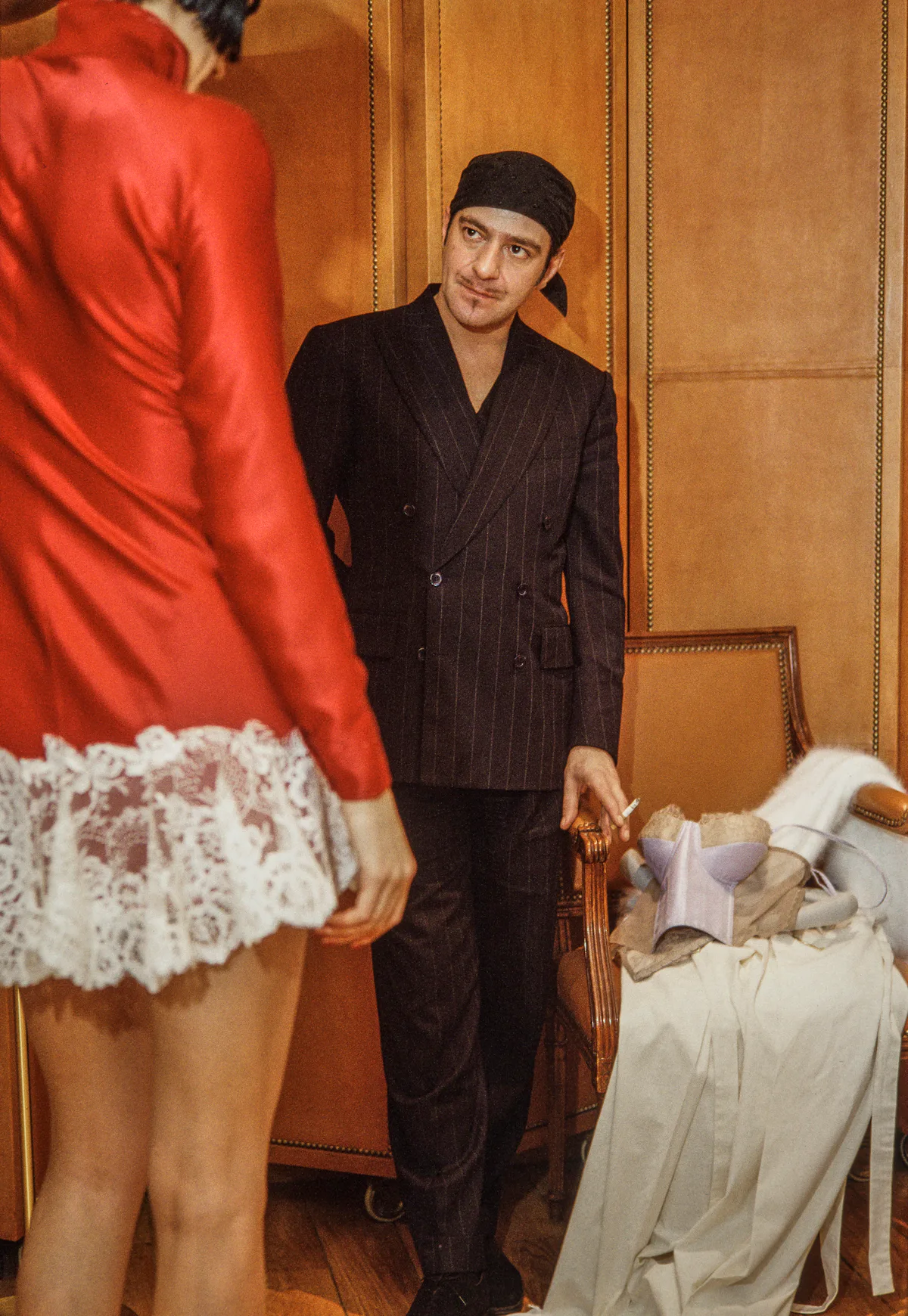
The Costume Institute has made its choice, and it is a bold one. Announcing John Galliano as the subject of the next Met exhibition is not merely a retrospective; it is a cultural reckoning rendered in silk and tulle. For a generation that has watched fashion cycle through eras of quiet restraint, this feels like a deliberate pivot toward the theatrical. We know the arc of his story, the meteoric rise, the public fall, the long, careful rehabilitation. To see that narrative enshrined within the hallowed halls of the Met is to acknowledge that genius and imperfection are not mutually exclusive. It asks us to hold the complexity, to appreciate the beauty of the work without erasing the context of its creation.
In a cultural moment where the quiet-luxury shade replacing the classic neutrals you own dominates our feeds, Galliano's maximalism is a fascinating counterpoint. His work has always been about the grand gesture, the immersive fantasy, the character that emerges from a single, dramatic silhouette. It is the polar opposite of the understated uniform we see on the streets today. Yet, there is a thread that connects them. Both aesthetics are a form of armor. One shields through anonymity, while the other shields through sheer force of persona. We see this duality playing out in the choices of women today, whether they are slipping into a structured, tailored ease like J.Lo trades her signature bodysuit for tailored ease in Milan or finding perfection in the singular, deliberate choice of a single accessory, as Katie Holmes's Milan Look Finds Quiet Perfection in a Single Bag demonstrates. Fashion is always a tool for self-definition, and Galliano's legacy is a masterclass in wielding that tool without apology.
Our take is that this exhibition will not be a hagiography. The Met is too intelligent for that, and frankly, Galliano's story is too complicated for a simple victory lap. This is about the tension between the artist and the art, the person and the public perception. For the viewer, it will be an exercise in separating the creator from the creation, a task that feels particularly urgent in our current discourse. It is a conversation about redemption, but more importantly, it is a conversation about the nature of legacy itself. What do we choose to remember, and what does it mean to celebrate a body of work that is as challenging as it is beautiful? The exhibition will force us to sit with that question, to look at the clothes and the context with fresh, unflinching eyes.
What we would tell a reader who asks us about this is simple: go in with curiosity and a willingness to be unsettled. This is not a show about the clothes alone; it is about the world they conjured. Watch how the curation handles the more problematic chapters, how it frames the brilliance against the chaos. The specific consequence to watch for is the ripple effect this will have on how the industry discusses collaboration and complicity moving forward. The Met has opened the door to a conversation we have been avoiding. The question is not whether Galliano deserves the honor, but whether we are ready to look at the totality of the image we have inherited. The answer, we suspect, will be revealed in the details of the construction, in the seams we are finally allowed to see.