There is a particular kind of ease that reads as true style, and Monica Barbaro captured it at Wimbledon before carrying that same energy into a new season of fashion. Her detour to the Chanel Métiers d'Art show in New York, following a moment courtside in white, felt less like a wardrobe change and more like a continuation of the same instinct. She is not chasing a trend; she is settling into a mood. It is the same confidence that has J.Lo trading her signature bodysuit for tailored ease in Milan, a move that proves even the most maximal of icons can find power in restraint. And when we look at the quiet-luxury shade that is replacing the classic neutrals you own, the through-line becomes clear: we are all searching for pieces that feel like extensions of ourselves, not costumes.
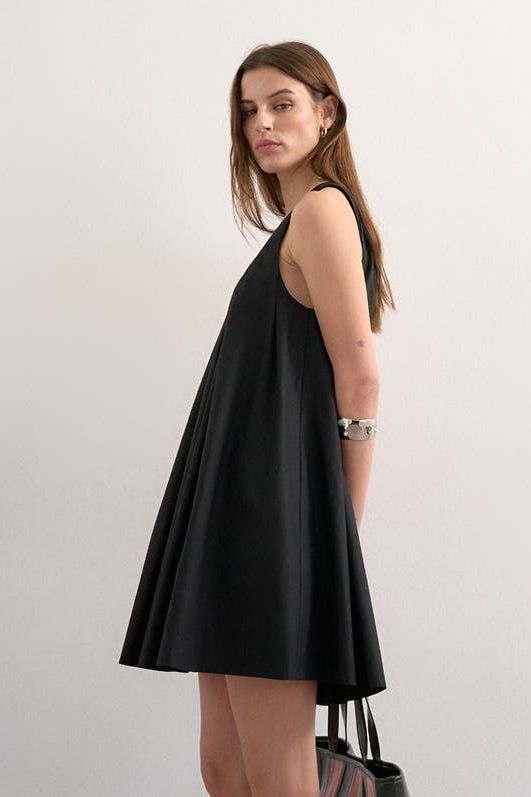
That is exactly why the super-short trapeze dress is having its moment. This is not the babydoll of our collective memory, nor the stiff, boxy shapes that defined its last iteration. The modern trapeze dress breathes because it asks nothing of the wearer beyond presence. It skims the body without clinging, offering a silhouette that is both playful and profoundly sophisticated. In a world that often demands we contort ourselves into uncomfortable shapes to feel put together, this dress offers a different proposition. It suggests that confidence can come from what you let go of, not what you hold tight. The look is less about the dress itself and more about the woman wearing it, her posture, her ease. It is a garment that rewards a certain kind of self-possession, the kind that doesn't need to shout. It is the sartorial equivalent of a calm, steady gaze across a crowded room.
For our reader, the practical takeaway is not to run out and buy the first trapeze dress you see. The point is to understand the shift in intention. We would tell you to look for one in a substantial fabric, something with a little weight that allows the shape to hold its own without looking stiff. Pair it with flat sandals during the day and a delicate heel at night, letting the proportions do the talking. This is not about hiding; it is about moving through the world with a lighter step. It is the same philosophy that makes a single, perfect monogram bag, like the one Katie Holmes carried in Milan, feel more impactful than an entire armful of accessories. It is the discipline of editing, the choice to say more with less. When you dress with this level of intentionality, you stop performing and start living.
What we are watching for is how this silhouette migrates from the runway and the red carpet into the everyday. The question is not whether the trapeze dress will be a trend, but whether we can adopt its underlying ethos of ease without losing our own sense of identity. The true test of any piece is not how it looks in the studio or on the street, but how it makes you feel when you forget you are wearing it. That is the quiet luxury we are after, a freedom that is felt, not seen. The moment a dress becomes a vehicle for your own presence rather than a costume demanding attention, it has served its purpose. And that is the detail to watch: not the hemline, but the woman inside it, finally comfortable enough to simply be.