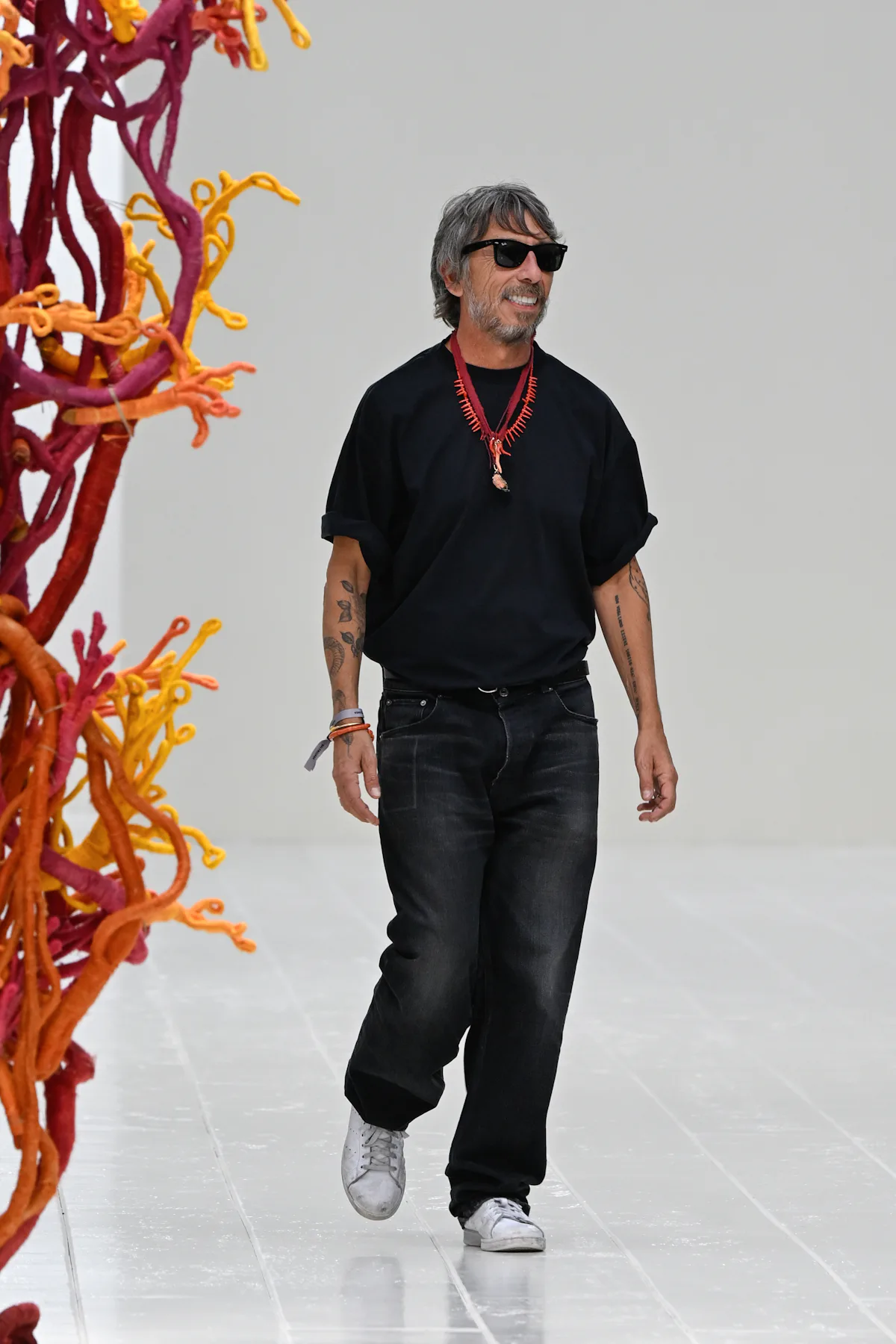
The departure of Pierpaolo Piccioli from Balenciaga feels less like a failure of talent and more like a quiet admission that heritage and provocation are not always easy bedfellows. We respect the decision, but we also see it as a clarifying moment: luxury houses are no longer content to let a designer's reputation carry the weight of a brand's identity. In a season where we are already rethinking polished staples like The Quietly Polished Shoe That Is Replacing the Classic Loafer and embracing intentional winter pieces in the spirit of Zoë Kravitz sets the tone for winter's most intentional pieces, Piccioli's exit signals that a label's core attitude cannot be borrowed, it must be lived.
Piccioli is an exceptional couturier. His work at Valentino proved he understands romance, drape, and the emotional weight of a garment. But Balenciaga, even under its current corporate structure, has never been a house of soft sentiment. It is a house of sharp gestures, of silhouette as shock, of youth culture refracted through a high-fashion lens. When Kering brought Piccioli in to honor Cristóbal Balenciaga's couture legacy while preserving Demna's streetwear momentum, they asked him to hold two opposing forces in one hand. His inaugural collection, inspired by the founder's motifs, was beautiful, but beauty alone does not sustain a brand built on friction. Sluggish sales followed, and the rumor mill, which has proven reliable, began to turn. Now, with the exit confirmed, the question is not whether Piccioli is talented, he is, but whether any designer can serve two masters at once.
For our readers, this story carries a practical lesson in discernment. We are living through a period of rapid creative turnover, and it is tempting to treat each departure as a crisis or a scandal. But what we see here is a brand reclaiming its own silhouette. Balenciaga's most powerful moments have come from designers who understood its subversive core, Demna's oversized proportions, the irreverent play with utility, the deliberate awkwardness that became a signature. The whispers that Martine Rose may step into the role make sense. She spent three years consulting on menswear under Demna, pushing the house into more subversive shapes. Her perspective is not a compromise; it is a continuation. If the goal is to build on Balenciaga's avant-garde spirit while honoring its heritage, Rose already understands the language. The question we are left with is whether Kering will give her the runway to speak it fully, or whether the same pressures that cut Piccioli's tenure short will apply to his successor.
The takeaway is this: when a luxury house changes direction, the smartest move is to watch what it does next, not what it says. Piccioli's exit is not a judgment on his craft; it is a signal that Balenciaga is choosing provocation over polish. For those of us who value intentionality in our wardrobes, that distinction matters. We will be watching closely to see whether the next chapter leans further into the brand's confrontational energy or attempts another reconciliation between past and future. Either way, the answer will arrive in the silhouette, not the press release.