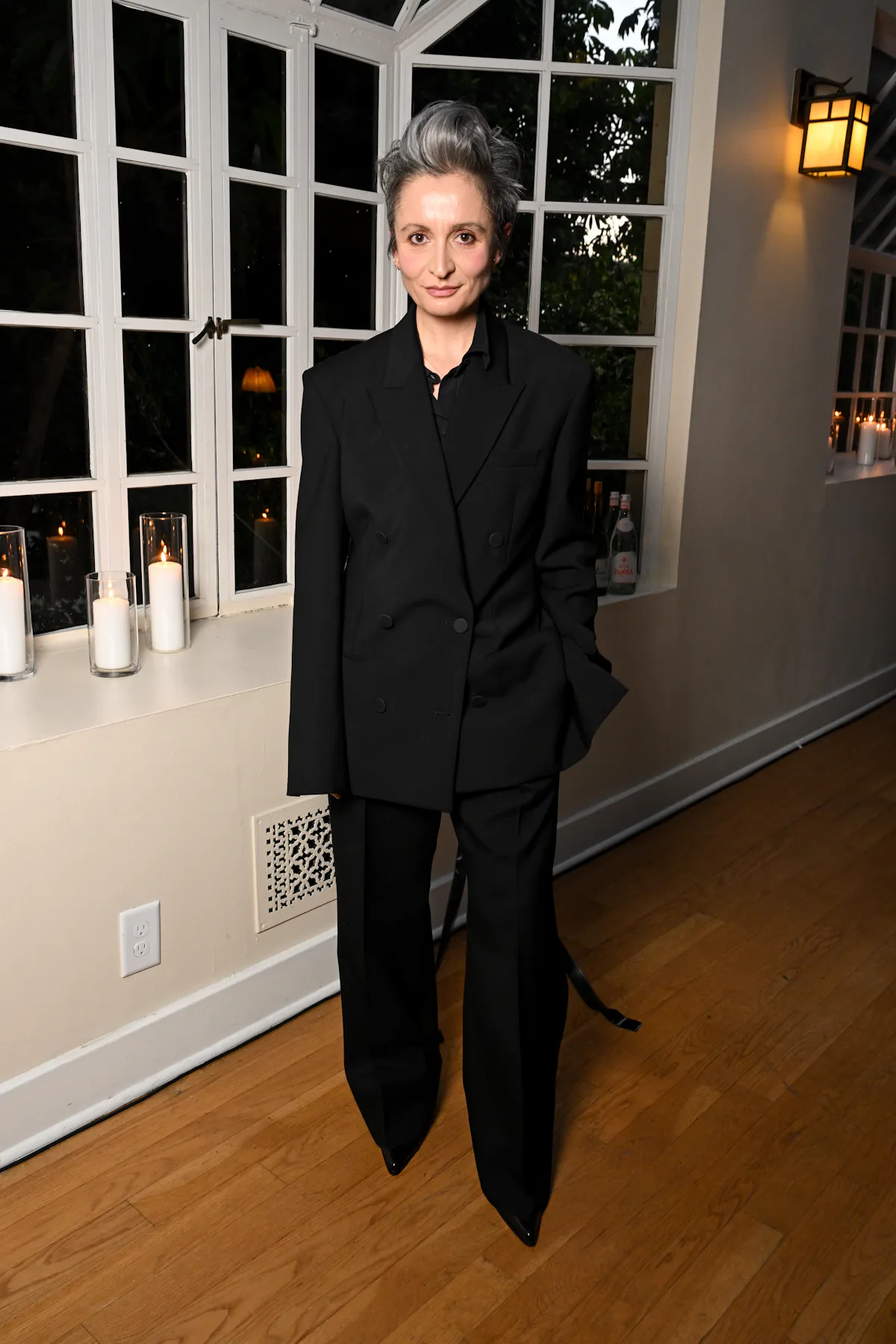
There is something quietly devastating about watching a designer who understood restraint be asked to leave before her vision could fully settle. Calvin Klein's announcement that Veronica Leoni will exit as creative director of the Collection line after just four seasons feels less like a standard contract conclusion and more like a premature closing of a chapter that had only just begun to breathe. We have seen this pattern before, Sean McGirr Steps Away From the McQueen Legacy, and it raises the same uncomfortable question: is the fashion industry willing to let minimalism, in its truest form, take the time it requires to root?
Leoni was the first female creative director of the American house, and her appointment felt intentional, a quiet correction to a lineage that had long leaned on masculine signatures. Her work drew from the same well of *90s minimalism that has recently found new life through cultural touchpoints like the Carolyn Bessette-Kennedy revival, and her collections, pared-back silhouettes, voluminous taffeta ballgowns, fringed floor-length dresses, offered a kind of soft precision that never screamed for attention. That is precisely what made it so compelling, and perhaps also what made it fragile in a system that rewards noise. Her Spring 2027 collection, shown just last month, leaned further into that simplicity with easy A-line dresses and silky pleated trousers, pieces that felt like they belonged in a wardrobe rather than on a mood board. It was the kind of refined, intentional dressing that aligns with the Spring 2027's Most Desired Silhouettes, Six Months Ahead that editors are already tracking, and it suggested a designer who was finally settling into her rhythm.
What makes this exit sting is not just the loss of a talented creative director, but the loss of momentum for a Collection line that had only just been reintroduced. David Savman's statement thanked Leoni for her "creative vision, commitment, and partnership," and acknowledged the "meaningful momentum" she built, and yet, the decision to let her go after four seasons suggests that momentum was not enough. For our readers, the practical takeaway is this: when a house as steeped in minimalist heritage as Calvin Klein cannot sustain a slow-burn creative vision, it signals that the industry's appetite for quiet luxury may still be shallower than we want to believe. Leoni's designs were not about spectacle; they were about presence. And presence, it seems, is harder to measure in quarterly reports. Her most recent work also showed a turn toward the kind of layered, intentional dressing that we have been tracking in The season's most refined layers arrive with quiet intention, and it is difficult not to wonder what a fifth season might have revealed.
The open question now is what comes next, for Calvin Klein, and for Leoni herself. A successor has not been named, and the Collection line remains "an important part of our brand," according to the company. But without a creative director who understands its DNA, that importance risks becoming a placeholder rather than a promise. Leoni may return to Quira, her own label, which she placed on hold for this role. If she does, she will be walking back into a fashion landscape that has just proven it is not always ready for the very refinement it claims to admire. That, perhaps, is the detail worth watching: not where she lands, but whether the industry will finally learn to let a quiet vision stay long enough to speak.