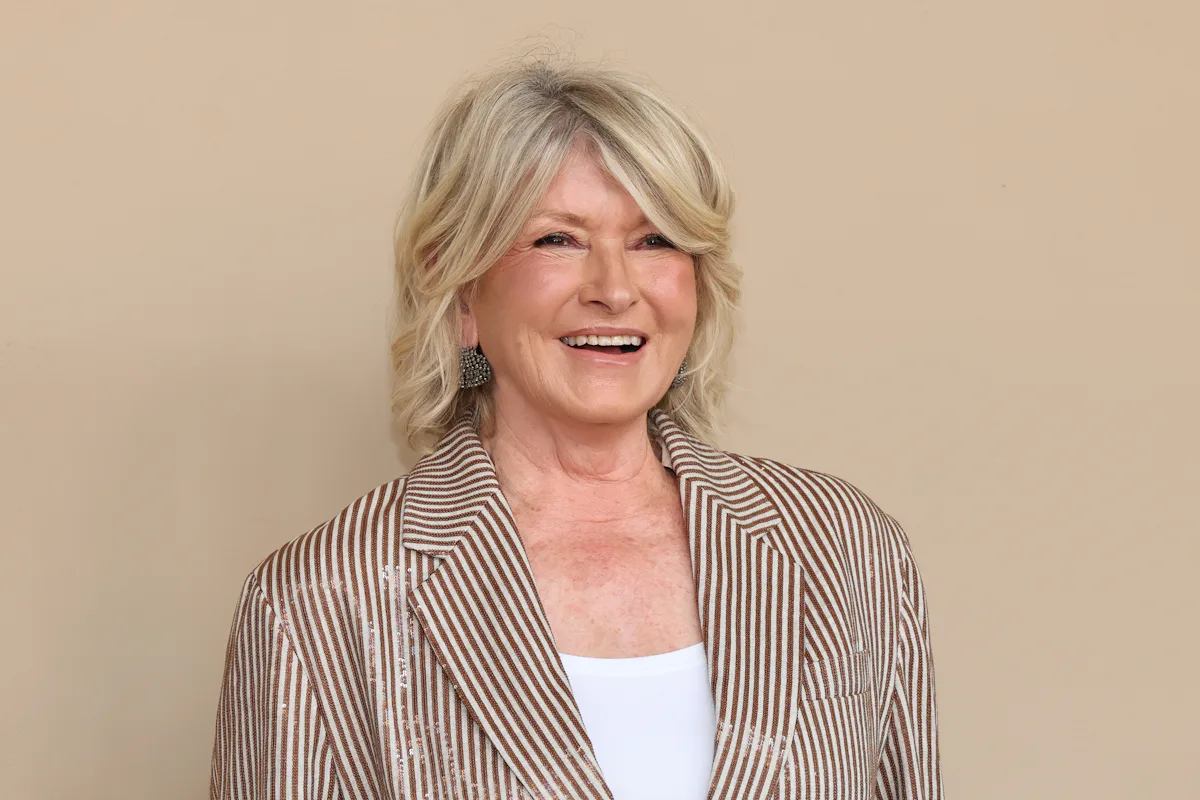
Some hair colors are less about the shade and more about the statement they make about a woman's inner state. When Martha Stewart revealed her new rose gold hair through a collaborative post with celebrity hairstylist Chris Appleton in early August, it felt less like a trend adoption and more like a quiet declaration of self-possession. There is a particular confidence required to touch an iconic blonde identity, especially for someone like Stewart, who has been an "eternal blonde" for decades. It would have been easy to stay within the lines of what is expected, but the choice to move toward a warmer, more reflective tone suggests a woman who is not clinging to a past version of herself, but rather introducing a new one to the world. This is the energy of someone who understands that true style is an evolution, not a fixed point.
The move resonates with a broader cultural conversation we have been tracking, particularly in how women in the public eye are reclaiming their narratives through aesthetic choices. It parallels the grace we saw in Pamela Anderson's September, where the actress navigated a whirlwind of high-profile moments with a sense of Venetian elegance, proving that poise can be a form of personal power. Similarly, Stewart's new hue is not just about the color; it is about the deliberate curation of her own image. It is a departure from a look we have come to know, which makes it more exciting than a simple maintenance visit. For our readers, the practical takeaway is about the philosophy of the refresh. You do not need a complete overhaul to signal a new chapter; sometimes, a subtle shift in tone, a softening or a warming of the edges, is enough to change the entire composition of your presence. It is a lesson in intentionality, much like the approach to Intentional Color: The Makeup That Elevates, Not Overpowers, where the goal is enhancement rather than transformation.
This is not a move that screams for attention; it is a move that commands it through quiet assurance. In a world that often equates change with a complete erasure of the past, Stewart's choice feels both modern and mature. She is not trying to be someone else; she is simply allowing a new facet of herself to come forward. This is the essence of the confidence we admire, the kind that comes from within and does not need external validation. When a reader asks us about this, we tell them to look at the intent behind the change. Is it to follow a trend, or is it to reflect a feeling? Stewart's rose gold feels like the latter. It is a warm, luminous choice that speaks to a radiance that is not about the color itself, but about the woman wearing it. The specific detail to watch is how she styles it in the coming weeks, because the hair is just the beginning of the mood she is setting. This is not a midlife crisis; it is a quiet renaissance, and we are here for the next act.