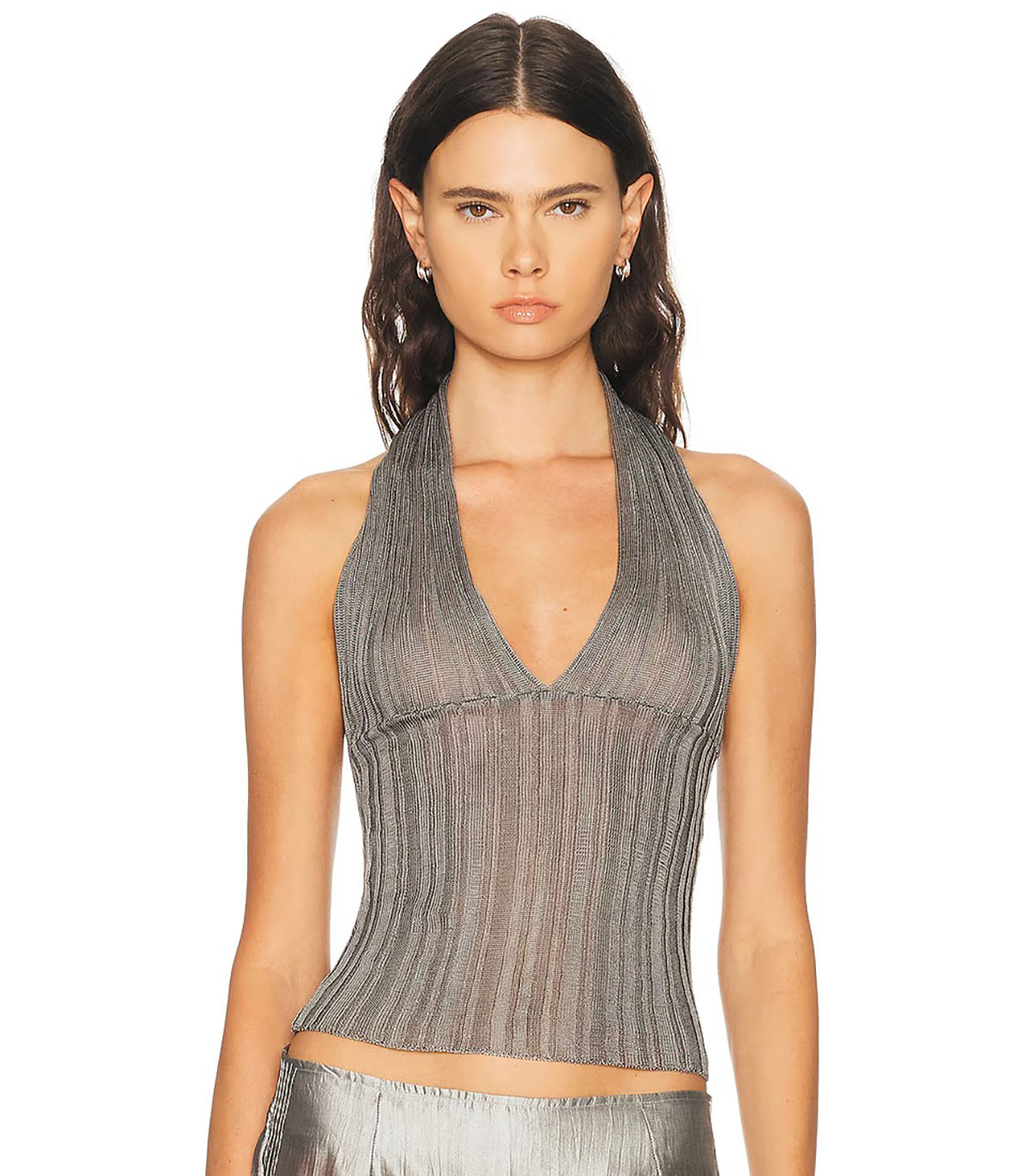
The return of the low-cut halter top is not a revival; it is a reclamation. The Y2K era, for all its exuberance, was a time of aggressive exposure, a sartorial shout across a crowded room. To see it styled for 2026, however, is to witness a conversation with that past rather than a reenactment of it. The current iteration is less about the spectacle of skin and more about the quiet confidence of the woman wearing it. It is a deliberate choice, not a plea for attention, and that distinction is where the true luxury lies. This is not a trend cycle spinning back to its starting point; it is a spiral, moving upward with more intention and self-possession than before.
This evolution feels like a natural extension of the conversations we have been having about lingerie as layers, as seen on Daisy Edgar-Jones and the quiet luxury favorites spotted on today's style set. Just as she redefines modern sensuality by tucking a slip beneath a knit, the modern halter is less about baring all and more about curating a precise point of intrigue. It is a neckline that draws the eye, not to follow a line, but to appreciate the architecture of the collarbone and the strength of the posture. The styling is key: it is not worn with low-rise jeans and a visible thong, but with a high-waisted trouser or a flowing maxi skirt, grounding the piece in a mature, assured aesthetic. This is a garment for a woman who knows her own mind and is comfortable letting her clothing speak in a measured, confident tone.
For our reader, the practical takeaway is one of considered acquisition. This is not a call to chase a fleeting trend, but an invitation to invest in a piece that offers a specific, elevated mood. When you see a halter that catches your eye, think less about the trend it references and more about the feeling it evokes. Does it make you feel composed? Does its cut encourage you to stand taller? This is the essence of the considered forecast for autumn's quietly elevated handbags that we find so compelling: it is not about the item itself, but the considered thought behind its selection. The garment should serve you, not the other way around. It is an opportunity to embody a sense of ease and femininity that is powerful because it is unforced, a subtle assertion of personal style that never needs to raise its voice.
What we would tell a reader who asks about this moment is simple: let the cut be the statement. If the neckline is doing the work, let everything else recede into the background. Avoid the urge to over-accessorize or add more skin elsewhere; the power is in the restraint. The most compelling detail to watch in the coming months is not the silhouette itself, but the fabric. Will we see it in fluid, liquid satins that catch the light, or in substantial, structured cottons that speak to a different kind of ease? That choice will define whether this moment feels like a fleeting echo or a permanent fixture in our own vocabulary of style. The question is not whether you will wear it, but what you will let it say.