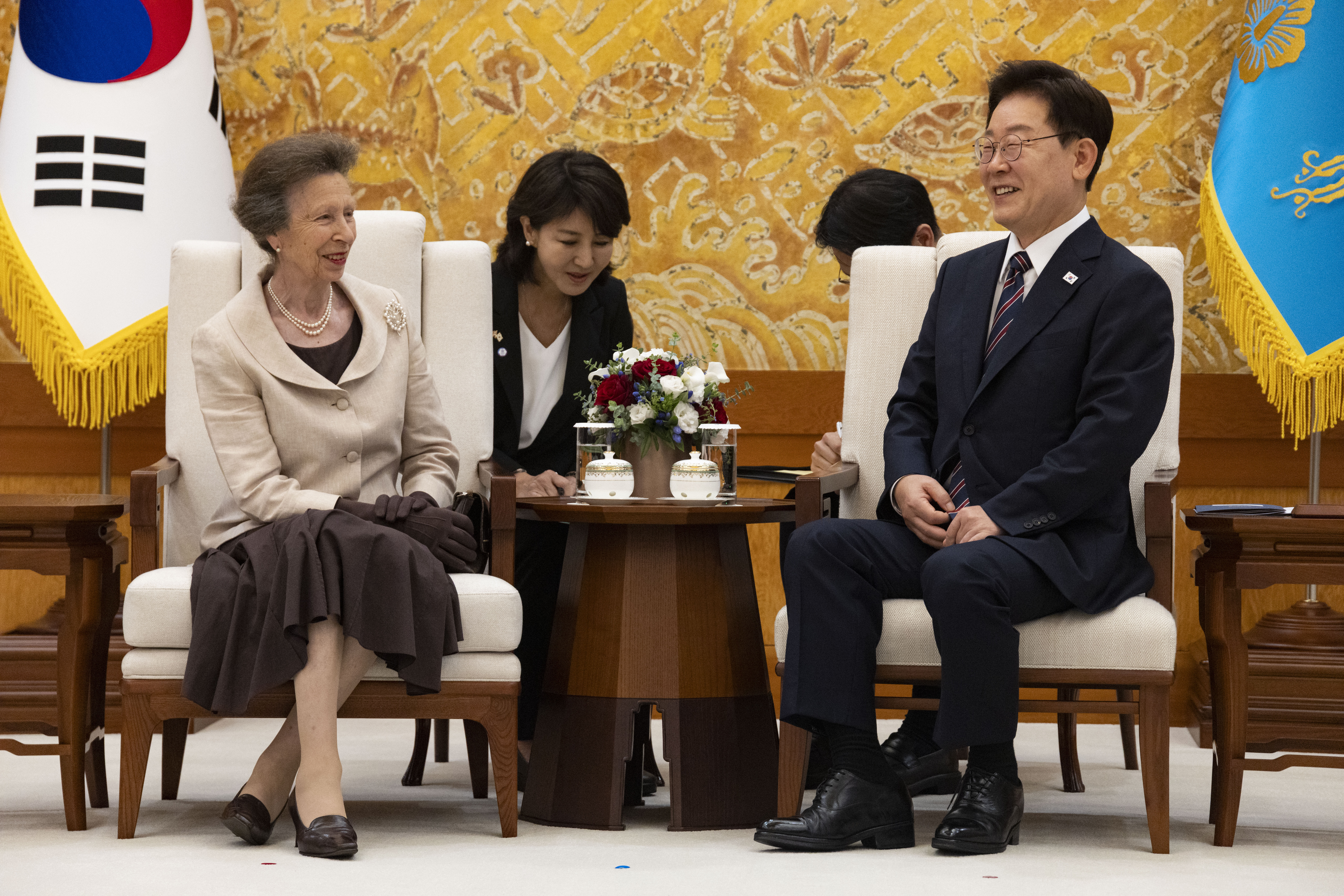
There is a particular kind of power that arrives without announcement. It is not the energy of a crowded room, but the quiet gravity that stills it. Reading about Princess Anne's tour of South Korea, one gets the sense that her presence operates exactly this way. The article notes that South Koreans have been "overjoyed" to meet her, and body language expert Darren Stanton attributes this to a blend of confidence and genuine connection. In an era where royal appearances are often dissected for their performative value, Anne offers something rarer: an unforced warmth that does not dilute her composure. She does not need to court attention; her attentiveness is the draw. It is a lesson in how true assurance reads as approachability, not aloofness.
This is the same quiet confidence we admire in a well-considered wardrobe or a thoughtfully curated space. It is the difference between dressing for an audience and dressing for the self. Princess Anne's approach to royal duty mirrors the philosophy behind our own The Sovereign's Quiet Ritual of Resourceful Royal Soaks: a sense of purpose that finds beauty in function and restraint in excess. There is no grand gesture here, only the steady, reliable presence of someone who knows her role so well she no longer needs to perform it. For our readers, the takeaway is not about royalty, but about the poise that comes from self-possession. When you are comfortable in your own skin, that ease translates into every interaction, every choice, every detail of your life.
We would tell a reader who asked about this story that confidence is not a loud assertion; it is a quiet refusal to explain oneself. Princess Anne's success in South Korea is not about the itinerary or the diplomatic milestones. It is about the way she makes people feel seen, which is something no amount of polish can fake. This is a craft, and like any craft, it is honed through practice and a clear sense of self. It mirrors the intentionality we explore in From Staple to Statement: Reworking a Beloved Tee, where the value is not in the newness of the object, but in the care we bring to its transformation. The same principle applies to presence: you do not need to reinvent yourself; you simply need to show up with an awareness of what you already offer.
What strikes us most is the emotional intelligence at play. Stanton's observation that South Koreans have been "overjoyed" suggests a connection that transcends protocol. It is a reminder that true connection is never manufactured; it is felt. For anyone looking to cultivate a similar presence, the answer is not in mimicking Anne's actions, but in adopting her mindset: be fully where you are, and let your own quiet confidence do the speaking. As we consider the mindful choices in The Quiet Power of Sustainable Style: A Survey on Mindful Fashion Choices, we are reminded that the most compelling statements are often the ones that require no words at all. The detail to watch is not what Anne does, but how she holds the space. That is a presence worth studying, and a lesson worth carrying into our own lives.