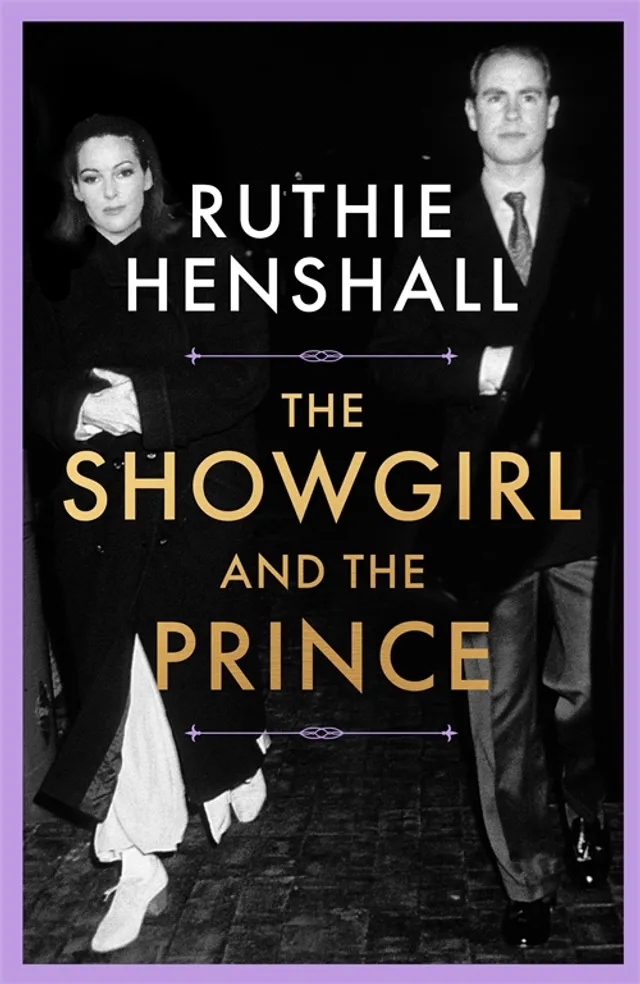
There is a particular kind of power in the quiet aftermath of a shared history, and Ruthie Henshall's recent revelation about Prince Edward feels like a masterclass in that exact energy. Before the duchess, there was a five-year romance with a woman whose life on the stage demanded a certain poise, a certain willingness to be seen. During her appearance on *Sunday Brunch* to discuss her new memoir, *The Showgirl and the Prince*, she shared a comment her ex made that lingers in the air precisely because it wasn't grand or theatrical. It was understated, almost reflective, and it reminded us that intimacy often lives in the smallest, most private exchanges. We are not here to speculate on what was said verbatim, but rather to sit with the weight of a moment where a former royal, a man known for his reserve, offered a piece of personal truth that she chose to carry forward. It is a reminder that our past relationships are not just chapters to be closed, but collections of moments that shape how we understand ourselves. For anyone who has ever loved and left, there is a strange comfort in knowing that even princes are not immune to the quiet gravity of a well-timed, honest word.
This story, at its core, is not about royalty in the traditional sense. It is about the reinvention that follows a public ending, and how we choose to curate our own narrative. It echoes the sentiment we explored in our piece on Diana, Drawn to Reinvention, Received a Proposal from Across the Atlantic, where the idea of a "mischievous attraction to reinventing herself" felt less like a personality quirk and more like a survival instinct. Henshall, too, is a woman who has redefined herself many times over: from a leading lady in the West End to a memoirist, from a girlfriend to a woman with a rich, full life of her own. Her choice to share this particular anecdote is not about gossip; it is about control. She is deciding what the world sees, just as she decided what to place on the page. It is a deeply feminine form of power, one that does not need to shout to be heard. It is the same quiet confidence we admire in the most elegant figures, a quality that feels less like performance and more like a settled sense of self.
For our readers, the takeaway is less about the Duke of Edinburgh and more about the art of holding your own story with grace. In an era where everything is over-shared and over-explained, Henshall's restraint is a refreshing counterpoint. She offers a glimpse, not an exposé. She gives us a feeling, not a full narrative. This is the essence of modern femininity: knowing that mystery is not a void to be filled, but a space that allows others to meet you halfway. It is the same principle behind the Quiet Confidence: The Most Elegant Celebrity Pixie Cuts, where the boldest statement is often the one that requires the least explanation. A haircut, like a memory, can be sharp and defining without being loud. Henshall's memoir, and her promotional tour, is her version of that sharp, clean cut. She is not asking for permission to be seen; she is simply choosing the angle.
So what would we tell a reader who asked us about this? We would say this: pay attention to the way people speak about their past. It tells you everything about their present. And if you are writing your own story, remember that you do not owe anyone the full draft. Share the moments that feel true, and let the rest remain yours. The specific detail to watch is how Henshall continues to thread this narrative in the coming weeks, whether she offers more glimpses or returns to the stage where her words are scripted. Because ultimately, the most compelling performance is the one we give ourselves, off the record.