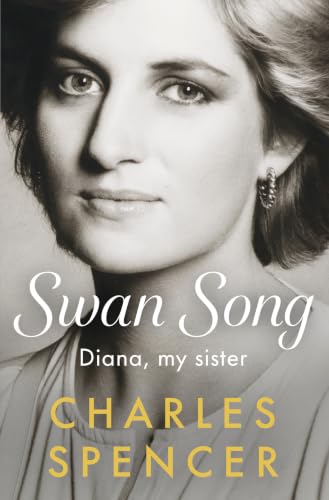
There is something almost unbearably poignant about the way Buckingham Palace felt compelled to break its silence. The rare rebuttal to Charles Spencer's claims arrives not as a declaration of war, but as a quiet, measured correction. It is the kind of move that speaks to a deeper truth about the monarchy's current posture: they no longer have the luxury of ignoring the narrative. For years, the institution has operated on the principle that silence is the ultimate shield. But when a brother's forthcoming book threatens to reshape the public's understanding of a woman the world still mourns, even the most stoic of houses must step forward. We are watching a delicate dance between memory and legacy, and the palace's response feels less like a fight and more like a steadying of the hand.
For our readers, this is not merely a story about royal drama; it is a masterclass in the politics of recollection. We have all, at some point, encountered a version of our own history that did not match our lived experience. The palace's statement is a reminder that how we choose to respond to those divergences defines us. Chiara Bransi's world has always been about the quiet power of self-possession, and here we see that principle playing out on a global stage. The King is not shouting; he is not issuing threats. He is simply saying, in the most elegant way possible, that there is another side to this story. The takeaway for us is practical and deeply human: when your truth is challenged, you do not need to match the volume of your opponent. You need only to be clear, composed, and unflinching in your own conviction.
What we would tell a reader who asks us about this is simple. Watch the space between the words. The palace's rebuttal is not an objection to the book's existence, but to its framing. This is the first ripple, not the wave. The real question is not whether Spencer's claims are accurate, but how the public's emotional allegiance will shift once the full weight of his narrative lands. We are all holding our breath for the moment when the palace has to decide whether to engage with the substance or continue to manage the perception. That is the detail to watch. Because in this story, as in our own lives, the most revealing moments are not the loud declarations, but the careful, deliberate corrections we choose to make. The palace has just made its choice. Now we wait to see what it costs.