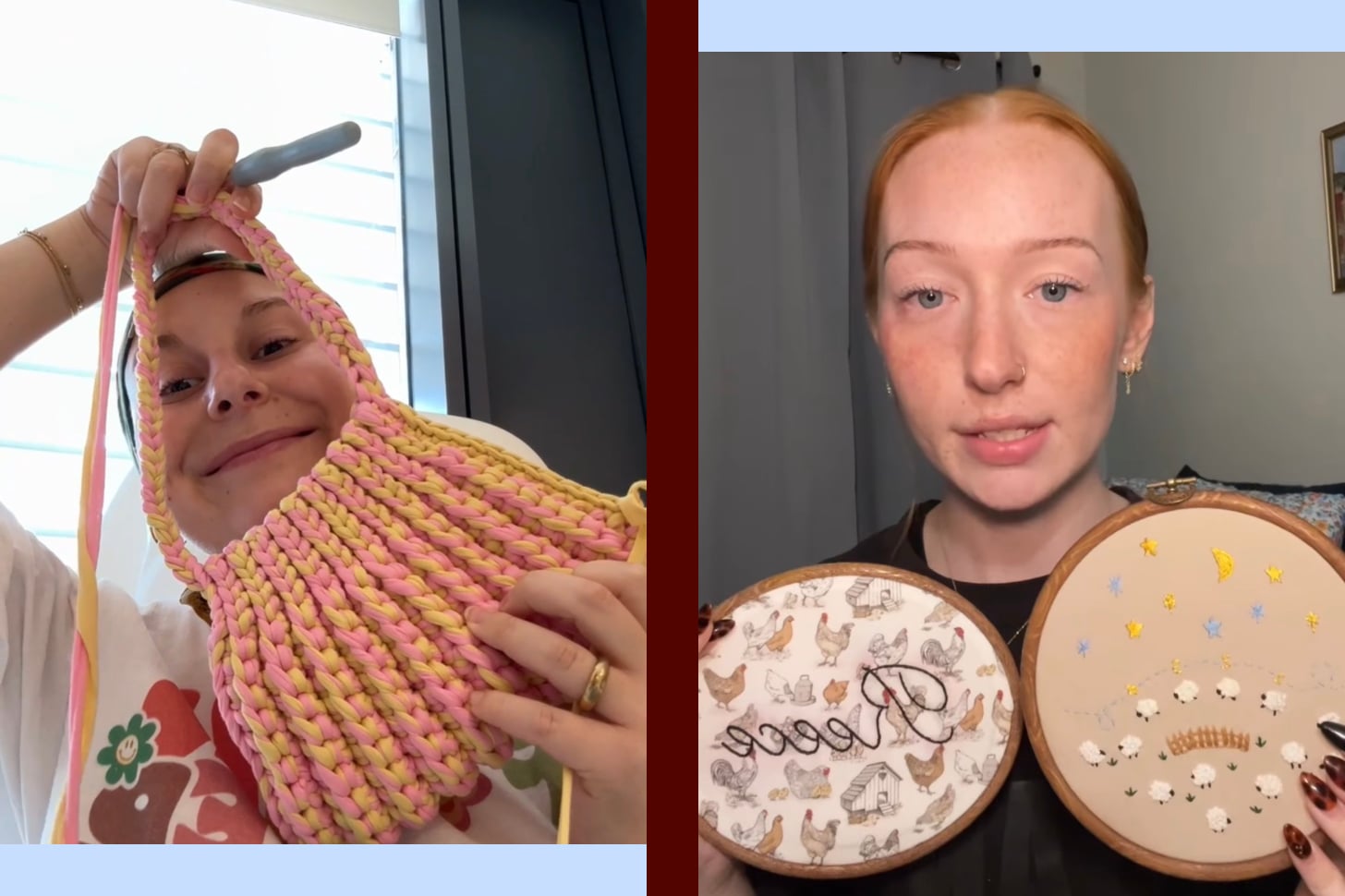
There is something quietly radical about choosing to create when your body is under siege. The instinct to make something with your hands, a single embroidered initial, a few rows of crochet, becomes an act of reclamation, a small but firm assertion that identity is not reducible to diagnosis. This is not about productivity or distraction; it is about returning to oneself through the most patient, tactile forms of expression.
When Kate Middleton described coloring during chemotherapy because she lacked the ability to read or focus on anything with an endpoint, she named a truth many of us avoid: illness strips away the familiar frameworks of achievement and linear progress. What remains is the quiet, unglamorous work of simply being present. Virginia Gelli, 28, turned to crocheting during her lymphoma treatment, finding that even managing a few rows gave her a sense of purpose on days when nothing felt like herself. Allie Reece, 24, embroidered her initials onto the pajamas she lived in, staking a claim over the only thing she could control. There is a deep, intuitive wisdom here that echoes what we explored in The Quiet Evolution of Personal Style After Thirty, the slow return to what feels like yours, not what performs well for others. And it carries the same understated gravity as The Weight of Letting Go Harry on Adrenaline, Crash and Uselessness, where the necessity of stress as a functional crutch reveals how fragile our normal operating systems can be.
The specific takeaway here is not that everyone needs a hobby, but that the right hobby functions as a quiet anchor precisely because it demands nothing beyond the moment. Crocheting, embroidery, coloring, these are not aspirational pursuits. They are repetitive, forgiving, and entirely unconcerned with outcome. Gelli made small bags and stuffed animals; Reece personalized pajamas for her oncologist and a plane for her pilot friend. The projects were modest, yet they carried the weight of intentionality. This is the same sensibility that informs Winter's Quiet Luxury Lives in These Cozy Essentials, the understanding that comfort, when chosen deliberately, becomes a form of dignity. Reece said it plainly: "It's so easy to get caught up in your thoughts during such a scary and uncertain time, so keeping my hands and mind busy was a huge help."
What stays with us is the detail that Reece always wore button-up pajama sets to chemo for easy port access, then embroidered them herself. That small act, personalizing the very garment that facilitated treatment, transformed a clinical necessity into something intimate. It suggests that grace is not found in grand gestures, but in the decision to make even the hardest days feel slightly more your own. The question worth sitting with is not what we would do in that chair, but what small, repetitive act we already have that might hold us when nothing else can.