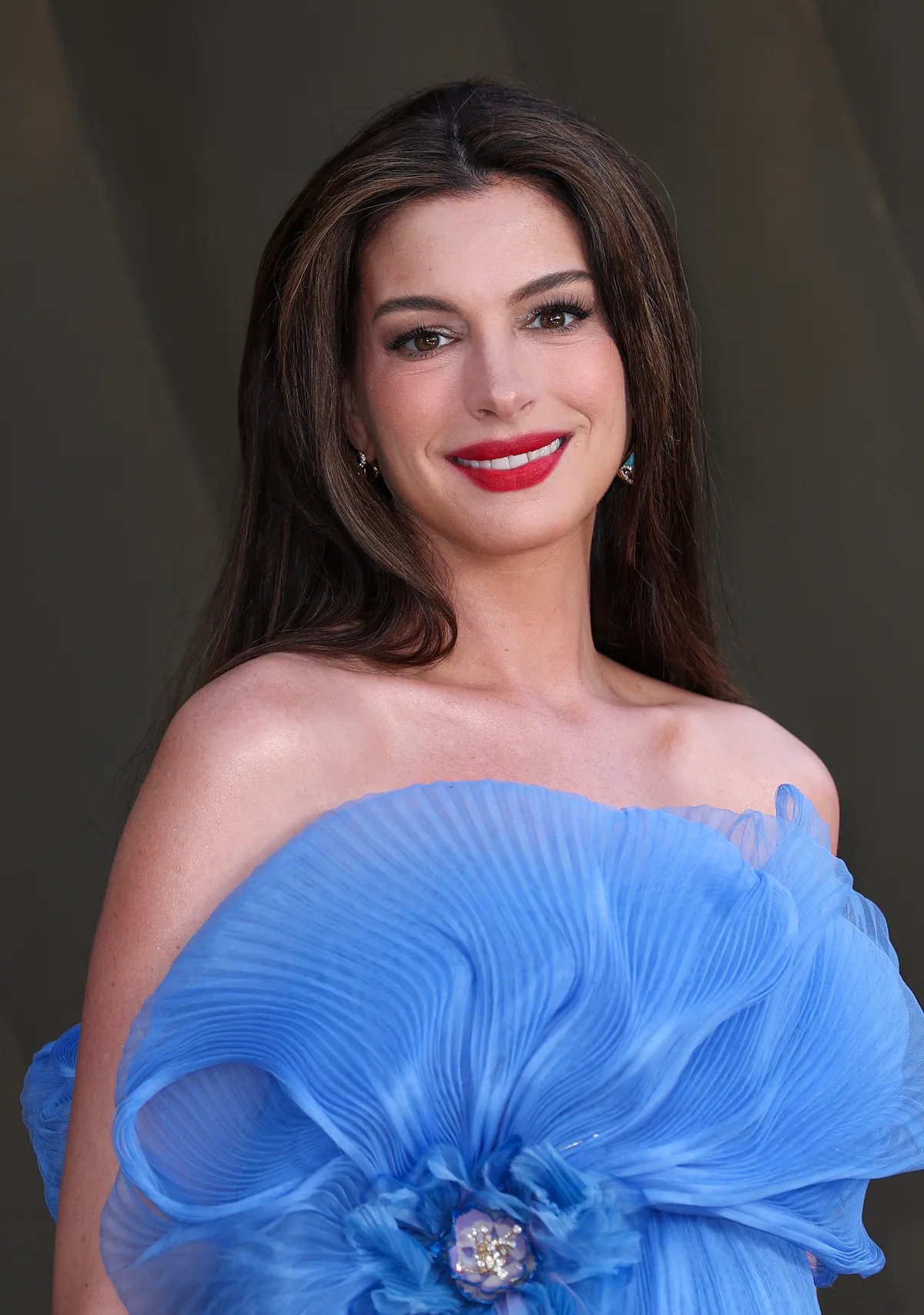
Fourteen years ago, Anne Hathaway's pixie cut was a character choice, a shorn crown born from the soot and struggle of *Les Misérables*. It read as transformation, a shedding of the ingénue for the sake of the craft. Now, she has resurrected the style for Vogue China, and the context has shifted entirely. This is not a return to a role; it is a return to a self, one who has spent the intervening years accruing the kind of quiet confidence that only comes from living. She wore the cut then like a costume, and she wears it now like a declaration of permanence.
What strikes us is the restraint. In an era where celebrity reinvention often arrives with a press release and a paparazzi stunt, Hathaway's move is a whisper. She is not asking for attention; she is simply stating a fact. This is the same energy we admire in Sculpted Silhouettes: Victoria Beckham’s Fall Collection Finds Quiet Strength, where tailoring does the talking and volume is a form of control. Beckham's woman does not need to raise her voice, and neither does Hathaway. The pixie, with its sharp lines and exposed neck, is a form of armor that requires no battle. It is a choice that signals a woman who is no longer performing for the male gaze, but rather curating her own aesthetic reality. She is showing us that femininity is not about length or softness, but about the confidence to define those terms for yourself.
This is where the emotional resonance lives. The first pixie was about the work; this one is about the woman. It is a subtle but profound shift from external achievement to internal alignment, a theme that echoes in Modern Sensuality: Dakota Johnson Embraces Transparency and Emerging Design. Johnson's embrace of transparency is not about exposure, but about honesty, a willingness to be seen without the usual layers of protection. Hathaway's pixie operates on the same plane. It is a form of transparency, a concession that at a certain point, you stop hiding behind the hair and start letting the bone structure, the eyes, the sheer force of your presence carry the day. And like Rihanna’s Parisian Moment: A Timeless Silhouette, Quietly Elevated, it proves that true elegance is never about the volume of the gesture, but the precision of it.
So what do we tell a reader who asks us about this? We tell them to watch the details. Look at how she styles it now versus then. The 2012 version had a certain sweetness, a lingering girlhood. This iteration, likely sharper, more sculpted, suggests a woman who has made peace with her own power. The practical takeaway is this: true reinvention is not about becoming someone new, but about becoming more of who you already are. The pixie is not the point. The point is the woman wearing it, and the quiet, assured way she lets us know she has arrived. The specific detail to watch is the length of time she holds onto it this time. A fleeting moment for a movie is one thing; a sustained choice is a statement. And we suspect this statement is just the beginning.