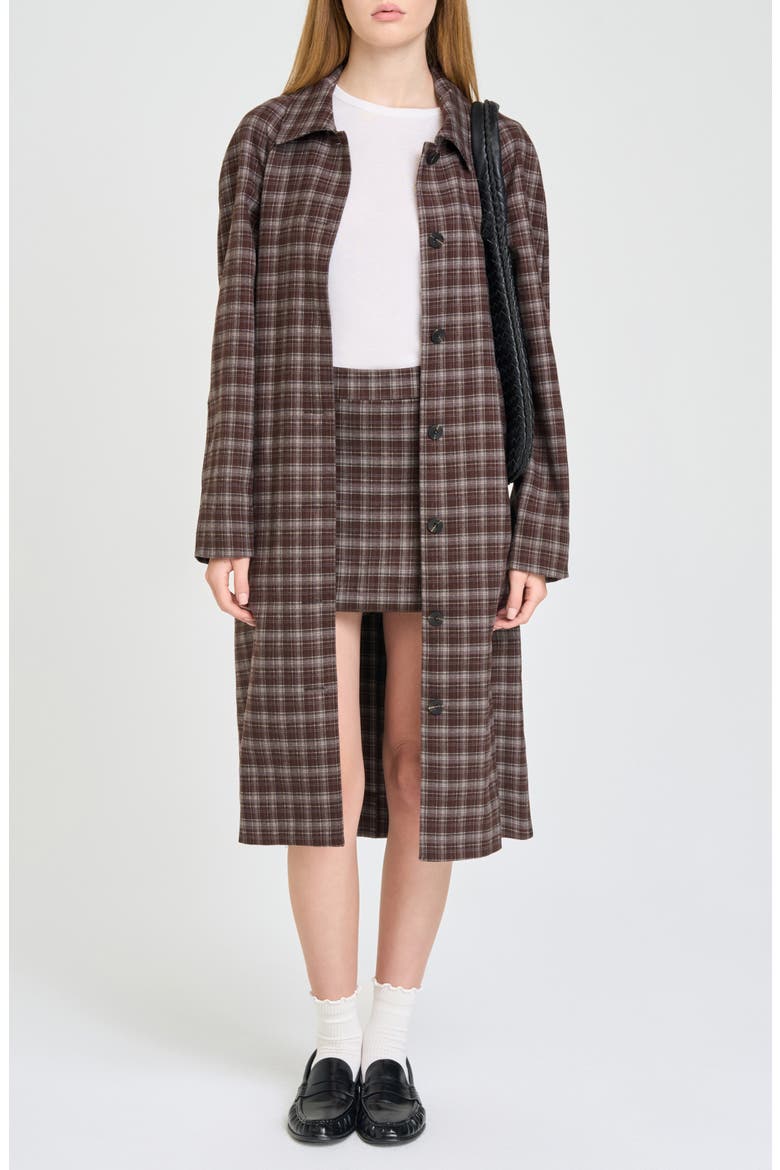
There is a particular kind of authority that comes from restraint. The article on autumn's most popular print makes the case for plaid, not as a trend to be conquered, but as a quiet constant in the chaos of seasonal dressing. It isn't groundbreaking, as the piece notes, and that is precisely the point. In a culture obsessed with novelty, there is something quietly radical about returning to a pattern that asks for nothing more than to be worn well. The cool girls of the fashion internet understand this. They are not shouting about it; they are simply layering it into their rotation with the same ease they would a white tee or a well-cut blazer. It is the The October Edit: The Quiet-Luxury Staples Defining the Season mentality applied to a print, where the value lies not in volume but in the quiet confidence of knowing exactly what works.
For our readers, this is not a call to overhaul a wardrobe. It is an invitation to reconsider what we already own. Plaid, after all, is forgiving. It does not demand attention; it rewards presence. The print carries an inherent structure, a pre-existing rhythm that means the rest of the outfit can fall away. This is where the The Quiet Power of Sustainable Style: A Survey on Mindful Fashion Choices becomes relevant. When a single piece can anchor an entire look across years, we stop treating fashion as a series of disposable moments and start treating it as a personal language. The most sustainable garment is the one you reach for repeatedly, not because you feel obligated, but because it feels like an extension of your own sensibilities. Plaid, in its most refined iterations, offers that. It is a foundation, not a flourish.
There is also a deeper emotional resonance worth acknowledging. The pattern carries memory. It evokes the stiffness of a new blazer, the warmth of a wool skirt against cold air, the nostalgia of a winter coat that has seen a thousand evenings. It is a print that asks us to slow down, to feel the weight of the fabric and the shift in season. In this way, it aligns with the introspective tone we often champion, the idea that style is less about external validation and more about self-connection. The article mentions that it girls wear this print all season long, but the deeper truth is that they wear it because it makes them feel grounded. It is not about the pattern itself, but the state of mind it invites. We would tell a reader who is unsure about embracing it to start small, a scarf, a tailored trouser, and let the print do the talking.
The takeaway here is not to buy more plaid, but to buy it with intention. Watch how the fashion set approaches it. There is no frantic styling, no forced effort. There is only a quiet, assured presence. As we move deeper into the season, the question is not whether you will wear the print, but whether you will wear it with the same calm authority it deserves. The detail to watch is not the pattern itself, but how much space you give it in your own narrative. Because in the end, plaid is just cloth. The confidence is yours to provide.