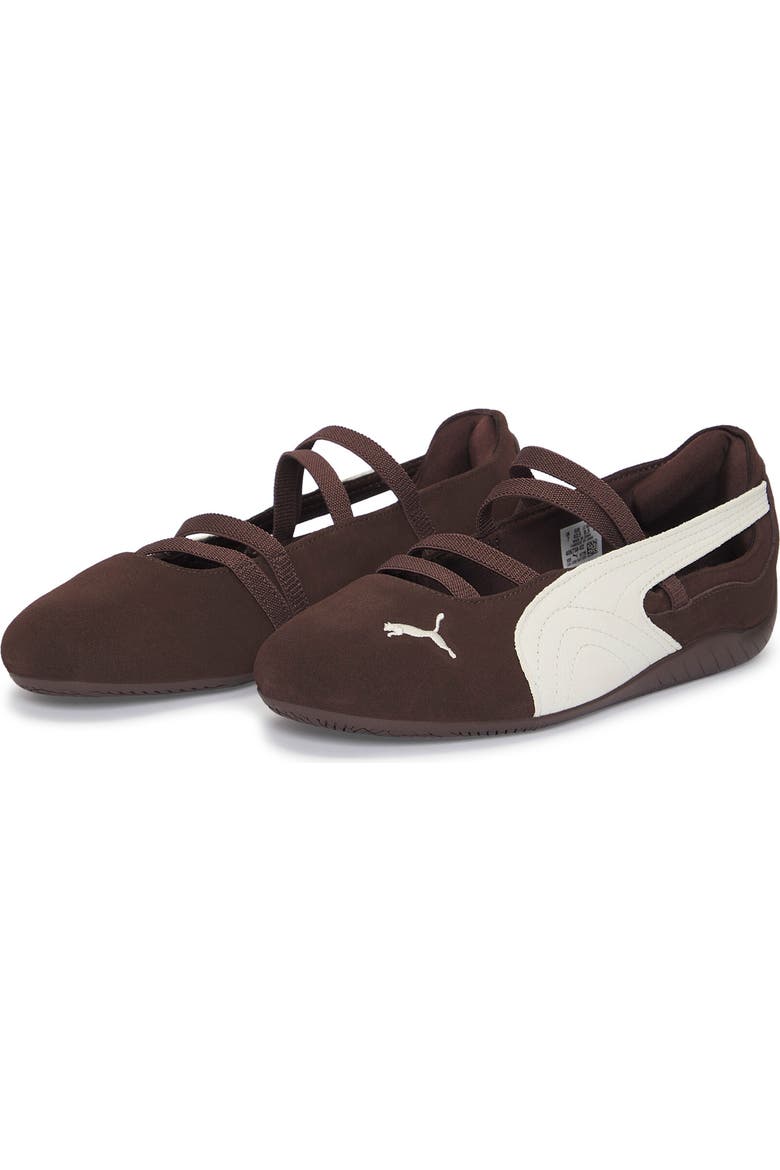
The ballet sneaker has been circling the cultural perimeter for a while now, but it took Dua Lipa and a pair of Pumas to finally make it feel like a summer necessity rather than a stylistic dare. There is something quietly magnetic about a shoe that asks for so little while giving so much. The polarizing part is obvious: it is flat, it is soft, it is almost apologetic in its construction. And yet, that is precisely why it works. In a season dominated by the quiet-luxury staples defining the season, the ballet sneaker is the rare piece that does not compete with your outfit. It settles into it. It lets the fabric, the cut, the attitude of everything else do the talking. That is not a trend. That is a temperament.
What makes this moment worth pausing on is not the sneaker itself, but what it represents for the way we are choosing to move through the world. The ballet influence is not really about dance class nostalgia. It is about a return to softness as a form of strength, which is something we have been circling across categories. The same instinct that makes us reach for a quiet-luxury shade replacing the classic neutrals you own is what pulls us toward a shoe that whispers instead of shouts. It is the confidence of not needing to prove anything. Dua Lipa, who has never lacked for edge, wearing a sneaker that is essentially a slipper with a sole, tells us something about where our attention should go. Not to the shoe. To the woman wearing it. That is the kind of self-assuredness we can all borrow from, regardless of whether we ever touch a pair of Pumas.
There is also a deeper resonance here, one that ties into the mindful approach to fashion choices that has been quietly reshaping how we shop. When you buy into a trend like this, you are not chasing a silhouette. You are buying into an idea about ease. About dressing for your own pleasure rather than for the approval of a crowded room. That is a more sustainable mindset than any fabric choice. It means fewer impulse buys, better styling, and a wardrobe that actually reflects who you are at any given hour. The ballet sneaker asks a simple question: what does comfort look like when it is the point, not the afterthought? For our readers, the practical takeaway is this: you do not need to be a dancer, a celebrity, or even someone who likes ballet to understand the appeal. You just need to be willing to let your shoes be the quietest part of your presence.
What we would tell a reader who asked us about this moment is simple. Try the shoe on with something you already own and love, not with a new outfit you bought to match it. Let it sit at the edge of your wardrobe for a week. Wear it to run one errand, then to meet a friend, then to a place where you used to think it would never belong. The test of a piece like this is not whether it looks good in the box. It is whether it disappears into your life and makes you feel more like yourself. The open question, then, is not whether the ballet sneaker will last. It is whether we are ready to let go of the idea that fashion has to be difficult to be meaningful. The shoe is already doing its part. The question is whether we can meet it with the same grace.