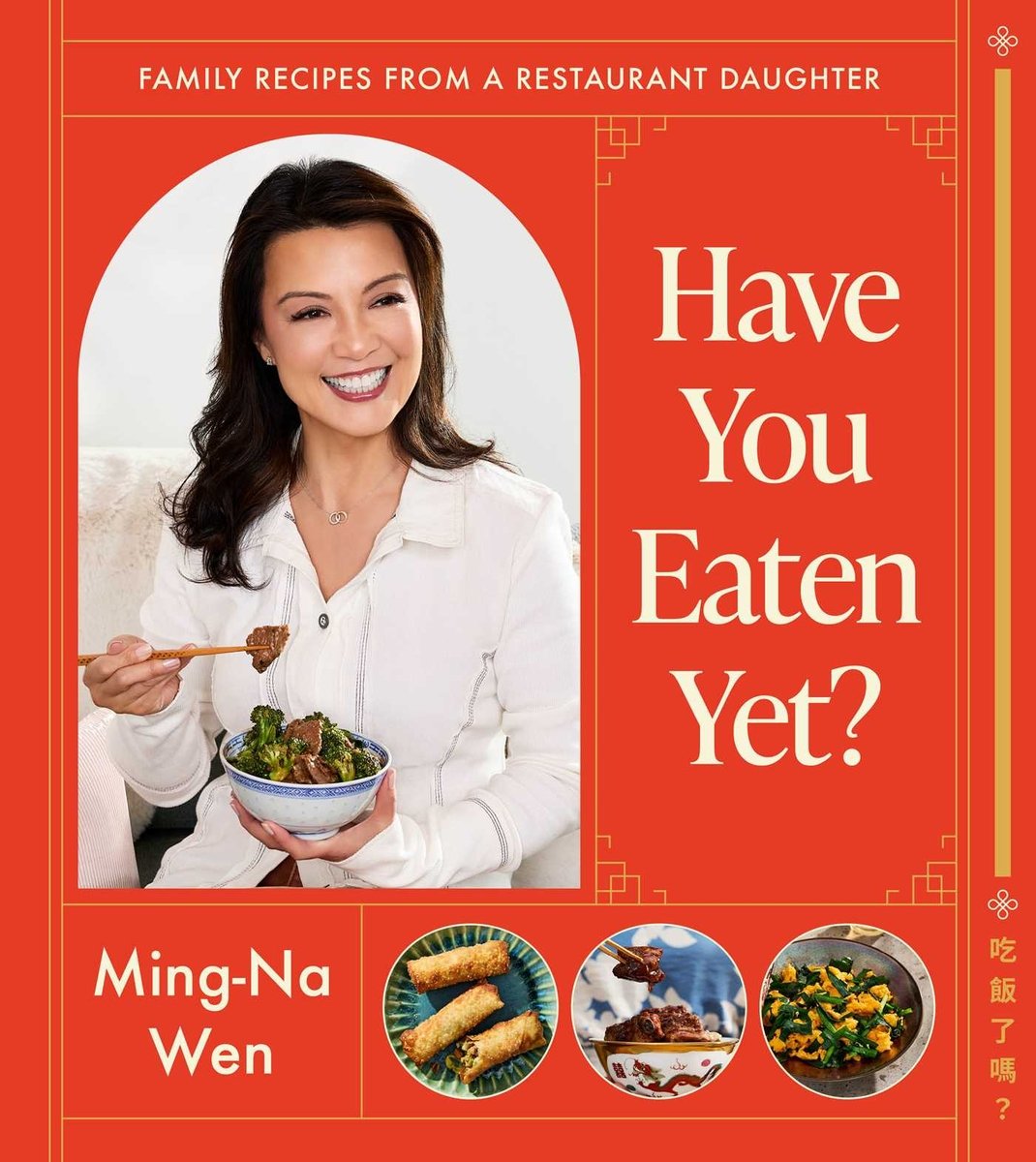
There is something deeply poetic about a life that begins in a kitchen and ends up on the world's biggest stages, and Ming-Na Wen's story reminds us that the most formative roles are often the ones we never audition for. In an era where celebrity memoirs tend to lean toward the transactional, the grind, the hustle, the relentless pursuit of fame, Wen's new book *Have You Eaten Yet?* offers something rarer: a quiet meditation on belonging, told through the lens of a Chinese restaurant that refused to disappear. We find ourselves drawn not to the Hollywood breakthrough, but to the red-and-green pagoda entrance of the Chinatown Inn, where a young girl learned that good ingredients make good food, and that same principle applies to a life well lived. It is a perspective that feels refreshingly grounded, especially when contrasted with the stories of other former Disney stars who have spoken openly about the cost of perfection, The Cost of Being a Perfect Disney Star, According to Christy Carlson Romano reminds us how easily a polished image can fracture under pressure. Wen's path was different: she arrived in America with no warning, found comfort in a slice of New York pizza, and built her resilience in the controlled chaos of a family kitchen.
What strikes us most is the intentionality woven into her memory. Wen describes the Chinatown Inn with the same sensory precision one might use to recall a beloved painting, the clatter of dishes, the blinking neon sign, the pristine white tablecloths stained with soy sauce before they were swapped for fresh ones. This is not nostalgia for nostalgia's sake; it is an acknowledgment that her identity was forged in that space. She calls herself a "restaurant daughter" with the same weight others might reserve for an Oscar nomination, and we understand why. The restaurant was not merely a backdrop; it was a second home, a part-time job, and ultimately, a philosophy. Her stepfather's mantra, good ingredients make good food, good food keeps customers coming back, became her own compass for acting, for relationships, for showing up in a world that did not always know what to make of her. It is a lesson in quiet authority: you do not need to shout to be heard when what you are offering is real. This kind of understated confidence echoes the way Omega writes a new chapter in horological cinema, where craftsmanship speaks louder than spectacle, and legacy is built on precision rather than noise.
There is another layer here that deserves attention: the way Wen's early experience of being bullied for her Chinese name and her small frame shaped the warrior women she would later embody. She tells the story of threatening to meet her tormentors after school, a bluff that never needed to be called, and we see the first spark of Mulan, of Agent May, of every character who stands her ground without raising her voice. It is a reminder that strength often begins as self-preservation, and that the most compelling on-screen power is rooted in off-screen truth. For our readers, the takeaway is specific and actionable: the next time you sit down at a family-run restaurant, consider the possibility that you are not just eating a meal, but witnessing a blueprint for resilience. Wen's memoir does not ask us to admire her success; it invites us to understand the foundation beneath it. And that foundation, it turns out, is a bowl of wonton soup made with fresh stock every morning, a lesson in patience and consistency that no Hollywood set could ever teach.