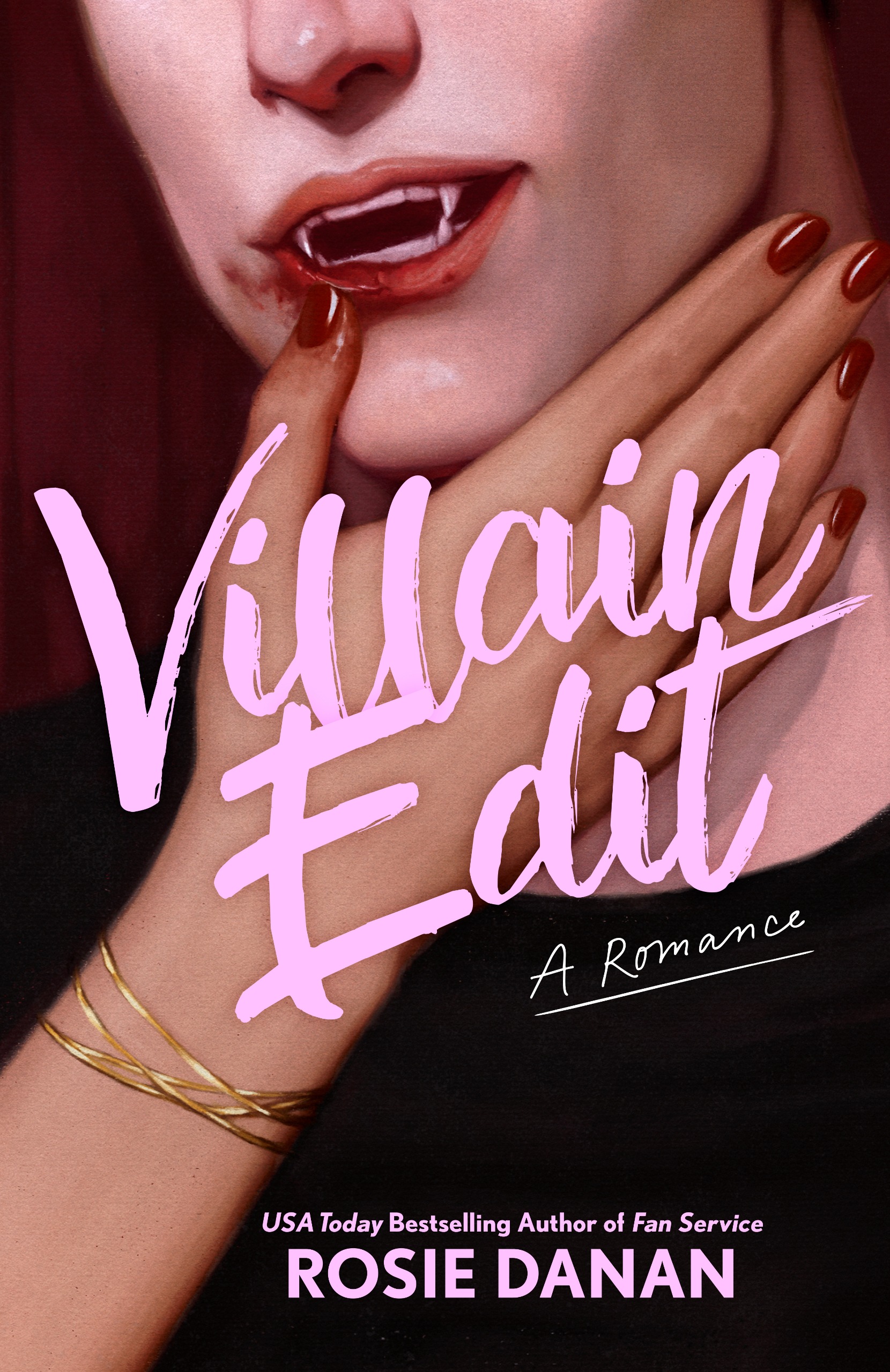
There is something quietly radical about a vampire who just wants to fall in love, not for power or predation, but because he read about it in textbooks to impress a girl. Rosie Danan's *Villain Edit* understands that the most compelling fantasy is not the supernatural, it is the permission to want something tender without irony. The novel follows vampire prince Gabriel Hargrave as he becomes the first supernatural contestant on a *Bachelor*-esque dating show, and reality TV producer Harper Calloway, who sees him as the answer to her career crisis. What makes this premise land is Danan's refusal to treat either the romance or the reality show as a joke. She writes with the same calm, assured confidence that we see in the quiet allure of a new neutral competing with leopard print, a reminder that the most arresting things often arrive without fanfare.
Danan's prose in the exclusive excerpt carries a restrained sensuality that feels earned. When Gabriel sits beside Harper on the couch, he is "gnawing the inside of his cheek to keep from leaning over and sniffing her neck." That is not the language of a bodice-ripper; it is the language of someone who has learned to hold himself still. The tension between his royal discipline and his unraveling composure is the engine of the scene, and it mirrors a broader cultural mood: we are tired of shouting for attention and hungry for stories that let desire breathe. This is why *Villain Edit* feels like a natural companion to the introspection we see in something like the exhibition of Princess Diana's archive, where a sweater keeps its secret. Both pieces understand that what is withheld often speaks louder than what is displayed.
The practical takeaway for readers is this: Danan has quietly built a case for the paranormal romance as a vehicle for emotional honesty, not escapism. Gabriel's hesitation is not about monster vs. human; it is about whether he is allowed to want a happy ending when he was raised to believe it is not meant for him. Harper, for her part, is not a damsel or a savior, she is a producer who knows that "falling in love, or at least, giving the illusion of it, is one of the most universal and unifying experiences we have." That line cuts both ways. It is a savvy observation about reality TV, and it is also the novel's thesis. We watch dating shows not because we believe in the outcome, but because we want to believe in the possibility. Danan gives us a vampire who wants the same thing.
The detail to watch is the prophecy Gabriel alludes to but does not explain. He says he has been "tarnished since the day he was born," and Harper does not know the irony. That thread suggests *Villain Edit* is not just a steamy romp through a reality show set, it is a story about whether a person can outrun what they were told they are. For readers who have followed the rise of reality-TV-inspired fiction, from murder mysteries on dating shows to dystopian competition series, Danan's addition of the supernatural feels less like a genre mashup and more like a natural evolution. Sometimes the bravest thing a character can do is sit still, let the kettle boil, and admit that they want to be seen.