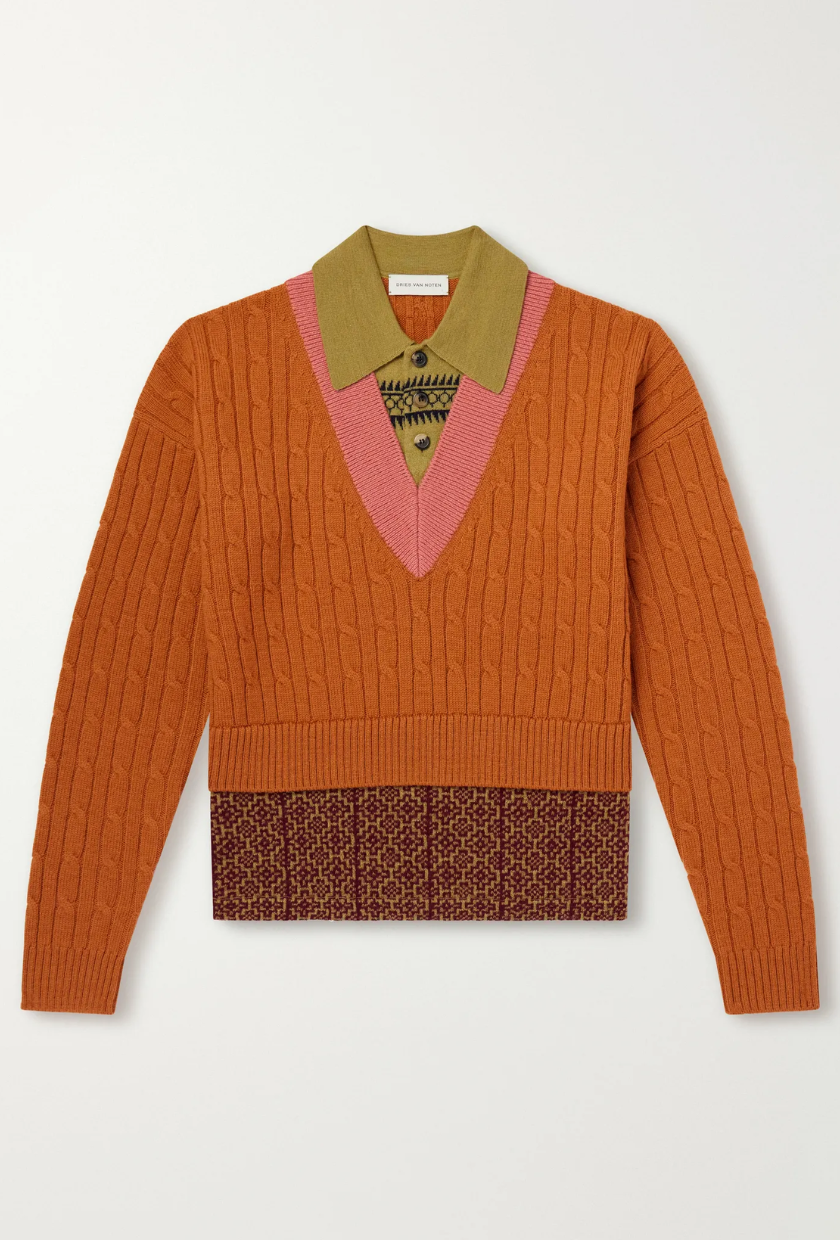
There is a particular pleasure in watching a man step out of the shadows of his own wardrobe. For too long, the masculine uniform has been a study in restraint, a monochrome meditation on safety. We have watched the beige takeover with a certain detachment, understanding the appeal of quiet neutrality but feeling, perhaps, a small pang of longing for something with a pulse. So when Max Hurd, a London-based art director and creative consultant with an exuberant aesthetic, declares the era of the "bore-drobe" over, we find ourselves leaning in with genuine curiosity. This is not a call to chaos, but an invitation to a more considered form of self-expression. It is a shift that feels less like a rebellion and more like a homecoming.
The intelligence of this movement is in its restraint. This is not about clashing neons or sartorial anarchy; it is about the deliberate introduction of hue into a landscape that has grown a little too comfortable with the absence of it. We see this same philosophy echoed in the broader cultural moment, where elevated footwear is no longer about logos, but about the quiet statement of a perfect silhouette and a considered palette. The connection is clear: style is graduating from a uniform of avoidance to a language of intention. For our readers, this means the practical advice is refreshingly simple: you do not need to overhaul your life, merely to inject a dose of intentionality. Swap the predictable navy sock for a deep burgundy, choose a shirt in a saturated terracotta instead of washed-out grey, or let a jacket carry a tone that actually flatters your complexion rather than hiding from it. The goal is not to be noticed, but to be remembered.
This is where the emotional resonance lies, and it is a thread we find particularly compelling. We have long championed the idea that personal style is an extension of inner state, a form of non-verbal communication with the self before it is ever a message to the world. The recent celebration of short nails, elevated style and the quiet confidence of a sharp, clean cut all point to the same truth: true elegance is a reflection of self-awareness, not a mask for insecurity. Color, in this context, becomes a tool for confidence. It is a statement of ownership. When a man chooses a shade that requires a small leap of faith, he is signaling a level of comfort with himself that is far more attractive than any tailored fit. It tells the world, and more importantly, himself, that he is present, engaged, and unafraid to take up space in a world that often rewards invisibility.
What we would tell a reader who asks about this shift is to approach it as a study in personal editing. Do not ask "what colors are in?" but rather "what shades make me feel more like myself?" The most successful adopters of this quiet shift will be those who treat it as an extension of their inner world, a subtle form of self-care that begins with the morning ritual of getting dressed. It is not about following Max Hurd's specific exuberance, but about finding your own version of it. The concrete point to watch is the fabric and texture. A flat, synthetic bright can feel cheap, but the same hue in a brushed cotton or a matte silk carries a depth that feels luxurious and grounded. This is not a trend; it is a permission slip to let your clothes carry a little more of your personality. The question is not whether you will join the shift, but which shade of courage you will choose to wear first.