There is something quietly radical about choosing an ingredient that does not just sit on the skin's surface but actually speaks to it. Dr Elizabeth Hawkes has said plainly what many of us have suspected: collagen in a jar is a humectant, not a builder. It conditions. It does not rebuild. For anyone who has been reaching for a collagen eye cream in the hope of reversing under-eye hollowing or softening deep-set lines, this distinction matters more than any glowing product description. The logic is elegant in its simplicity, if the molecule is too large to penetrate, it cannot stimulate the fibroblasts that make new collagen. So the real question is not which cream has the most collagen, but which one has the ingredients that know how to ask your skin to make its own.
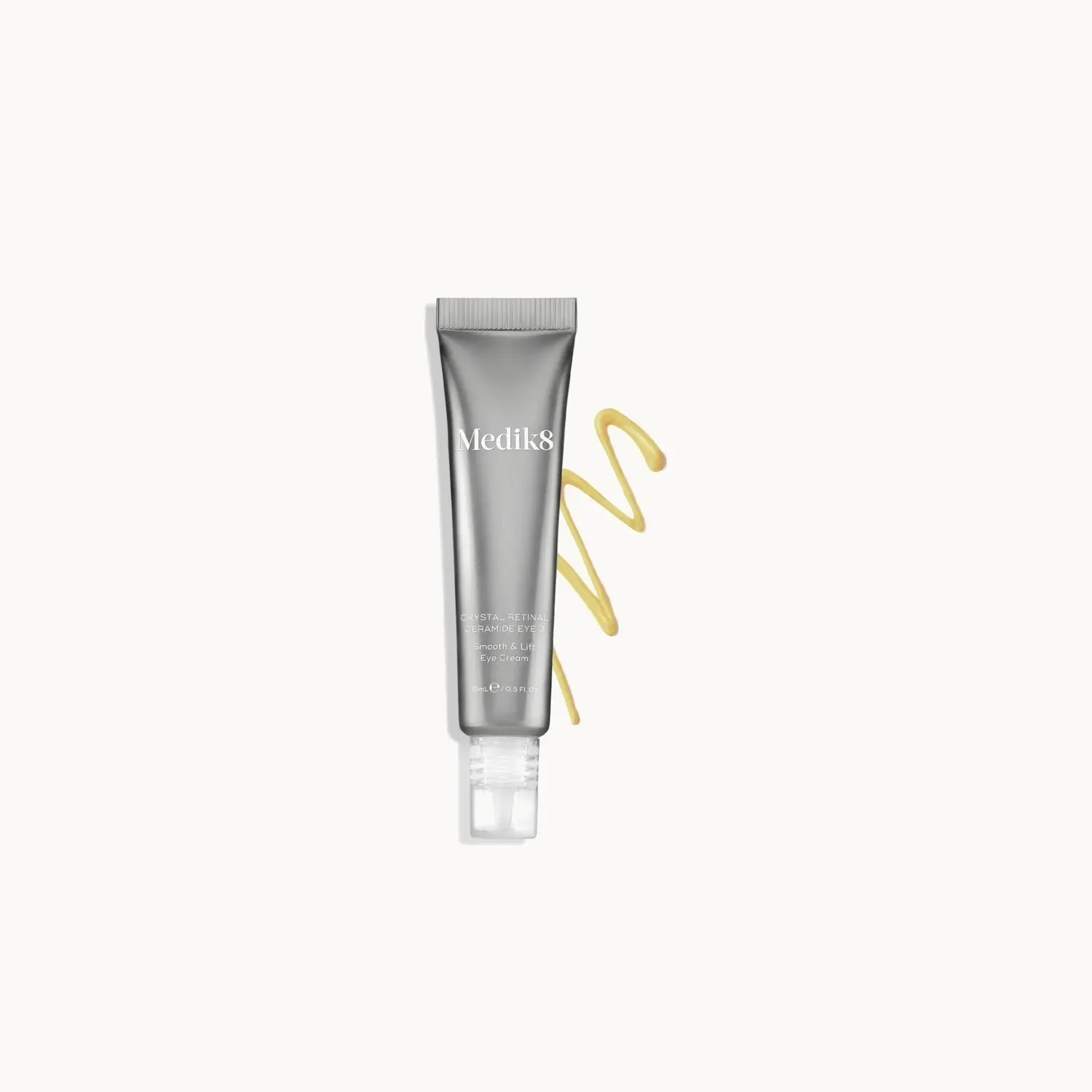
Peptides, retinal, and vitamin C are the quiet architects of this approach. They do not perform instantly, but they work with precision. Dr Hawkes calls Matrixyl 3000 the gold standard among peptides because it signals directly to the cells that synthesise collagen and elastin. That is the kind of science worth investing in, especially around the eyes where the skin is thinnest and most vulnerable to loss of structure. The results from a peptide-based formula like the Marks & Spencer Formula Ultra Peptide Eye Cream, which showed visible reduction in fine lines after four weeks in clinical trials, prove that efficacy does not require a three-figure price tag. On the higher end, products like the Medik8 Crystal Retinal Ceramide Eye combine retinaldehyde with peptides, offering a dual mechanism that works faster than standard retinol without sacrificing gentleness. This is not about buying the most expensive jar on the shelf. It is about reading the ingredients list with the same discernment you would bring to the pieces you archive in your wardrobe.
The real takeaway, and it is one worth stating directly, is this: we must stop looking for collagen in our creams and start demanding ingredients that trigger our own production of it. The distinction is not semantic, it is structural. The Beauty of Joseon Revive Eye Serum, with its 2% retinal liposome and ginseng root, proves you can achieve this for under £20. The Dermalogica Smart Eye Density serum uses growth factors to address under-eye hollowing, a concern many women assume only injectables can touch. These are not compromises. They are smarter choices. And in a beauty landscape that often rewards marketing over mechanics, that kind of clarity feels like a small act of rebellion.
It reminds me, in spirit, of The Quiet Ritual of Opening a Beauty Advent Calendar, where the pleasure is not in accumulation but in the deliberate unlayering of small, intentional moments. Skincare, at its most refined level, operates the same way. There is no rush. The results compound over time, like a sentence you revise until it says exactly what you mean. The question I keep returning to is this: if we already know that collagen topically cannot rebuild collagen, why do we keep reaching for it? Perhaps because habit feels safer than precision. But precision, in the end, is what gives the eye area its luminosity, and that is a beauty worth waiting for.