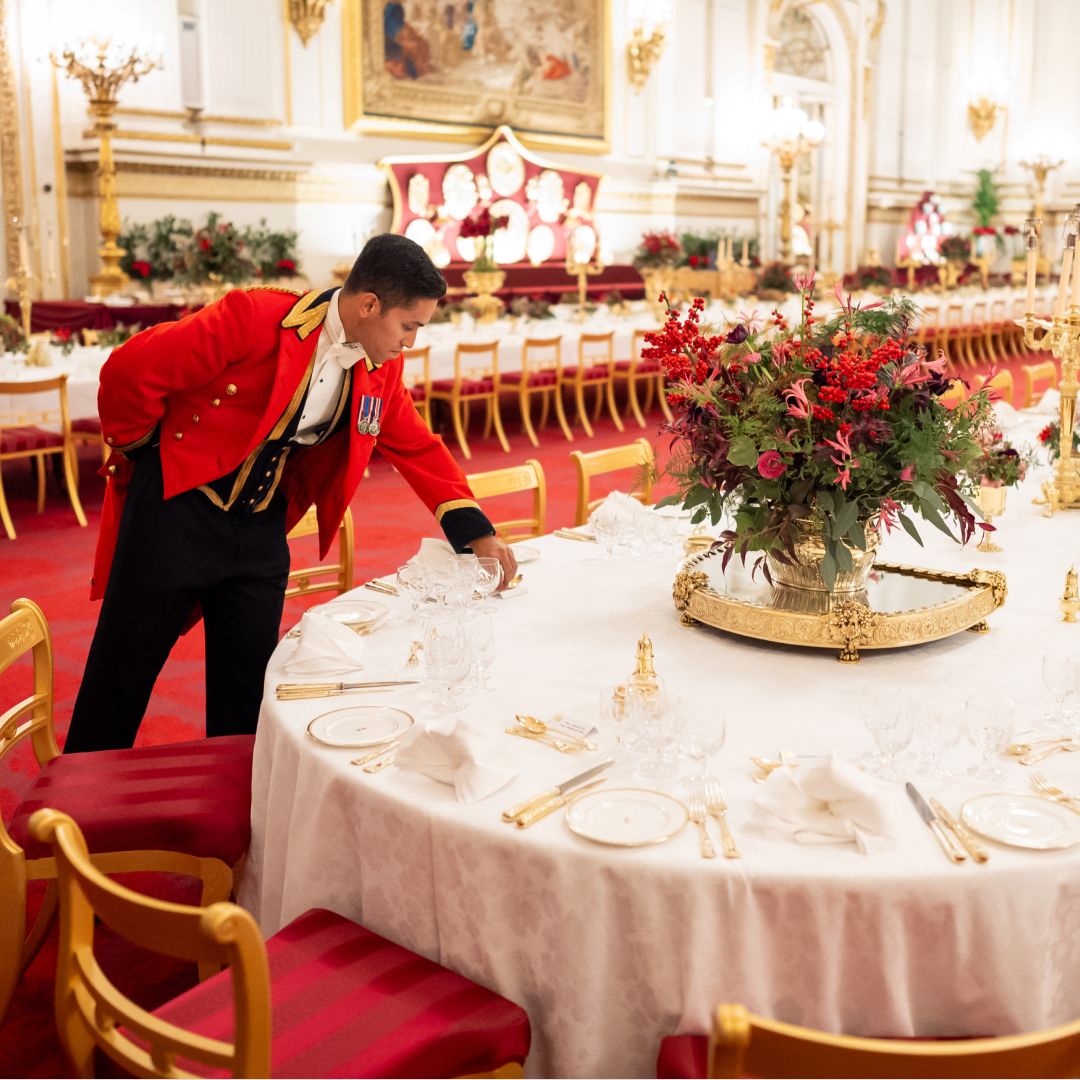
There is a particular kind of magic we assign to the unseen, especially when it involves a crown. We imagine the private dining rooms of the Royal Family as extensions of the state banquets we glimpse on television: walls of gold leaf, tables groaning under crystal, every plate a masterpiece. So when former royal chef Visen Anenden reveals that the daily reality is far more restrained, it feels less like a debunking and more like an invitation to exhale. The biggest misconception, as he puts it, is the assumption that everything is "grand, spectacular, and bling." Instead, we are offered a quieter truth, one that aligns with a certain wisdom we often forget: that true luxury is rarely loud. This resonates deeply with the spirit of The Sovereign's Quiet Ritual of Resourceful Royal Soaks, where we explored a similar theme of quiet resourcefulness within palace walls. It seems the institution's most enduring tradition is not opulence, but a thoughtful, almost austere, intentionality.
For those of us who curate our lives with deliberate care, this is a welcome recalibration. We often chase the spectacle, believing that grandeur is the ultimate signifier of a life well lived. Yet Anenden's revelation suggests that the opposite is true. The daily royal table, rooted in simplicity and function, speaks to a confidence that does not need to prove itself through excess. It is the difference between a person who wears a diamond for the size and one who wears it for the light it catches. This is the same self-assurance we see in figures who have long understood their own narrative, much like the late princess whose own reinvention was a quiet, persistent act of self-definition, as explored in Diana, Drawn to Reinvention, Received a Proposal from Across the Atlantic. Her style was never about the volume of her wardrobe, but the clarity of her presence. The kitchen, it seems, operates on the same principle: the substance of the meal is not measured by the number of courses, but by the comfort it provides.
If a reader asked us what to take from this, we would say this: pay attention to what you do when no one is watching. The way you prepare a weekday dinner, the care you take with a simple cup of tea, the choice to repair rather than replace. These are not mundane acts; they are the architecture of a refined life. The allure of the royal world has never been its chandeliers, but the discipline hidden behind them. It is a discipline that whispers of a deeper sense of self, one that is not swayed by the external performance of wealth. This is a lesson in editing your own life, stripping away the noise to find what truly nourishes. It is the same desire to hold onto a lingering hope or a quiet wish for something more meaningful, a theme we touch upon in A Lingering Wish: Exploring King Charles’ Enduring Hope, where the emotional undercurrent is far more compelling than any surface-level formality.
Our honest take is that this story is not about food at all. It is about the gap between perception and reality, and the power that comes from closing it. The next time you see a formal portrait or a state event, remember the quiet plate of simple, well-sourced food that likely preceded it. Let that image be your takeaway. It is a reminder that the most profound statement of confidence is often the one that feels most effortless, and that the true measure of a life is not in the spectacle we present to the world, but in the quiet rituals we preserve for ourselves. The detail to watch is not the next banquet, but your own table.