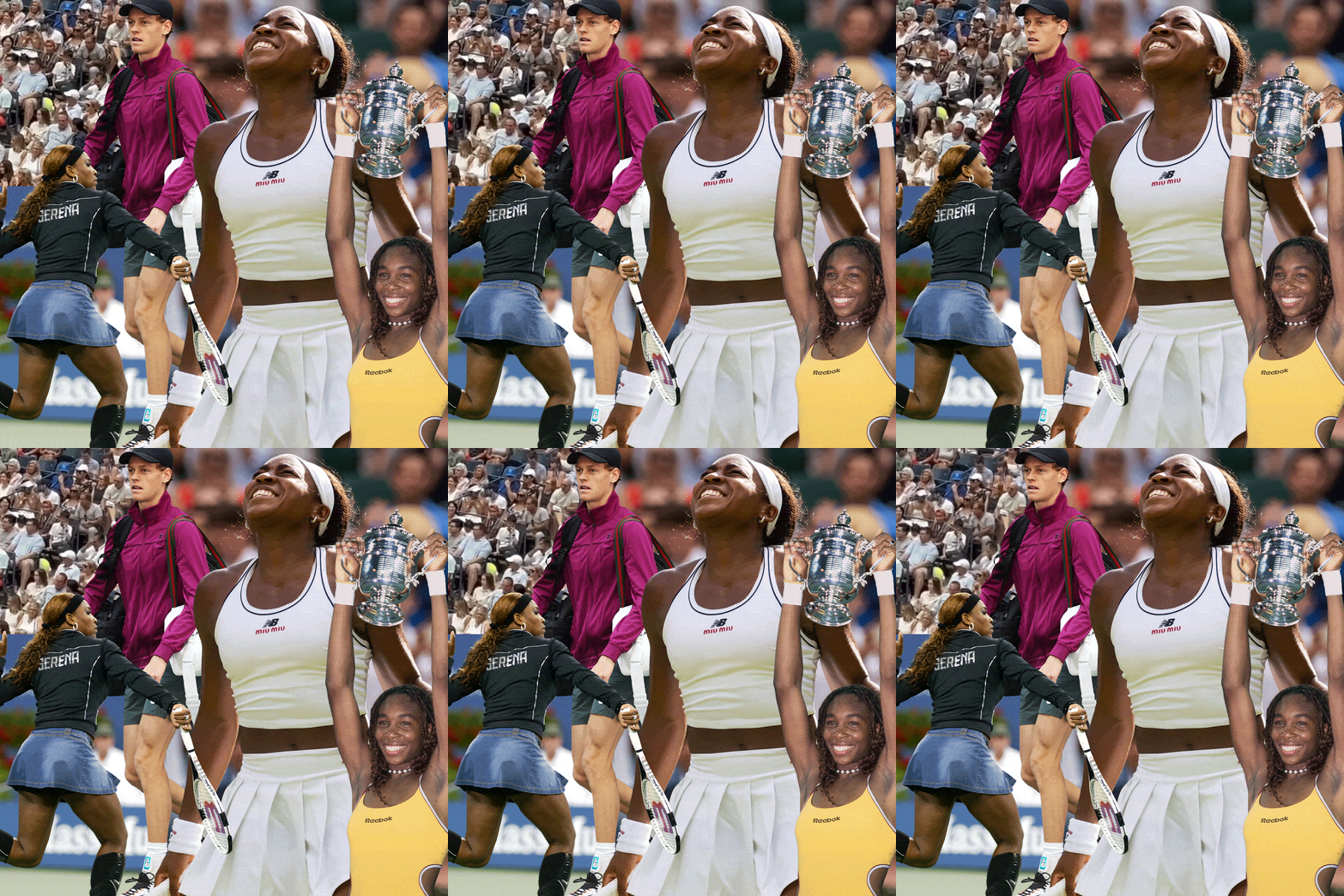
The end of summer has a particular weight to it, a quiet reluctance as the light shifts and the city settles back into its rhythm. But the US Open arrives as a reprieve, a two-week suspension of the inevitable. It is not merely a sporting event; it is a cultural punctuation mark, a final exhale of warm evenings and collective energy before the pace quickens. As the article notes, this late-August tradition draws the world to New York, and we find ourselves drawn to it for reasons that extend far beyond the baseline. The tournament becomes a stage where athleticism and aesthetics converge, where the tension of a tiebreak is matched only by the visual poetry of the crowd. It feels less like an ending and more like an elegant transition, which is precisely why it captivates us. It is a masterclass in presence, in being fully immersed in the moment, a theme that resonates deeply with the season's quiet confidence.
For the style-conscious observer, the Open is a runway as much as a court. The stories that emerge from this fortnight are often less about the final score and more about the sartorial choices, the collaborations, the moments of personal expression that unfold under the lights. We watch the matches, yes, but we also watch the way a player adjusts their collar, the way a tailored jacket fits on a spectator in the stands, the specific energy of a limited-edition sneaker released to coincide with the event. This is where the tournament transcends sport and enters the realm of lifestyle, a space where elevated footwear becomes a talking point and a fresh manicure is part of the uniform. It is the same intentionality that guides our own choices, from the subtle polish of short nails to the statement of a new pair of shoes, a reminder that style is a form of self-possession.
Our take is that this event offers a rare kind of clarity. In a world that moves at a frantic pace, the US Open demands a particular kind of attention. It rewards the viewer with moments of pure, unscripted drama, but it also offers a canvas for personal reinvention. The practical takeaway for our readers is this: treat the tournament as an invitation to curate your own atmosphere. You do not need a ticket to participate. Host a viewing gathering where the dress code is as considered as the guest list. Use the final days of summer to refine your own aesthetic, drawing inspiration from the discipline and elegance on display. The point is not to mimic, but to absorb the energy and channel it into your own expression. It is about finding that sense of calm authority in your own space, a quiet power that requires no validation.
What we would tell a friend who asks is simple: pay attention to the details. The most memorable moments are rarely the loudest. They are the quiet glances, the composed walks, the specific choice of an accessory that completes an outfit. As the tournament progresses into September, watch for the style narratives that unfold alongside the athletic ones. The true measure of the event, however, is not in who lifts the trophy, but in how the spirit of the game lingers long after the final point, influencing how we move through our own lives. The question we are left with is not who will win, but how the aesthetics of this year's Open will inform the way we dress for the transition into fall, a final, stylish nod to the summer that was.