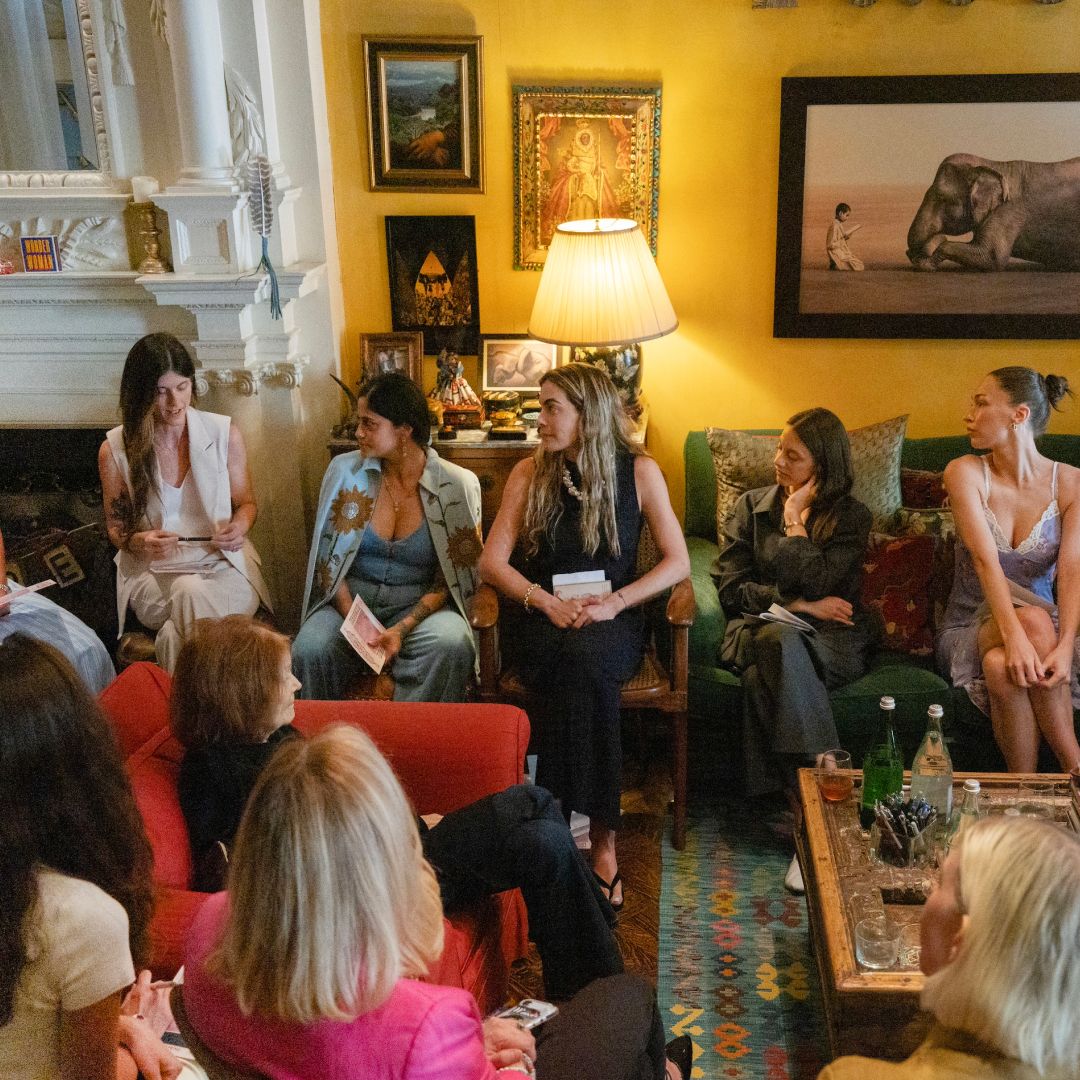
Some conversations are meant to be witnessed, not just heard. When Gloria Steinem opened her home to more than twenty endometriosis advocates and sufferers, in partnership with the health platform Looni, she did something quieter than activism often demands: she created a room where pain could be spoken without performance. We think that is the real story here, not the disease itself, but the deliberate act of gathering. Endometriosis affects ten percent of women worldwide, and yet the words that surfaced in that intimate setting were isolating, mysterious, helpless. Those are not medical terms. They are emotional ones. And they tell us something the statistics never will: that the condition has always been as much about being unheard as it is about being unwell.
This gathering matters because it refuses the usual hierarchy of suffering, where only the visible or the verifiable earns empathy. Steinem's home became a kind of living archive of testimony, a space where the personal was allowed to stay personal. We have long followed her ability to turn private experience into public meaning, and it is no surprise that her influence reaches beyond politics into style and connection. In Threads of Activism: How Gloria Steinem Inspires Modern Style, we saw how her life has shaped designers and brands, proving that her sensibility is not a phase but a foundation. Similarly, A Legacy of Presence: Honoring Gloria Steinem's Enduring Voice reminds us that her power has always been about showing up, again and again, until the room changes. This conversation about endometriosis is another iteration of that same commitment: not to solve everything, but to sit with what is real.
For our readers, the takeaway is practical, not poetic. If you live with chronic pain, or love someone who does, you already know that the medical system can fail you. What this gathering offers is permission to stop waiting for a perfect diagnosis before you demand to be believed. The women in that room did not leave with a cure. They left with the knowledge that their stories were held, and that is not a small thing. It is the beginning of reimagining what support looks like, outside of waiting rooms and referral letters. It is also a reminder that advocacy does not always require a podium. Sometimes it requires a living room.
The open question we are left with is this: how do we take the intimacy of that afternoon and translate it into structures that last? A single conversation, however powerful, cannot replace consistent care. But it can set a standard for what care should feel like. If Steinem's legacy teaches us anything, it is that presence is a form of protest, and that listening is its own kind of leadership. We will be watching to see whether Looni and the advocates who spoke turn this moment into something more permanent, a protocol for how to hold pain without flinching. Because the next woman diagnosed with endometriosis deserves more than a statistic. She deserves a room of her own.