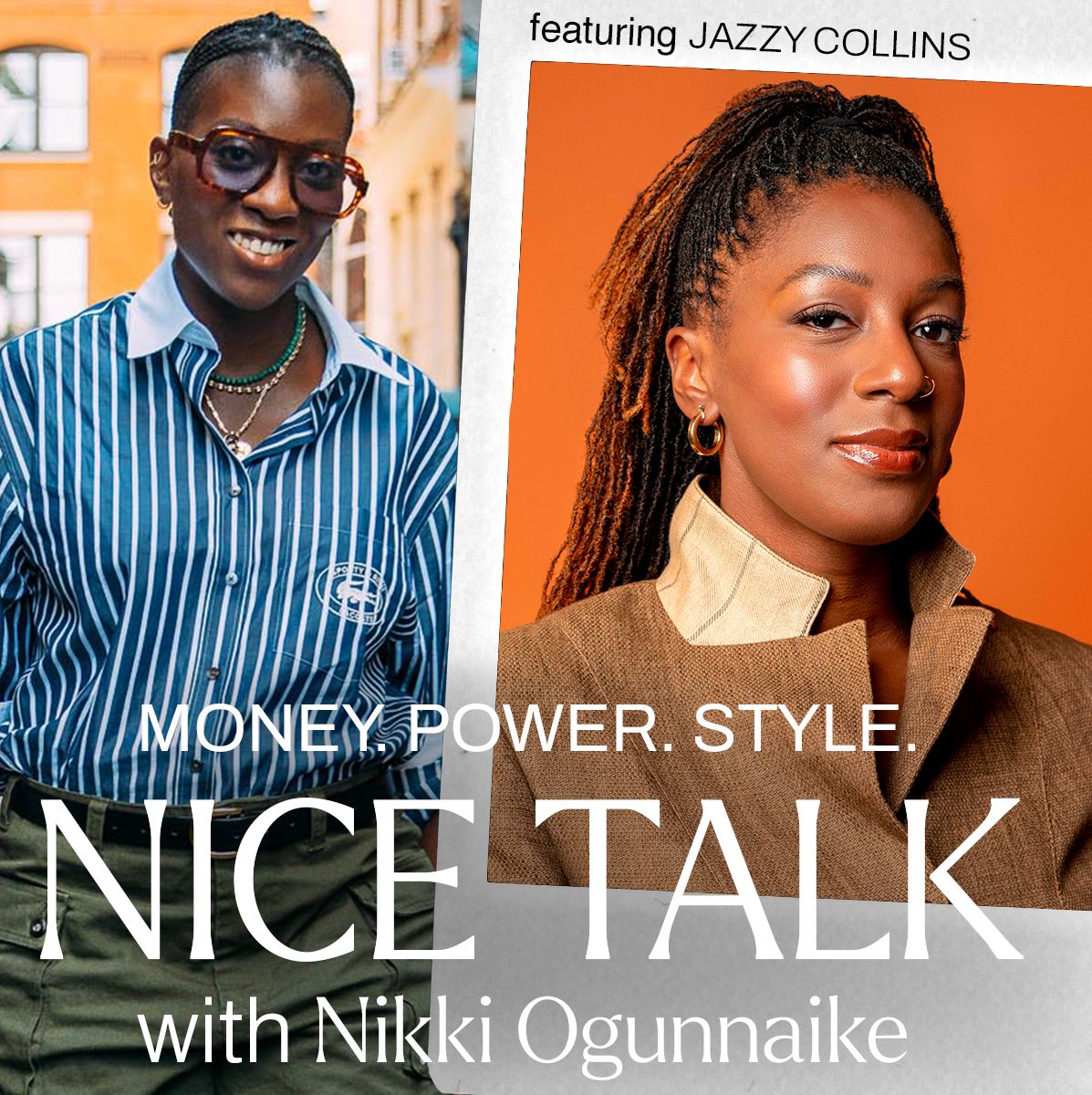
There is a particular kind of power in not having to raise your voice to be heard. Jazzy Collins understands this better than most. As the first Black person to win the Emmy for Outstanding Reality Casting, she has spent her career choosing the people we cannot look away from, the faces that make us feel something before they ever speak. Her recent conversation on the *Nice Talk* podcast, where she pulled back the curtain on how reality television actually casts its players, is not just a technical breakdown. It is a meditation on the quiet authority that comes from knowing exactly what you are looking at, and in her case, who belongs in front of the camera.
We often treat reality TV as a guilty pleasure, something separate from the refined textures of our own lives. But Collins' work reveals the opposite: casting is not about finding chaos, it is about curating emotional truth. She does not just look for people who will argue; she looks for people who are unafraid to be seen in their complexity. This is where her story connects to a thread we have been following closely, from the quiet resilience of Mariana Khalil’s ascent in *Physical 100* to the way institutions shape identity, as explored in Howard University: A Legacy Nurturing the Next Generation. Each of these narratives is about the deliberate, often invisible selection of who gets a platform, and what they choose to do with it once they have it.
What Collins demonstrates is that the casting process is less about picking a character and more about recognizing a person who is already whole. It is a lesson in discernment that applies far beyond the screen. In our own lives, we are all casting directors, curating our inner circles, our creative collaborations, and the energy we allow into our personal worlds. The practical takeaway here is not about how to get cast on a show, but about the value of being selective. You are not looking for someone to complete a story; you are looking for someone whose presence adds a new dimension to your own. Collins does not see herself as a gatekeeper, but as a weaver of intersecting fates. That is a far more elegant and intentional approach than the industry's usual noise.
If a reader asked me what to make of Collins' perspective, I would tell them this: watch how she treats the people she does not cast. In her world, a "no" is not a rejection of a person, but a recognition of timing and fit. It is a quiet confidence, the same soft power that defines the most compelling figures in any field. She is not performing authority; she is embodying it. The question her work leaves us with is not about who deserves a spotlight, but about what we are doing with the attention we already have. That is the real casting call, the one that happens every morning when we decide how to show up in our own lives. And as Collins proves, the most memorable characters are never the ones trying to be seen, but the ones who know exactly what they are looking at.