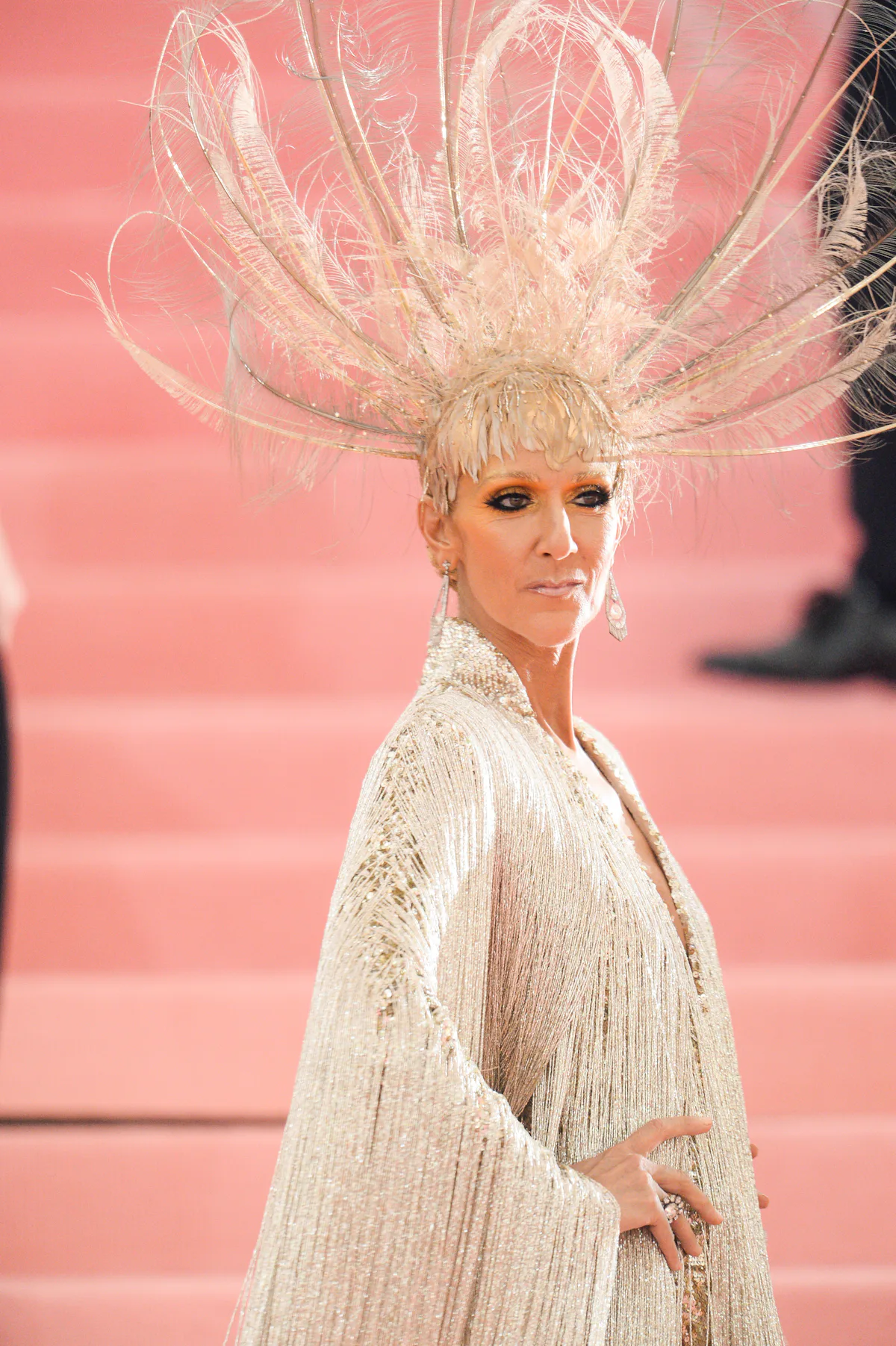
Céline Dion's fashion legacy is not about the clothes themselves, but about what they allow her to become. She has never used style as a costume; she uses it as an extension of her voice, a visual counterpart to the emotional architecture of her performances. In an era where many celebrities dress for the camera, Dion dresses for the moment, and the distinction is everything. For our readers who understand that personal style is a form of self-expression rather than decoration, her wardrobe offers a masterclass in intentionality, and the quiet power of knowing exactly who you are.
Consider the backwards John Galliano for Dior suit she wore to the 1999 Academy Awards. Two decades before deconstruction became a red-carpet staple, Dion understood that confidence is not about following the rules, but about rewriting them entirely. She wore the structure inside out, and it worked because she believed it would. This is the same energy that defines the season's most curated fashion finds, as our editors have noted in The Month's Most Curated Fashion Finds, According to Who What Wear Editors, pieces that require a wearer who brings their own presence to the garment, rather than the other way around. Dion has always been that wearer. Her sheer Grammys dress in 1997, a full three decades before the trend became ubiquitous, was not about exposure; it was about owning the gaze. She was never playing catch-up to fashion; fashion has been catching up to her.
What makes Dion's style so compelling now, particularly as she returns to the stage after her health-related hiatus, is the continuity of her vision. She has always loved volume, structure, and ornate detail, from the Swarovski crystal tiara at her 1994 wedding to the sculptural mousseline and organza Dior dress worn during her 2026 Paris residency. Her maximalism is not chaos; it is discipline. Every dramatic sleeve, every feathered headpiece, every monochromatic look is chosen with the same precision she brings to a held note. This is not frivolity. This is the outward expression of an inner world that is deeply considered. It echoes the same principle behind Five lip liners that define the season's quiet allure, the idea that the most impactful statements are often the ones made with restraint and specificity. Dion's maximalism is, paradoxically, a form of quiet luxury: she never shouts, but the room always listens.
Her street style reinforces the same truth. The hot pink Peter Do ensemble she wore in New York in 2020, the J.Mendel leather pants and fur coat in Paris in 2013, these are not afterthoughts. They are performances in their own right, proof that she treats every public appearance as an extension of her artistry. Most telling is her access to fresh-off-the-runway fashion: the deconstructed Givenchy suit from the Spring/Summer 2027 collection, worn just days after its debut. Fashion houses do not lend to those who merely wear clothes. They lend to those who understand the narrative. Dion understands that a garment is not finished until someone inhabits it with intention.
The question her career leaves us with is not about trends or labels, but about presence. As she continues her Paris residency and her quiet comeback, we are watching a woman who has never separated her voice from her image. The takeaway is deceptively simple: style is not about what you put on. It is about what you bring to it. The detail to watch is whether the next generation of performers will understand that the stage is not the only place a performance happens. Dion has proven that the street, the red carpet, and even the recovery room can be venues for the same kind of artistry, if you are brave enough to show up fully dressed in your own truth.