There is something profoundly moving in the way Charles Spencer speaks about rowing a cheap plastic boat across Oval Lake to visit his sister's grave. It strips away the crown, the palace, the global spectacle of Diana's life, and leaves us with something far more intimate: a brother who paddles over with one oar because a bridge would invite the world in. This is not a story about grief as performance; it is about grief as a private, recurring ritual. And in an era where we are constantly invited to watch royalty from the outside, whether through Royal Welcome Expires for Sarah Ferguson at Andrew's New Residence or curated behind-the-scenes tours like Step Into Royal Secrets With Paul Burrell's Curated British Escape, Spencer's quiet confession feels like a deliberate refusal of spectacle. He chose an island, a maze, a rowboat. He chose peace over access.
What strikes us most is the intentionality of the space itself. The island is not merely a burial plot; it is a landscape designed for transition. Spencer describes a small, overgrown maze that one must walk through to reach the graveside, a passage that feels like "shedding the real world." This is not an aesthetic choice for the sake of beauty, it is a psychological one. The maze forces a slowing down, a shedding of noise, before one can arrive at a place of communion. It mirrors the very quality we admire in those who live with quiet confidence: the refusal to let the outside world dictate the terms of one's inner life. For our readers, the takeaway is this: the most sacred spaces are not the most accessible. They require effort, intention, and a willingness to leave something behind.
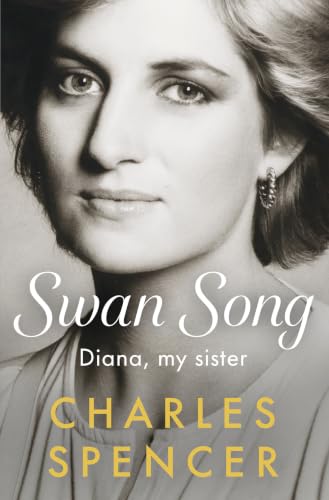
Spencer's book, *Swan Song: Diana, My Sister*, is framed as a 350-page version of the eulogy he delivered at her funeral, and that framing matters. He is not writing a biography of a princess; he is writing a memoir of a sibling. The distinction is everything. He notes that losing a sibling means losing "part of your childhood forever," and he reflects on the peculiar loneliness of being the one who shared that childhood. This is not the language of a public figure protecting a legacy; it is the language of a man who still feels the absence in a deeply personal, almost physical way. The eulogy gave him a strand to pull, and the book follows it. For those of us who follow stories of royalty and remembrance, this is a reminder that the most resonant tributes are rarely the grandest ones. They are the ones that refuse to perform.
One detail lingers: the broken bridge rule for Nelson Mandela. Spencer writes that Mandela could not manage the boat, so the bridge was used just once, for a man who had walked a long road of his own. It is a small, specific moment, but it reveals something essential about Spencer's approach to his sister's resting place. The rule was not rigid; it was thoughtful. Privacy was paramount, but humanity came first. As we watch other royal figures navigate estates, separations, and public narratives, we wonder how many of them are building bridges, and how many are quietly rowing boats. The question Spencer leaves us with is not about Diana's legacy, but about our own: what kind of space are we creating for the people we love, and who are we willing to let cross it?