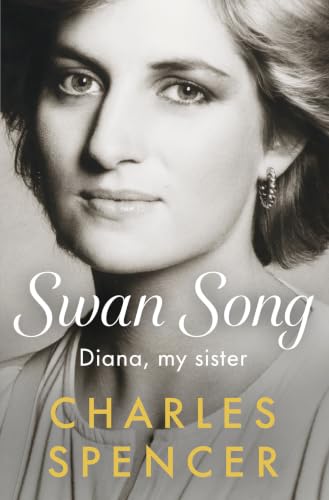
There is something quietly devastating about watching a man spend decades defining himself against a legacy he never asked for, only to realize the world will always see him as a footnote to someone else's story. Charles Spencer's latest reflection on the reception of *Swan Song: Diana, My Sister*, noting the stark difference between American and British reactions, feels less like a promotional anecdote and more like a confession. He is not simply selling a book. He is trying to reclaim a narrative that has never fully been his to hold.
What strikes us most is the weight he still carries. Spencer has spent years as the keeper of his sister's memory, the man who delivered that searing eulogy, the brother who watched a private tragedy become public property. That the American audience responds differently, perhaps with less institutional reverence, perhaps with more emotional distance, speaks to something we have observed in our own reporting on Inside Diana's Secret World of Intrigue and Quiet Rebellion: Diana was never just a person. She became a symbol, and symbols belong to whoever interprets them most passionately. For Spencer, that means his version of her is constantly competing with the world's version.
This is the quiet weight of legacy, a theme that runs through the royal family like a hidden current. We recently examined The Quiet Confidence Princess Kate Inherited From the Queen, and the contrast is instructive. Kate steps into an inherited role with visible ease, building her own presence within the structure. Spencer, by contrast, is still negotiating the shadow of a role he never chose, brother to a saint, custodian of a story that refuses to end. One inherits confidence; the other inherits a wound that keeps reopening with every book tour, every interview, every question about Diana.
Our take is this: Spencer's frustration is not really about geography or publishing markets. It is about the impossibility of controlling how you are remembered when your most famous association is someone else's tragedy. The practical consequence for readers is a reminder that legacy is not something you build, it is something others filter for you. Spencer can write a dozen books, but the headline will always lead with Diana. That is not cruelty from the media; it is the nature of a story too big to be contained by one author.
The specific detail we are watching is whether Spencer will eventually stop trying to correct the narrative and simply let it exist alongside his own. That moment, if it comes, will be far more interesting than any book tour.