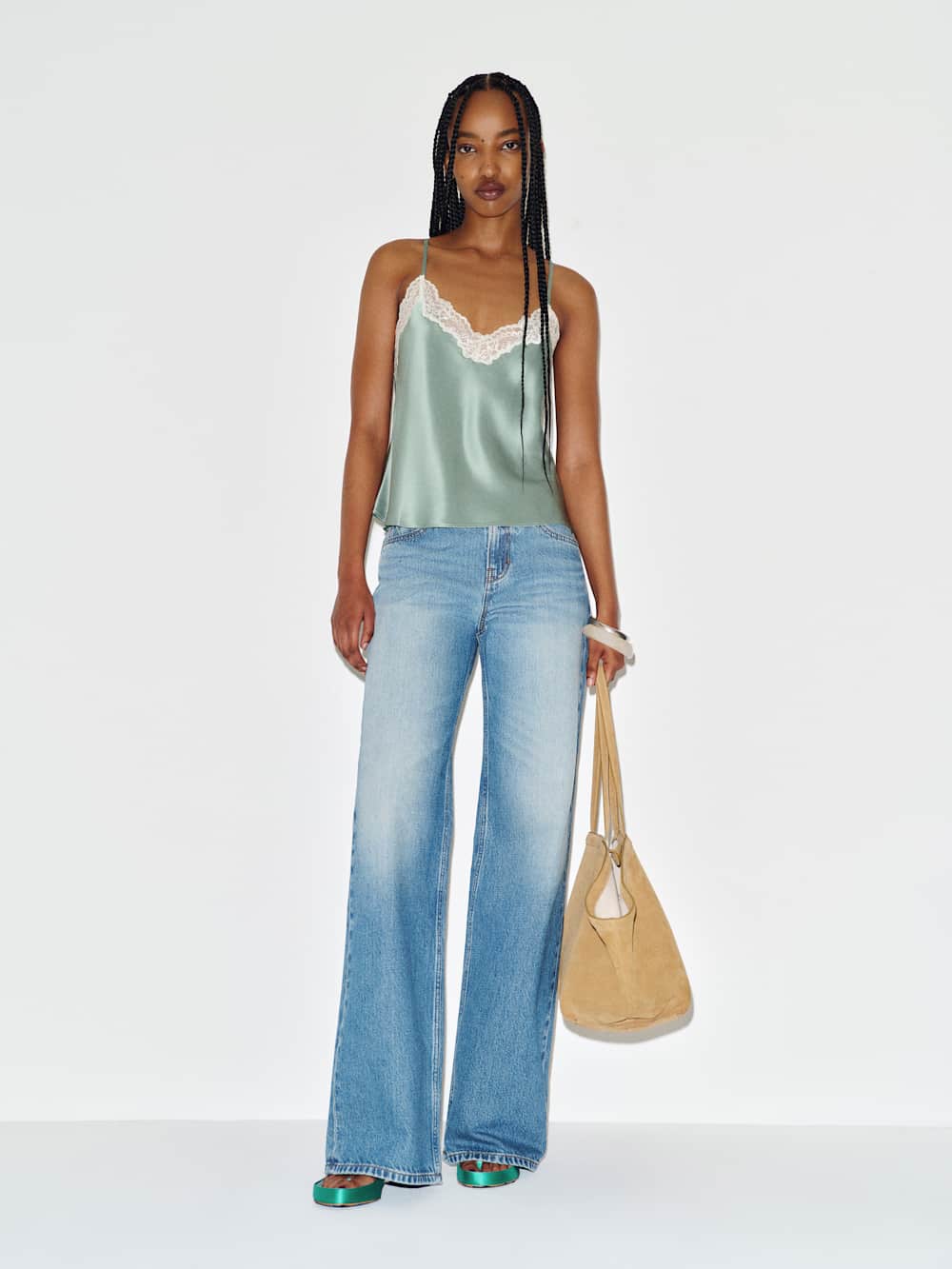
Color has a way of finding us before we find it. The article's premise, maximum impact, minimal effort, is one we've long believed in, but it's the quieter truth beneath that phrase that feels worth sitting with. As editors, we watch styling hacks cycle through seasons like weather fronts: the French tuck, the waist belt, each promising to solve an outfit dilemma with a single gesture. But what lingers isn't the trick itself. It's the intention behind it. A spectrum, curated, asks us to slow down and choose with clarity rather than accumulate without thought. That's not a trend. That's a practice.
This is where the piece resonates most deeply with the ethos we return to again and again, one that feels aligned with The October Edit: The Quiet-Luxury Staples Defining the Season. That edit wasn't about loud newness; it was about pieces that hold their own presence, a Gucci bag that doesn't need to announce itself, a reimagined barn jacket that feels like a quiet nod to permanence. Color, when approached the same way, stops being decorative and becomes intentional. A single saturated tone, worn head to toe, can do more than a dozen prints layered in haste. It asks a question: what do you actually want to communicate today? Not to anyone else, but to yourself. That's the emotional thread we keep pulling, one that also runs through The Quiet Power of Sustainable Style: A Survey on Mindful Fashion Choices, where mindfulness isn't a buzzword but a daily filter for what earns a place in your wardrobe. Color, in this light, is just another form of self-respect.
So what do we tell a reader who asks us about this piece? We tell them that the takeaway isn't about memorizing a rule or chasing a specific shade. It's about noticing which colors make you feel more yourself, and letting that instinct guide your edits. When a look feels overwhelming, strip it back. Choose one focal point, a wash of terracotta, a flash of cobalt, and let everything else fall away. The confidence comes from restraint, not from volume. And if you're unsure where to start, look at how a single accessory can anchor an entire mood, much like Katie Holmes's Milan look found quiet perfection in a single bag. That's not a coincidence; it's a philosophy.
What we're really watching, then, is a shift in how we see color itself. Not as a risk, but as a form of emotional vocabulary. The article's most lasting impression isn't the hacks it references; it's the permission to edit your own spectrum. The practical consequence? Your closet becomes smaller, more deliberate, and infinitely more expressive. The open question we'll be sitting with is whether we can carry that same curation into the rest of our lives, choosing presence over noise, one deliberate shade at a time.