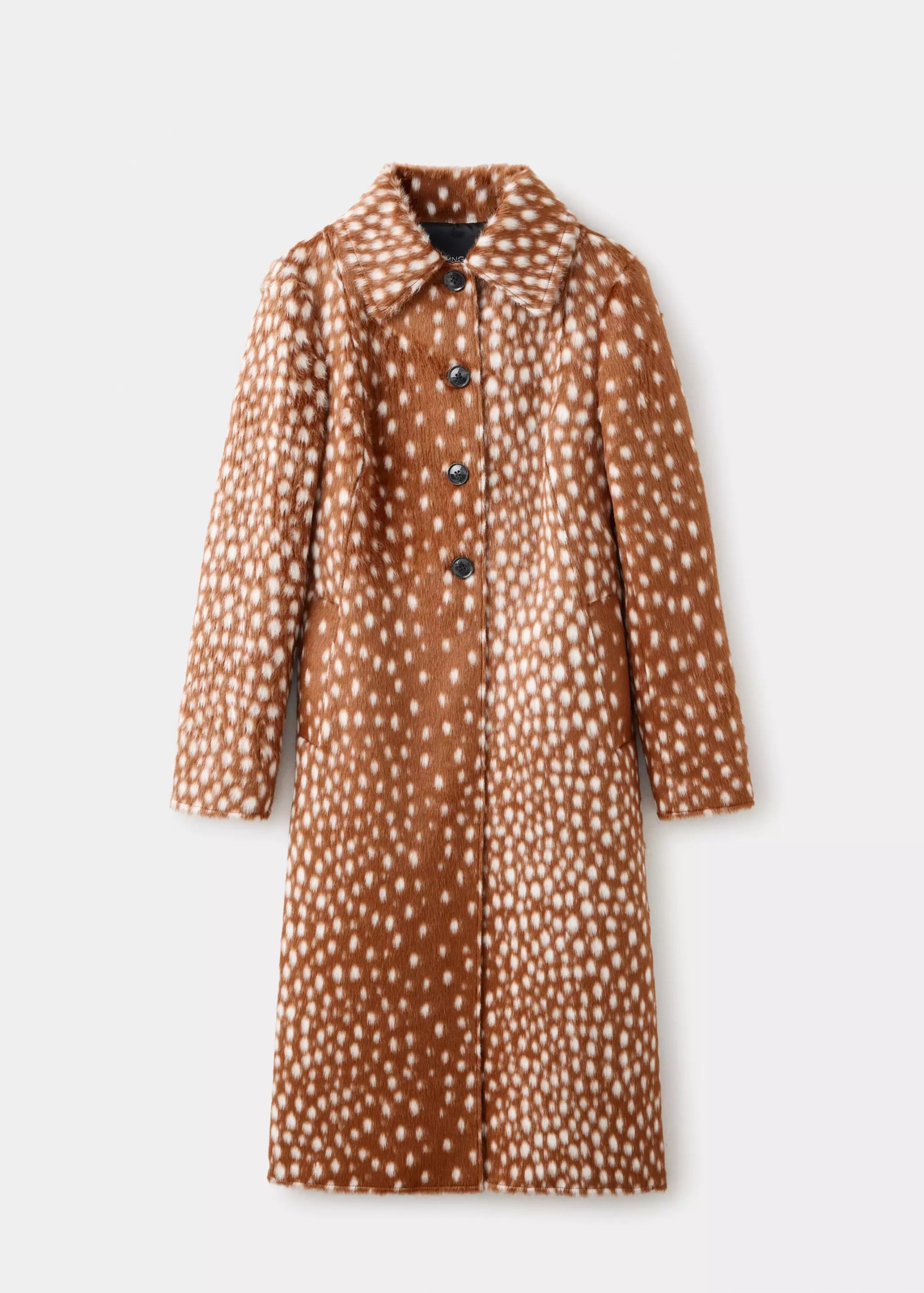
There is something quietly thrilling about a trend that arrives not with a roar, but with a soft, spotted step. Deer print is giving leopard spots genuine competition for fall and winter 2026, and our reaction is simple: it was time. Animal prints have long served as a shortcut to visual interest, but the fawn motif feels different, gentler, more refined, and far more suited to the kind of wardrobe that prizes atmosphere over volume. This is not a novelty pattern destined for a single season of costume; it is a textured neutral, and that is precisely why it works.
The best thing about deer print is how effortlessly it integrates into the quiet luxury ethos we have long admired. Spots in caramel and cream read as organic rather than aggressive, allowing a coat or handbag to feel expensive without performing for attention. Mango's long Bambi faux-fur coat and Loulou de Saison's pony-effect pumps prove that the motif translates beautifully across textures, while St. Agni's fawn minimal jacket keeps the silhouette clean and intentional. Even Adidas has joined the woodland era with spotted Samba sneakers, a detail that suggests this trend has genuine staying power beyond the runway. The key is to treat deer print exactly as you would leopard: as a wardrobe staple, not a statement that demands special styling. Throw a spotted coat over pleated trousers and a cashmere sweater, or let a fawn-print shoulder bag add personality to a simple weekend look. That ease is the point.
This shift toward softer, more introspective prints echoes something we have been noticing across fashion this season. In The Quiet Beauty in a Sweater’s Imperfections, we explored how a thrifted cashmere piece can carry more emotional weight than a pristine new one, a reminder that value lives in feeling, not flash. Deer print operates on a similar wavelength: it does not shout for approval. It asks to be lived in. Similarly, Sarah Sherman Samuel on intuitive dressing and the wardrobe piece she rediscovered speaks to the power of trusting your own instincts over external noise. That same intuitive confidence applies here. You do not need a guide to styling deer print; you simply need to wear it as if it has always been in your closet.
What makes this trend worth watching is not its novelty, but its restraint. Unlike zebra or cheetah, which can dominate a silhouette, deer print whispers. It invites a second look rather than demanding the first one. Our specific takeaway is this: the fawn print is not about being seen, it is about being felt. For the woman who already knows her own taste, this is the animal print that requires no explanation. The real question is not whether to adopt it, but which piece will feel most like an extension of your own quiet confidence.