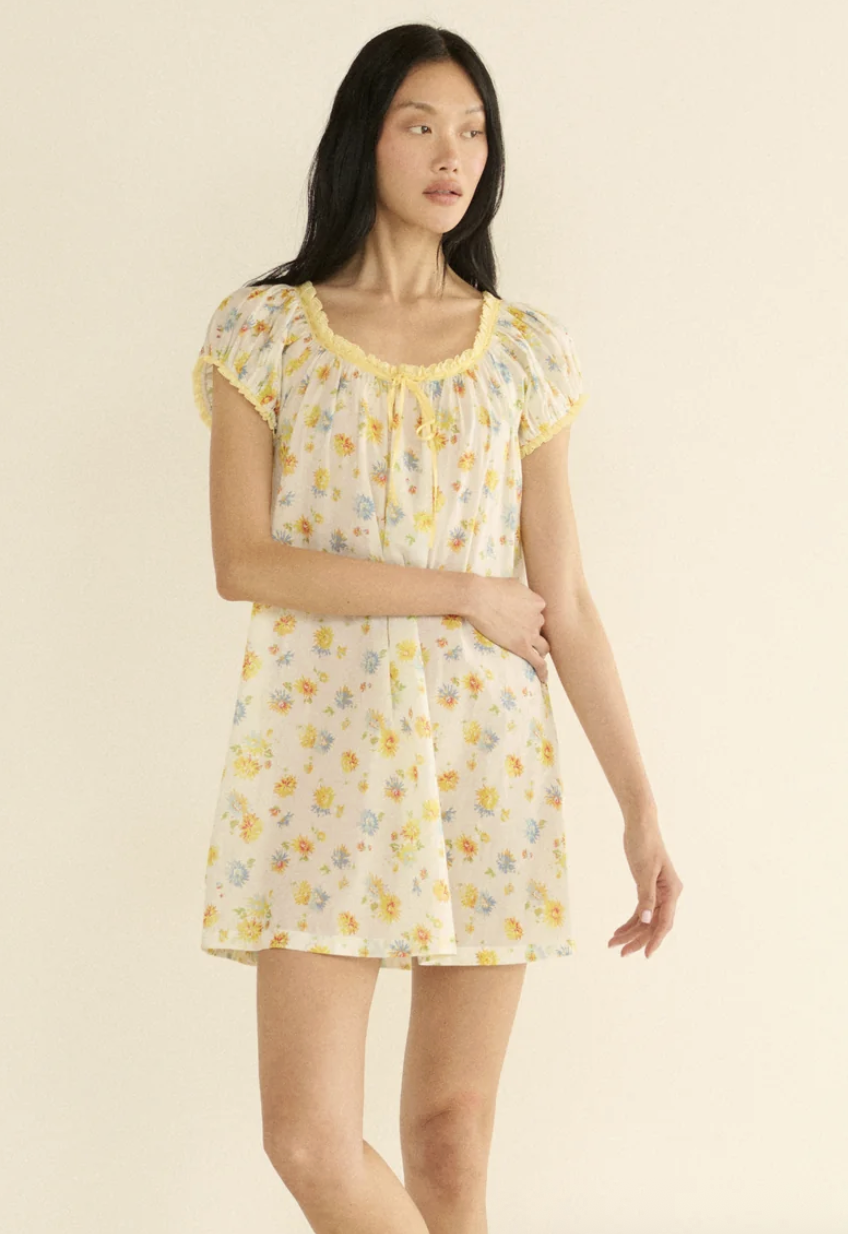
Somewhere between the boho-girl ease of the L.A. label and the polished restraint of quiet luxury sits the Julia Dress. It is the kind of piece that does not announce itself, yet it lingers. For Bella Hadid, who wore it in a recent post, the choice feels less like a trend decision and more like an instinct. The floral print carries a softness, the babydoll silhouette a deliberate girlishness that never tips into costume. It is exactly the sort of styling that makes you pause, not because it is loud, but because it feels right. This is the same understated authority we have been tracking all season, from The October Edit: The Quiet-Luxury Staples Defining the Season to the pieces that earn their place in a rotating wardrobe. The dress is not a statement; it is a mood.
What draws us to this particular piece is not the label or the price point, though both are worth noting. It is the way the dress holds a paradox. It is floral yet minimal, feminine yet grounded, romantic yet completely composed. In a summer where dressing well often means dressing quietly, this feels like a quiet rebellion against the noise of over-styling. We would tell any reader who asked: if you are searching for a piece that does the work for you, this is it. It asks nothing of you but presence. The cut skims rather than clings, the print does the talking, and the under-$300 price means you can invest without the weight of expectation. It is the kind of garment that makes you look like you have somewhere to be, even when you are just moving through your own day.
This is where the Julia Dress connects to a larger conversation we have been having with our readers. We have always believed that style is not about volume but about discernment. The Quietly Exceptional Finds That Earned Their Devoted Following are those that reward a second look, and this dress earns that attention. It is not about chasing what everyone else is wearing; it is about recognizing what feels like you. The babydoll shape, often dismissed as juvenile, is reclaimed here as a study in contrast. It is romantic without being precious, soft without being weak. That is the tension we love, and it is the same tension that defines a woman who knows herself. She does not need to explain her choices; she simply wears them.
The detail to watch, then, is not the floral or the silhouette, but the way the dress moves. Does it sway when you walk? Does it catch the light in a way that feels intentional? These are the questions that matter. The Julia Dress is not a passing moment; it is a reminder that true style is a quiet form of self-possession. We would tell our reader this: when you find a piece that makes you feel like yourself, you do not ask permission to wear it. You simply do. And that is the point we keep returning to, season after season. It is not about the dress. It is about the woman who wears it, and the calm authority she carries with her.