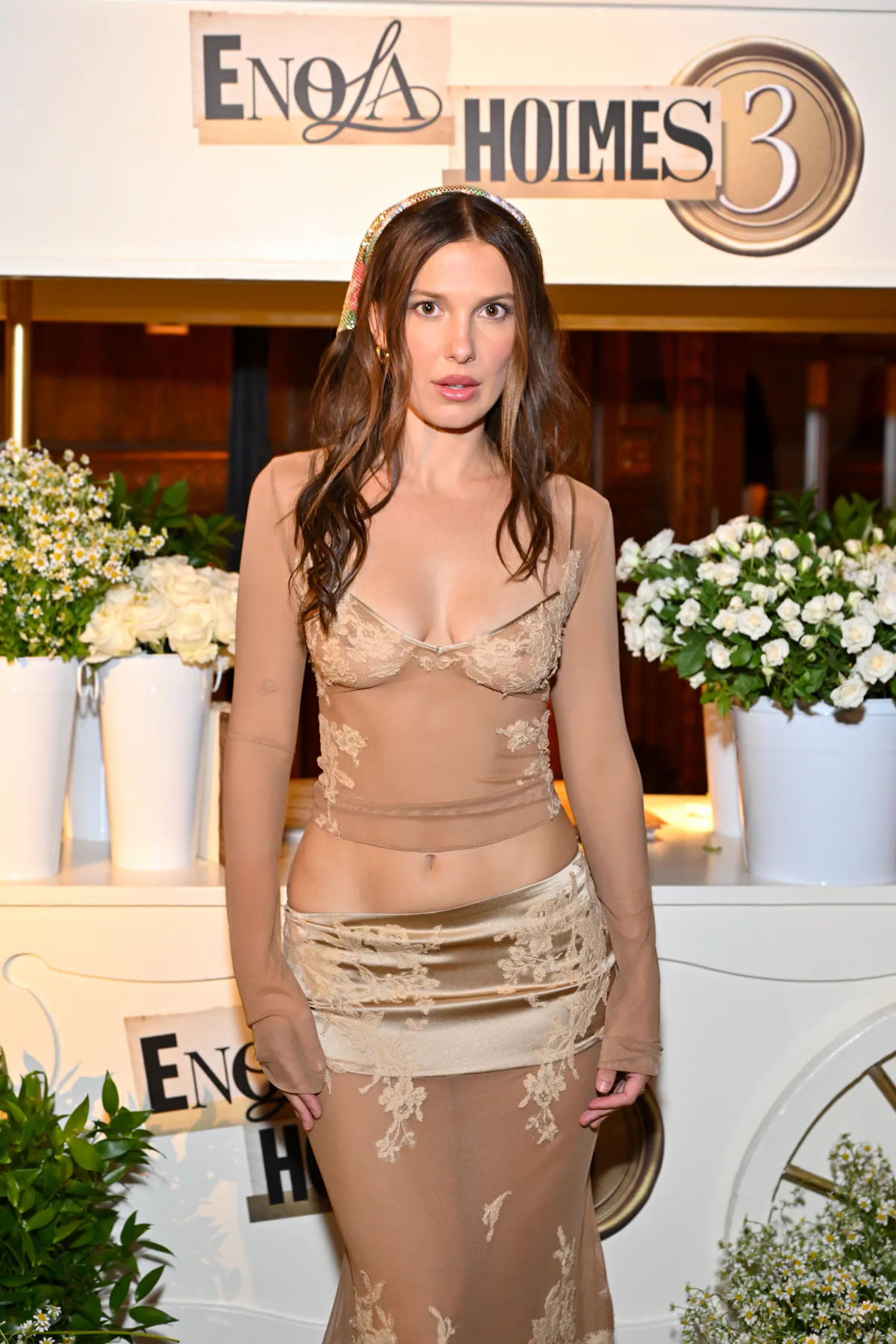
Millie Bobby Brown’s recent appearance on *The Tonight Show Starring Jimmy Fallon*, showcasing a vintage Roberto Cavalli top styled as a dress, feels particularly resonant within the current fashion landscape. It’s a moment that speaks volumes about the cyclical nature of trends and the increasing desire for authenticity and individuality in a world saturated with fast fashion. The resurgence of Y2K aesthetics is undeniable, as evidenced by similar looks from icons like Sarah Jessica Parker [Sarah Jessica Parker's Latest Summer Outfit Is Very Carrie Bradshaw], but Brown’s approach feels less like a blatant revival and more like a thoughtful reimagining. The effortless chic of the look, paired with the inherent sustainability of vintage, positions it as a stylish and conscious choice – a move away from the disposable culture often associated with the original Y2K era. Even amidst the frenzy of sales events like Prime Day [Prime Day Ends Tonight—Grab These Editor-Approved Fashion Deals While They’re Still on Sale], opting for a pre-loved piece signals a shift in priorities for many consumers.
The genius of Brown’s styling lies in its simplicity. Transforming a top into a dress is a masterclass in resourcefulness and confidence, demonstrating how a single garment can be elevated through creative styling. It's not about the expense or brand recognition, but about the wearer’s ability to express their personal style and make a statement. This resonates with an audience increasingly valuing self-expression over overt displays of wealth. The Cavalli piece itself, with its distinctive print, doesn't scream for attention, but rather exudes a subtle luxury and a sense of timelessness. This aligns perfectly with the quiet luxury aesthetic that’s gaining traction, a movement that prioritizes quality, craftsmanship, and understated elegance. It’s a far cry from the logo-mania that characterized much of the original Y2K era, and presents a more sophisticated and enduring interpretation of the trend.
Beyond the immediate visual appeal, Brown’s choice speaks to a broader cultural shift. The rise of vintage and secondhand shopping isn’t simply a trend; it’s a response to growing environmental concerns and a desire for more sustainable fashion practices. Consumers are becoming more discerning, seeking out pieces with history and character, rather than chasing fleeting trends. Furthermore, the butterfly cut [Growing Out Your Bob This Summer? The Butterfly Cut Is the Flattering Style That Makes Regrowth Effortless] highlights a similar sentiment – embracing and working with what you have, rather than striving for a manufactured ideal. Brown's look embodies this philosophy, showcasing how pre-existing pieces can be transformed into something entirely new and uniquely personal. It's a lesson in mindful consumption and creative self-expression.
Ultimately, Millie Bobby Brown’s vintage Roberto Cavalli moment isn’t just about a single outfit; it’s a reflection of a larger conversation about fashion’s role in a changing world. It’s a demonstration of how to embrace nostalgia without sacrificing individuality, and how to find beauty and style in unexpected places. The enduring question now is: will this signal a full-scale embrace of vintage styling as a core element of modern fashion, or will it remain a fleeting moment of stylish inspiration? One thing is certain: the demand for authenticity and conscious consumption within the fashion industry is only going to continue to grow.