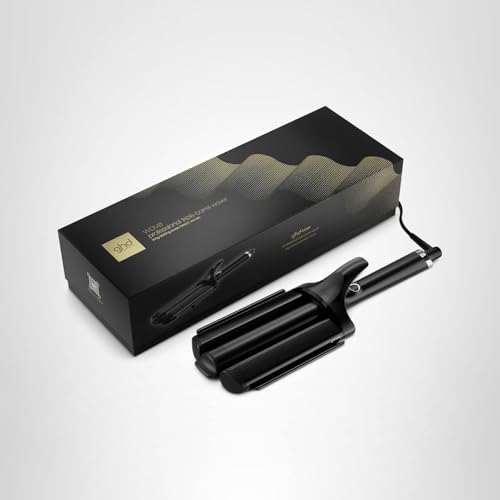
There is a particular kind of woman who does not chase the sun; she lets it find her. She understands that true allure is not in the doing, but in the being. So when I read a story about the humble hair waver, the tool we once associated with teenage experiments and the sharp, unforgiving crimp of the early 2000s, I felt a quiet sense of recognition. The article suggests that this tool, once relegated to the back of the drawer, has finally found its place in a more refined beauty vernacular. It is no longer about volume for the sake of volume, but about a texture that suggests you have just emerged from the sea, or perhaps from a state of deep, uninterrupted thought. It is the difference between a hairstyle and a state of mind.
This evolution mirrors a larger shift we are seeing across the editorial landscape, one that favors intention over excess. Consider the Short nails, elevated style: Fall's manicure mood, which argues that restraint can be the ultimate statement, or the Quiet Confidence: The Most Elegant Celebrity Pixie Cuts, where the boldest choice is often the one that requires the least fuss. There is a through-line here, a thread of self-assured calm that connects the way we style our hair, our nails, and our entire approach to presentation. The mermaid wave, in this context, is not about looking like you tried; it is about looking like you have better things to do than try. It is the physical manifestation of that inner quiet confidence, a way of saying, "I am comfortable in my own skin," without ever having to say it aloud.
For our reader, the one who is building a life that feels as good as it looks, this is not just a beauty tip; it is a permission slip. It is permission to step away from the overwhelming noise of trends that demand too much and to embrace a single, effective gesture that works with your natural rhythm. The practical takeaway is simple: invest in a tool that respects your time and your aesthetic. We would tell you to look for a waver that creates a soft, lived-in bend rather than a defined crimp, and to treat the styling process as a ritual, not a chore. The article's honesty about the tool's unsexy past is precisely why it resonates now. It acknowledges the memory of the middle school phase, then gently moves past it, suggesting that we are all allowed to reinvent ourselves, especially as we edge toward the final months of summer. This is the same energy as the Elevated Style: Defining Fall with Intentional Details, where the focus is on curated pieces that speak to a personal narrative rather than a seasonal checklist.
The most compelling detail in the original piece is the acknowledgment that we are nearing the end of summer, a time when most trends start to feel tired and repetitive. The mermaid glow, then, is the antidote to that fatigue. It is a final, beautiful exhale before the turning of the season. The question we should be asking ourselves is not whether the wave is on-trend, but whether it reflects the woman we are becoming. If the answer is yes, then the tool is irrelevant; the intention is everything. The specific consequence to watch for is the moment you catch your reflection and do not see a style, but a disposition. That is when you know you have stopped chasing the wave and have simply become it.