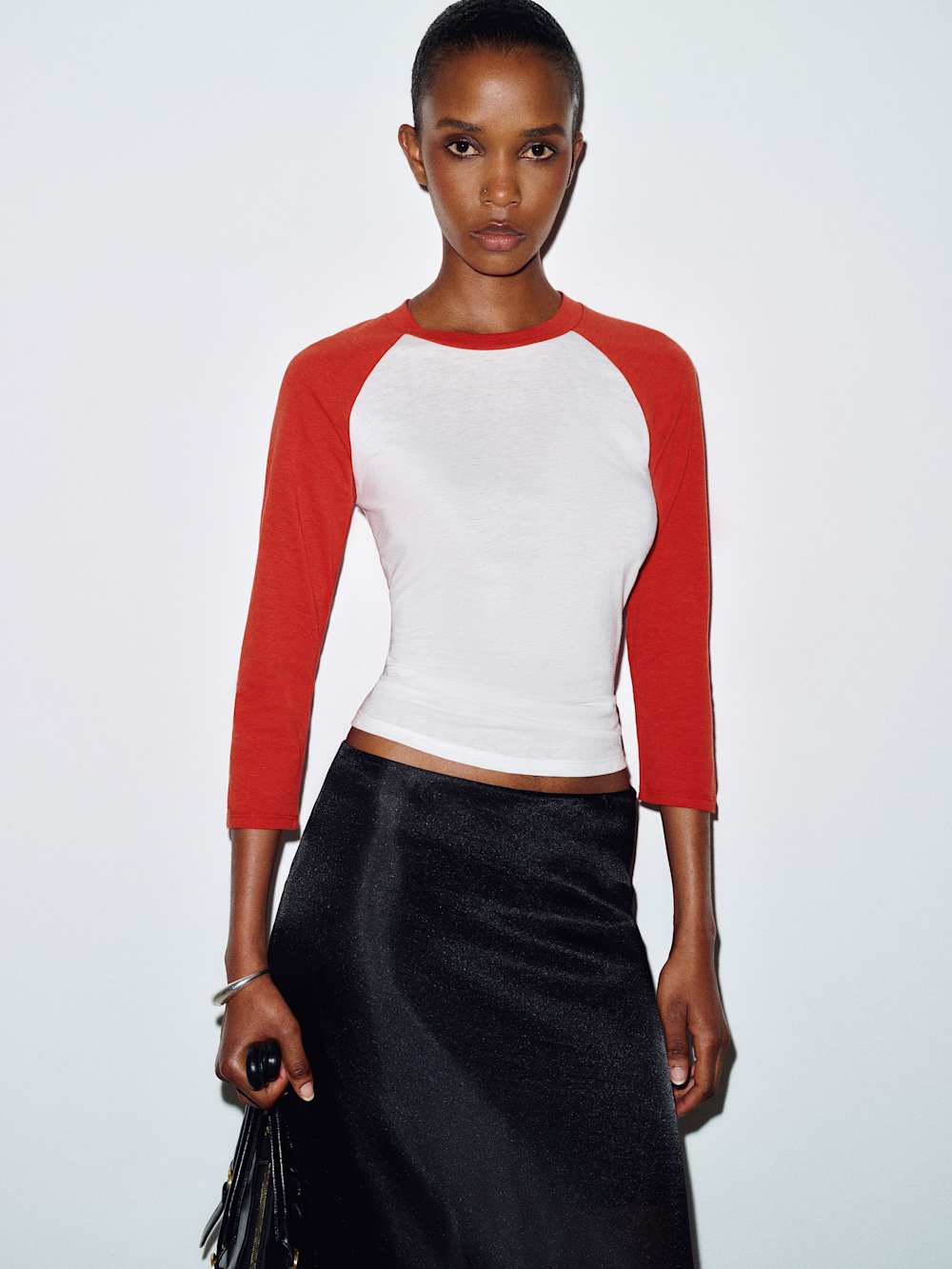
There is a particular pleasure in watching a familiar silhouette shed its context. The baseball tee, for so long the uniform of the casual and the athletic, has been pulled into a quieter orbit. It is less about the stadium and more about the stillness of a considered morning. The reimagining strips away the sporty connotations and leaves behind a shape that feels almost sculptural in its simplicity. We are not looking at a jersey anymore; we are looking at a study in proportion, a piece that asks for nothing more than to be worn well. This is not a trend that announces itself. It is a shift in temperature, a lowering of the volume.
This evolution feels less like a departure and more like a return to a certain kind of thinking, one that aligns with the quiet-luxury staples defining the season. We have watched the conversation move from logos to lines, from loud to lived-in. The same instinct that elevates a tailored ease over a structured bodysuit, as seen with J.Lo trading her signature look for something more relaxed, is at play here. It is the understanding that confidence does not require volume. The appeal is in the restraint, in the choice to let the fabric and the fit do the speaking. When a garment is this understated, the wearer becomes the most interesting element in the frame. It is a lesson in editing, in knowing what to leave out.
For our reader, the practical takeaway is about recalibrating the eye. You do not need a new wardrobe; you need a new perspective on the pieces already in rotation. The baseball tee becomes a canvas, not a costume. Pair it with tailoring for a contrast that feels current, or let it sit against silk for a study in texture. The point is not the garment itself, but the intention behind it. We would tell anyone asking that this is not about following a specific look, but about adopting a posture. It is the difference between wearing something and wearing it well. The piece asks you to be present, to move with a certain grace, to understand that true style is often a matter of what you choose not to do.
The most compelling detail to watch is how this translates beyond the celebrity sighting. If the mainstream adopts this with the same subtlety it is being presented, we may see a broader acceptance of the idea that the quiet-luxury shade replacing classic neutrals is not just a color, but a mindset. The question is not whether the baseball tee will be worn, but whether we can resist the urge to over-style it. The future of this moment depends on our ability to leave it alone. The real statement is the one that is never made out loud.