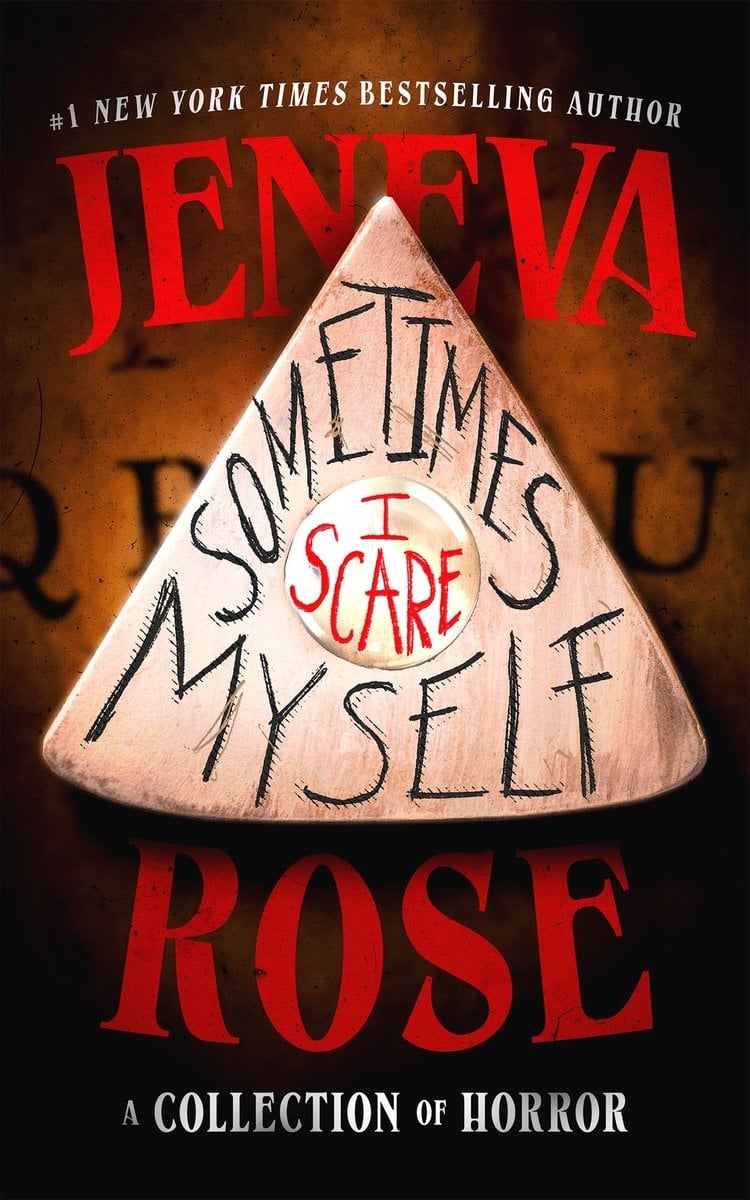
There is a particular kind of power in admitting that you are not entirely comfortable with yourself. We spend so much time curating the light, the soft focus, and the composed exterior that we often forget the tension that makes a person interesting. Jeneva Rose, crowned the "Queen of Twists," understands this implicitly. Her forthcoming novel, *Sometimes I Scare Myself*, leans into that discomfort, suggesting that the most compelling thrillers are not just about external danger, but the quiet, unsettling realization that we might not know our own minds. It is a theme that resonates with the modern woman who is tired of performing perfection and is instead ready to acknowledge the depth of her own complexity.
This introspective pull mirrors a shift we are seeing across aesthetics and style. The same quiet confidence that allows a woman to wear a short, elevated manicure without apology or to embrace the sharp, clean lines of a celebrity pixie cut is the same self-assurance that allows a reader to sit with the darker corners of a narrative. It is not about being afraid; it is about being honest. Just as we are seeing a move toward subtle shifts with lasting impact in our wardrobes, there is a parallel movement in literature away from purely escapist fantasy and toward a more grounded, psychologically complex reality. It is a form of elevated style for the mind, where the cut of the prose is sharp, and the emotional palette is rich with shade.
Our take is that this book represents a necessary evolution in the mystery-thriller space, one that aligns perfectly with a cultural appetite for authenticity over performance. For our readers, this is more than just a reading recommendation; it is an invitation to stop fearing the shadows within. The practical application is simple: give yourself permission to be a contradiction. You can be soft in your femininity and formidable in your intellect. You can curate a beautiful home and still have a stormy inner life. Rose's work validates that duality, and in doing so, it makes the act of reading feel less like an escape and more like a homecoming to the parts of yourself you usually keep hidden. It is the literary equivalent of that calm, knowing look that says you have seen things, and you are still standing.
We would tell a reader who is on the fence that this is the book to watch for precisely because it does not offer easy answers. The specific detail to watch for is how the author navigates the protagonist's unreliable perception, as that is where the true craftsmanship lies. It is not about the plot twist for shock value, but about the twist that forces you to re-examine your own reactions. As you turn the final pages, the question that lingers is not "who did it," but rather, "what am I capable of feeling?" That is the quiet, thrilling terror that makes a story stay with you, long after the lights are off. And honestly, that is the most luxurious feeling of all.