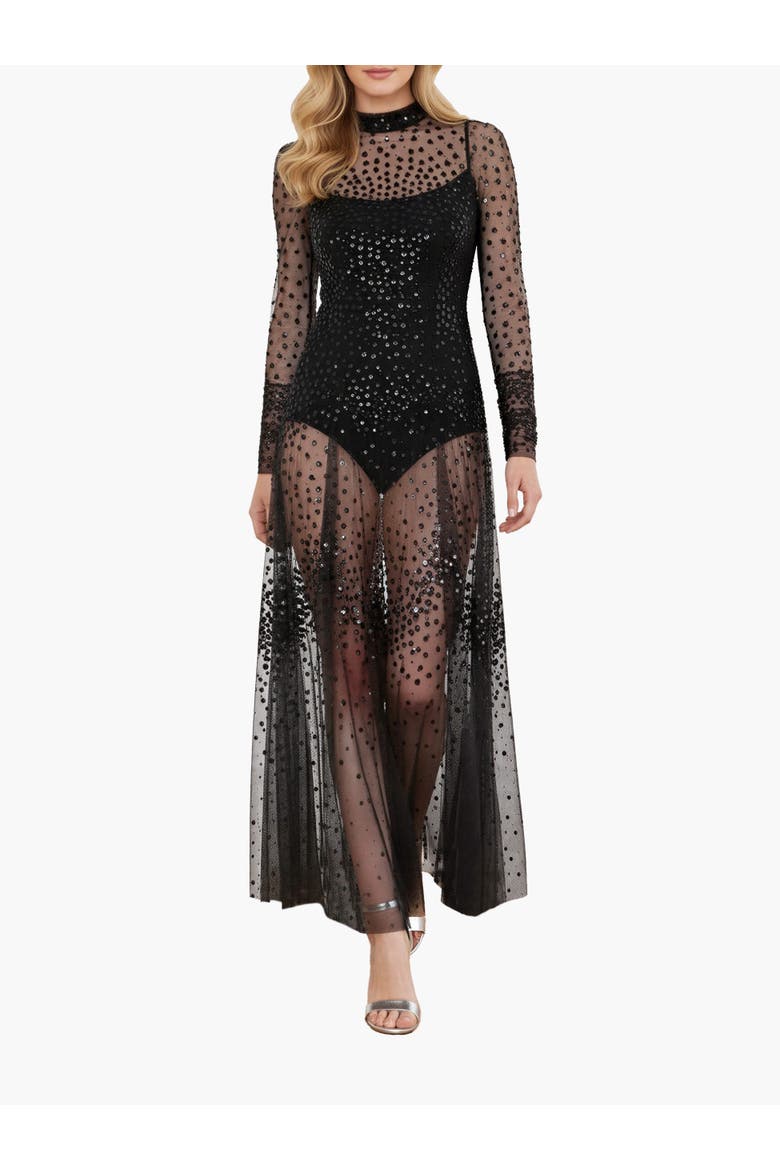
There is a difference between wearing a naked dress and understanding why you are wearing one. Emily Ratajkowski's appearance at The Albies 2026 gala in a completely sheer, floral-embroidered Gucci gown was not a provocation, it was a declaration of self-possession. The long sleeves, the shimmering fabric, the sweeping train: every element suggested a woman who has moved past the need to shock and into the quieter territory of simply knowing exactly what she is doing. This is the same impulse that makes a shirt feel powerful without a single gimmick, as we explored in The Quiet Power of a Shirt That Needs No Gimmicks. Ratajkowski has worn the naked dress before, but this Gucci moment felt different, less about exposure, more about presence.
The occasion itself matters here. The Albies honors individuals who risk everything for justice, and the room included Amal and George Clooney, Donatella Versace, Emma Thompson. This was not a red carpet built for spectacle; it was a gathering with weight. By choosing a gown that is technically transparent yet entirely composed, Ratajkowski aligned herself with the evening's tone: high stakes, high intention, no room for distraction. The thong beneath the sequined mesh is not the point. The point is that she moved through that room as a whole person, not a headline waiting to happen. That kind of ease cannot be faked. It comes from the same internal confidence that allows couples to mirror each other as an act of intimacy rather than imitation, a dynamic we wrote about in When Couples Mirror Each Other, It’s a Declaration of Intimacy.
What this means in practical terms is that the naked dress trend has officially matured. It is no longer about how little you can wear or how much attention you can generate. It is about whether the fabric, or the lack of it, serves the person inside. Ratajkowski's Gucci gown is transparent, but it is also deliberate. The floral pattern, the shimmer, the long sleeves: these are choices that frame the body as an architectural element, not an offering. She is not asking for permission or approval. She is simply occupying her space, and the gown is a tool for that occupation, not the other way around.
The concrete takeaway is this: the next time you consider a sheer moment, ask yourself what the garment is doing for you, not to you. If it demands that you perform, it is not the right piece. If it allows you to stand still and be seen exactly as you are, then you have found what Ratajkowski found at the Natural History Museum, a dress that disappears into the woman wearing it, leaving only her confidence behind.