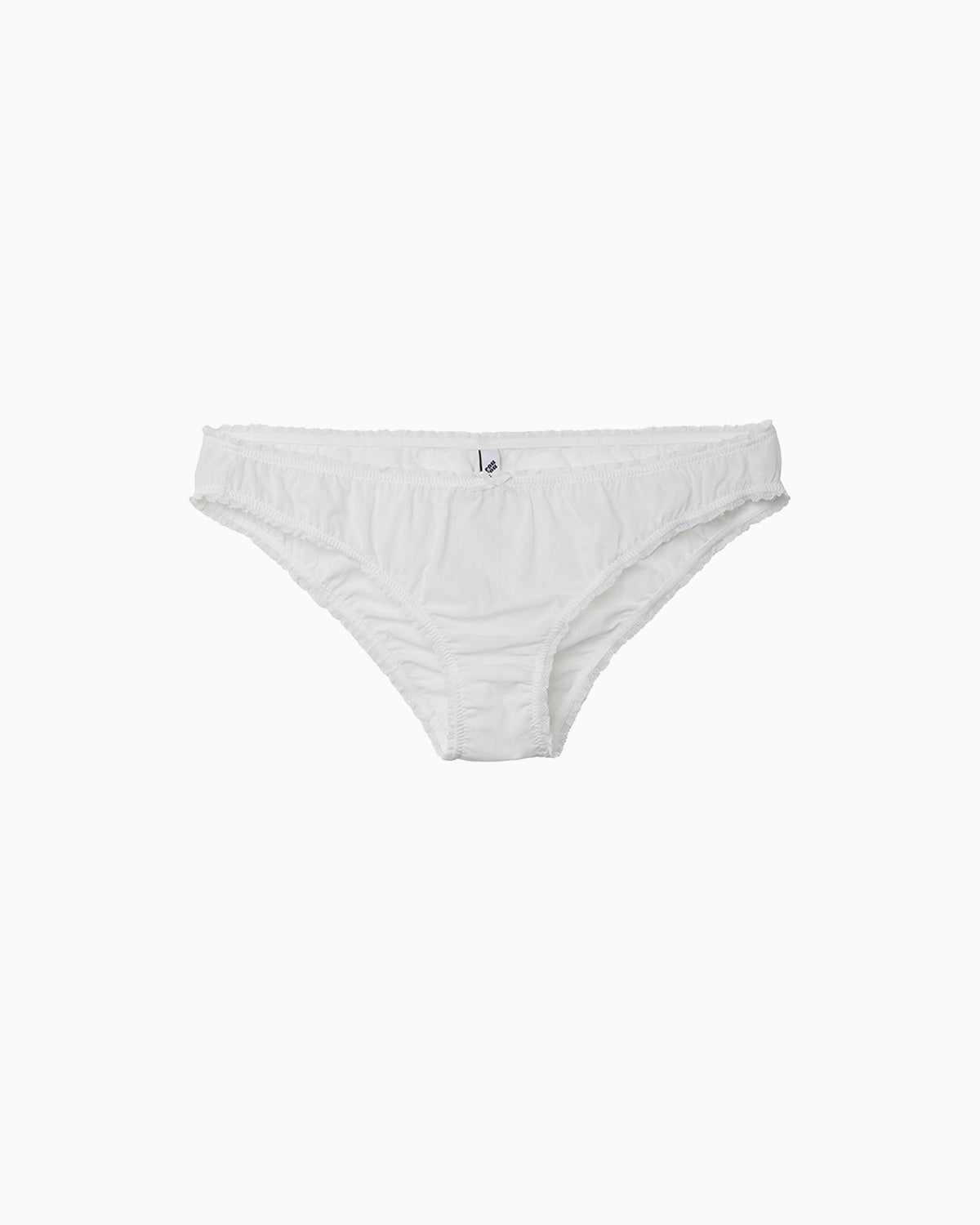
There is a particular kind of freedom that arrives when you stop negotiating with your own clothes. The article on essential cotton underwear touches on something that feels almost radical in its simplicity: the decision to prioritise ease over ornamentation. For years, the author leaned on lace and snug fits, believing that style required a certain amount of suffering. But the eventual exhaustion of constant adjustment is a quiet thief. It steals presence. It pulls you out of the moment and into a state of perpetual fussing. This story is not really about undergarments; it is about the intentionality of choosing comfort as a form of self-respect. It reminds me of the philosophy behind The Quiet Pursuit of Natural-Fabric Dressing for Light Summer, where the focus shifts from how something appears to how it makes you feel against your skin.
What resonates most here is the shift from external expectation to internal alignment. The author's realisation that she was spending too much time thinking about adjusting her clothes rather than living is a lesson in editing your life. It is the same ethos found in The Quiet Power of Sustainable Style: A Survey on Mindful Fashion Choices, where mindfulness moves beyond fabric and into the very psychology of choice. When you stop wearing things that demand your attention, you free up space for something more meaningful. This is not about abandoning style; it is about refining it until it aligns with who you are at your most relaxed. The cotton piece she trusts repeatedly is not a compromise; it is a declaration that her comfort is non-negotiable.
There is a lesson here that extends far beyond the drawer. If we apply this same logic to our daily uniforms, our routines, even our inner narratives, we begin to see the power of repeated, trusted choices. The author's journey from lace to cotton mirrors a broader cultural shift toward authenticity. It echoes the sentiment in From Alpine Beginnings, a Style Sensibility Begins to Bloom, where a sensibility grows from a grounded, unpretentious start. It is not about making a grand statement; it is about finding what works and quietly committing to it. The practical takeaway for our readers is simple: audit the items that cause friction in your day. If something makes you adjust, fidget, or second-guess, it is not serving you. Replace it with the version that disappears against your skin.
We would tell any reader who asks: do not underestimate the power of a garment you forget you are wearing. That is the true luxury. The author's testimony is a gentle nudge to reconsider what we deem essential. The cotton underwear she trusts is not a fleeting trend; it is a quiet rebellion against discomfort disguised as style. The next time you reach for something that looks good but feels like a chore, remember this piece. Choose the version of yourself that moves freely. That is the only authority that matters.