There is something quietly devastating about a novel that asks you to sit with the discomfort of wanting to belong. The books in this roundup, from Emma Cline's *The Girls* to R.O. Kwon's *The Incendiaries*, do not merely document cults; they dissect the very human hunger for a world that makes sense, even when that world demands pieces of yourself you did not intend to give. We have long admired how Loro Piana Wraps the Rockies in Quiet Cashmere for the Holidays understands that true luxury is felt rather than announced. These novels operate on a similar frequency: they are not about the spectacle of the compound, but about the quiet erosion of a self that lets a compound feel like home.
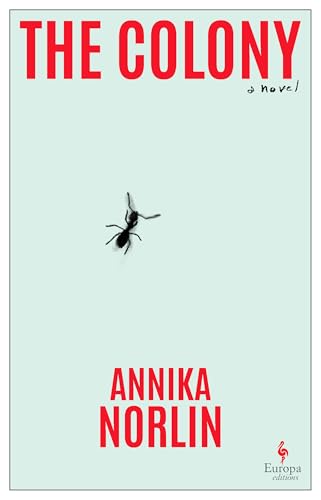
What makes these stories so commanding is their refusal to reduce the follower to a fool. In Annika Norlin's *The Colony*, a burned-out journalist finds herself drawn to a group of misfits living off the grid, not because she is gullible, but because their respect for the land and one another feels more honest than the world she left behind. Nicole Cuffy's *O Sinners!* takes this tension further: journalist Faruq extends his assignment for months, unable to decide whether the Nameless utopia is a veneer for something darker or a marvel worth replicating. The question lingers not because he is weak, but because the pull of a community that sees you is, in its own way, a form of gravity. These are stories about the Quiet Calculus of Influence Beyond the Follower Count, the invisible transactions of trust, grief, and loneliness that bind people to a leader, a cause, or a shared delusion.
The most unsettling truth these novels press upon us is that the line between devotion and danger is often drawn in hindsight. In Olivia Muenter's *Little One*, Catharine West has spent years distancing herself from her father's Florida commune, only to be flooded with memories when a journalist reaches out. The idyllic moments with her best friend sit beside darker discoveries about her mother, and the reader is left holding the weight of a question: At what point does shared belief become a cage? Mariana Enriquez's *Our Share of Night* weaves a family saga through a horror lens, reminding us that the most enduring cults are not the ones that make headlines, they are the ones that pass down their logic through blood. We are left to wonder whether any of us would recognize the boundary before we had already crossed it.
What we take from this collection is not a checklist of warning signs, but a mirror. The specific detail to watch is not the leader's charisma or the compound's rules, it is the moment a character stops asking whether the group is good for them and starts asking whether they are good enough for the group. That quiet pivot, almost imperceptible on the page, is where devotion curdles. And it is precisely the moment these novels refuse to let us look away.