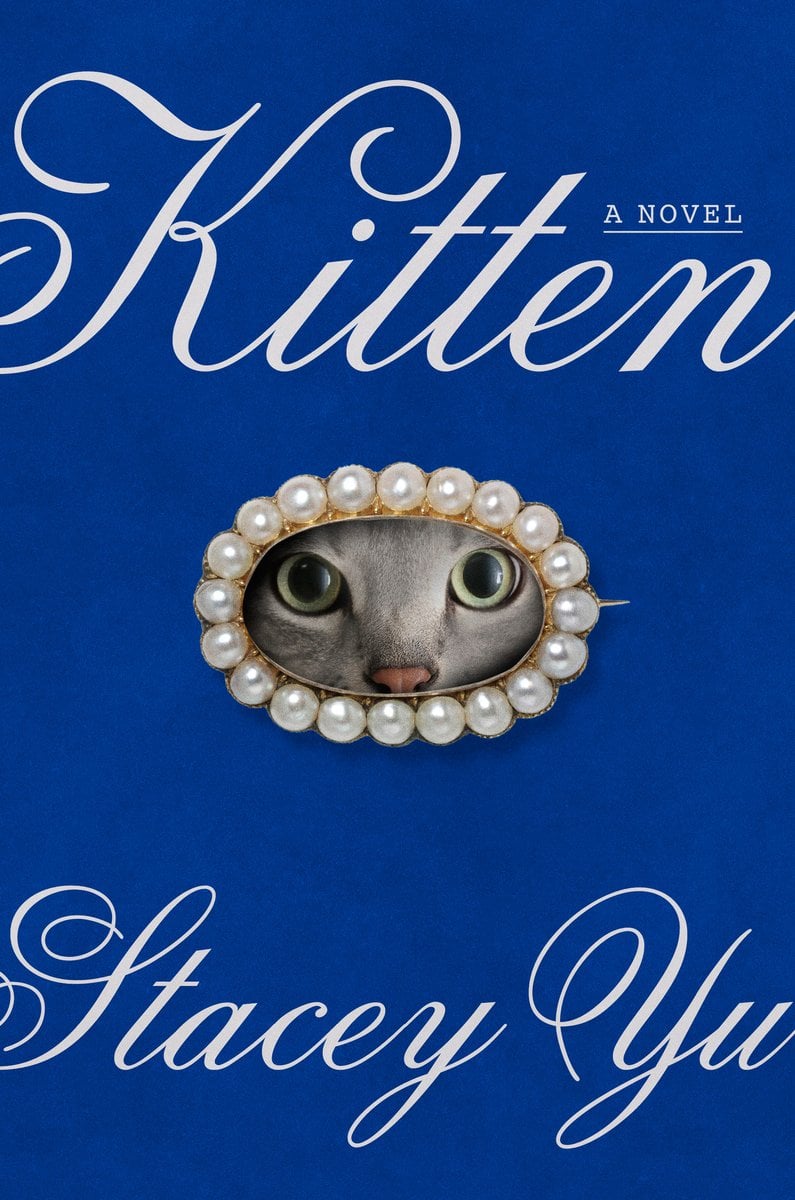
There is a particular kind of power in wanting nothing from the world. Stacey Yu's *Kitten*, which publishes August 4, centers on a young woman who "wants to live in this frightening, unpredictable world and owe it nothing." That single line carries more weight than most full-length manifestos. It is not a rebellion that screams; it is a quiet, radical untethering. For years, we were sold the Girlboss fantasy, a version of ambition that demanded performative exhaustion and relentless output. Yu's protagonist feels like the cultural exhale after that noise. She is not fighting for a seat at the table; she is questioning why the table exists. This is the same energy we see rippling through fashion right now, where J.Lo trades her signature bodysuit for tailored ease in Milan, choosing quiet polish over loud skin.
We are drawn to this narrative because it mirrors a shift in how we want to inhabit our own lives. The fantasy is no longer about accumulation or approval; it is about emotional autonomy. This is where the ethos of *Kitten* connects to the broader sartorial conversation, particularly the rise of the quiet-luxury shade replacing the classic neutrals you own. Both movements reject the obvious. They favor the feeling over the label, the internal state over the external validation. When we stop owing the world a performance, we free ourselves to take up space on our own terms. It is a lesson in subtraction, a reminder that confidence is often a matter of restraint. As Yu's protagonist suggests, true freedom might just be the ability to move through chaos without asking it to define you.
For our readers, this is not abstract literary theory. It is a practical recalibration. We would tell you to look at your own life and ask where you are still performing for an audience that is not watching. The pressure to be "on" is a habit, not a requirement. Start by curating a space that reflects this inner quiet, whether that means editing your wardrobe to pieces that feel like armor for the soul, not just the body, or observing how Katie Holmes's Milan look finds quiet perfection in a single bag. Holmes understands that a single, perfect object can ground an entire aesthetic. It is the same principle: you do not need more; you need more of the right thing. The takeaway here is sharp and specific: owe the world nothing, not because you are indifferent, but because your energy is a curated collection, and you are the only one who gets to decide what it holds.