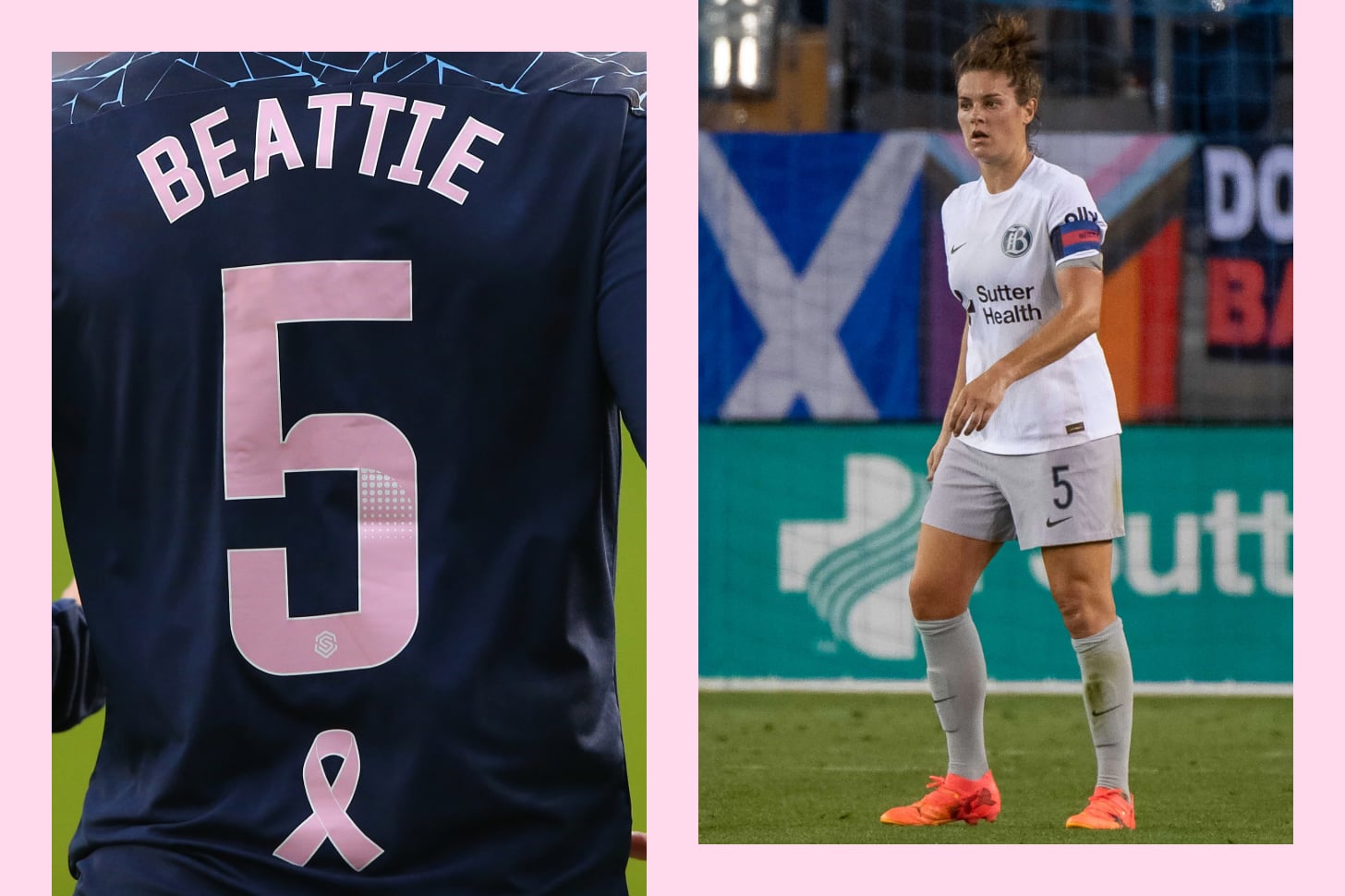
Jen Beattie is a footballer to her core, and that is precisely why her story lands the way it does. She has played for clubs like Arsenal, Manchester City, and Bay FC, but the piece that matters most here is not about trophies or tactics. It is about the quiet, unglamorous work of returning to yourself when your body becomes the opponent. The image of Beattie standing beside a jersey bearing her own name, emblazoned with breast cancer awareness pink, is not a moment of triumph. It is a moment of recognition. She is meeting herself mid-passage, and she is choosing to keep moving. That is not a headline. That is a practice.
What strikes us is not the courage, though courage is there. It is the restraint. Beattie does not perform her struggle for us; she simply lives it, and lets the living speak. In a culture that demands we narrate every ache for approval, her example is a quiet correction. She reminds us that strength is not loud. It is showing up to training when the mirror is hard to face. It is allowing yourself to be a patient, not a player, and then finding your way back to the pitch without pretending the detour never happened. For our readers, the takeaway is not about football. It is about the slow, unglamorous act of reclaiming your own narrative. You do not have to turn your pain into a performance. You can simply keep showing up, in your own time, in your own way.
We would tell anyone who asks about this story to sit with the image of that jersey for a moment. It is not a symbol of defeat, nor is it a badge of war. It is a fact. And there is freedom in treating your own experience as a fact rather than a verdict. Chiara Bransi's own work has always circled this same truth: that femininity is not fragile, and that softness can hold steel. Beattie embodies that fusion. She is not asking for pity or applause. She is asking for continuity, for the chance to be a footballer who also happens to be a survivor. The quiet power of that duality is something we can all carry into our own lives, whether we are facing a diagnosis or simply a hard Tuesday. Her journey is a reminder that identity is not erased by struggle; it is deepened by it.
The specific detail we are watching is what happens next. Not the next match, but the next ordinary day. The one where she laces her boots without thinking about why. That is the real victory, and it is not a single moment but a series of small, unspoken agreements with herself. If there is one thing to quote from this, it is this: resilience is not a performance. It is the choice to remain yourself when everything around you suggests you should become something smaller. Beattie has not become smaller. She has simply become more of who she already was. And that is the only ending that matters.