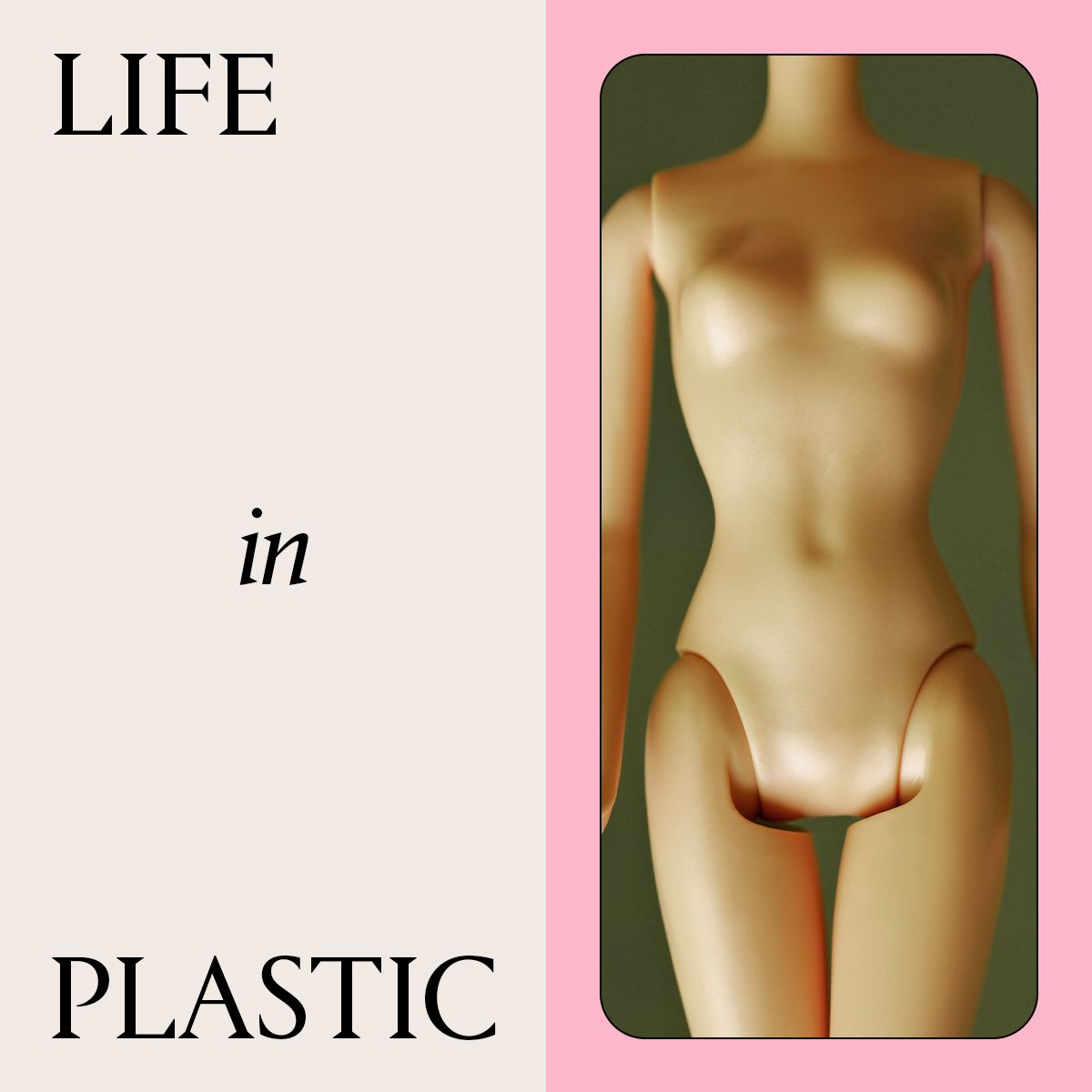
There is a particular kind of stillness that settles over a woman's life when she stops asking permission to want things for herself. Lindsay Schiffman's story, as told through Marie Claire's *Life in Plastic* column, opens with a confession that feels almost private: *I never imagined there would come a day when I would say I was excited for surgery.* That single line carries the weight of everything we rarely say aloud about self-reconstruction. It is not a decision made in haste, nor one born of vanity alone. It is the quiet acknowledgment that wholeness sometimes requires a detour through the clinical, the sterile, the deliberate. We are not meant to read this as a superficial whim, but as a reclamation of agency.
This is where her journey intersects with a broader cultural truth we have been circling for some time. We recently wrote about Marni’s Quiet Confidence Redefines Modern Dressing, noting how the house's current language is one of restraint and self-possession rather than spectacle. Lindsay's narrative shares that grammar. There is nothing loud about deciding to change your body. The impulse is not performative; it is intimate. And in our coverage of Sculpting Strength: How Lifting Redefines Modern Wellness, we heard four women describe how breaking down the stereotypes of weight lifting changed their lives. The through-line is unmistakable: strength is not a fixed state, but a process of continuous, often uncomfortable, becoming. Lindsay is not escaping herself; she is walking toward a version she has chosen.
Our take is not that surgery is for everyone, nor that it should be. It is that we have finally reached a cultural moment where a woman can say *I am excited* about a procedure without apologizing for the complexity of that emotion. The practical takeaway for our readers is permission. Permission to hold two truths at once: that you can love the body you have and still want to change it. That you can admire the ease of a linen dress and still book a consultation. That confidence is not a moral high ground reserved for those who never waver. Lindsay's story asks us to consider that self-discovery is rarely linear, and that reconstruction is simply another form of self-knowledge. It is not about erasing anything; it is about deciding what you want to carry forward.
What we would tell a reader who asked us about this piece is simple: watch how you speak to yourself in the waiting room of your own life. The most radical thing Lindsay does is not the procedure itself, but the honesty of her anticipation. She is not performing ambivalence for the sake of palatability. She is excited, and she says so. That is the detail to hold onto, the one that lingers after the article ends. Because in a world that wants women to be either effortlessly natural or aggressively enhanced, the bravest stance is the one that says: *I know what I want, and I am not afraid to let it require something of me.* That is not vanity. That is a map. And she is drawing hers in real time.