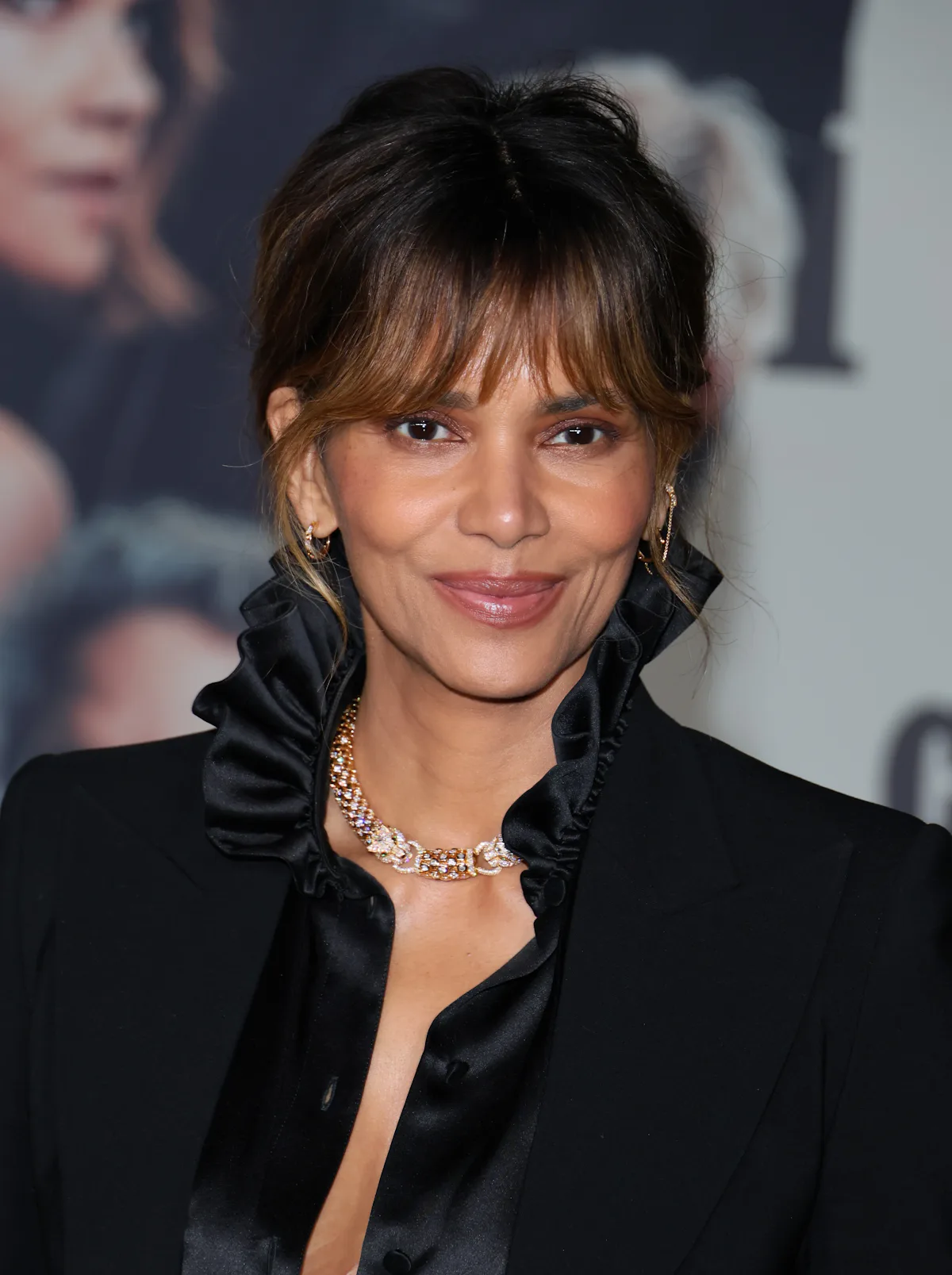
Halle Berry's recent appearance on "Today With Jenna & Sheinelle" not only showcased her timeless beauty and charisma but also highlighted her mastery of the emerging trend of "printmaxxing." Sporting a vibrant red and black floral Alexander McQueen ensemble, Berry effortlessly embodied the essence of modern femininity—an aesthetic that resonates deeply with our current cultural moment. In a world increasingly drawn to bold expressions of identity, her outfit served as a reminder that fashion can be a powerful medium for self-expression, one that transcends mere clothing to become a statement of self-empowerment. This aligns perfectly with the ethos explored in our piece, We are born as limitless beings, naturally free in our essence. Yet the physical world teaches us to build identities, m..., which delves into the interplay between personal identity and societal expectations.
Berry’s approach to fashion, particularly her embrace of printmaxxing, reflects a broader societal shift toward authenticity and individuality. As she spoke about aging gracefully and advocating for women’s wellness, her outfit became a visual extension of her message. The bold floral prints she donned were not just about aesthetic appeal; they were emblematic of a woman who is unabashedly confident in her skin, redefining beauty by showcasing her authentic self. This is particularly relevant in an era where many women are seeking to reclaim their narratives and embrace their identities without the constraints of traditional beauty standards. It resonates with the exploration of self-care in our article, The 12 Best Self Care Gifts to Get New Moms in 2026, which emphasizes the importance of nurturing one’s self in a world often focused on external validation.
The significance of Berry’s appearance transcends the realm of fashion; it speaks to the cultural zeitgeist where women are not just consumers of trends but are actively engaging in dialogues about empowerment and self-acceptance. Printmaxxing can be seen as a metaphor for the complexities of modern womanhood—layering various elements of identity, personal history, and societal roles into a cohesive narrative that is uniquely one’s own. This layered approach to self-expression challenges the notion of minimalism in style, suggesting that sometimes, more truly can be more when it comes to showcasing one’s individuality.
Looking ahead, the implications of Berry’s printmaxxing mastery are far-reaching. As more women embrace bold styles and prioritize personal expression over conformity, we may see a significant shift in fashion norms. The conversation around what constitutes beauty and elegance is evolving, pushing boundaries and encouraging a more inclusive definition that celebrates diversity in all its forms. As we witness this transformation, it begs the question: How will the fashion industry respond to the growing demand for authentic representation? Will we see more brands championing this ethos, or will the trend of individualism simply serve as a fleeting moment in the ever-changing landscape of style? The answers may very well shape the future of fashion and the narratives we tell about ourselves.