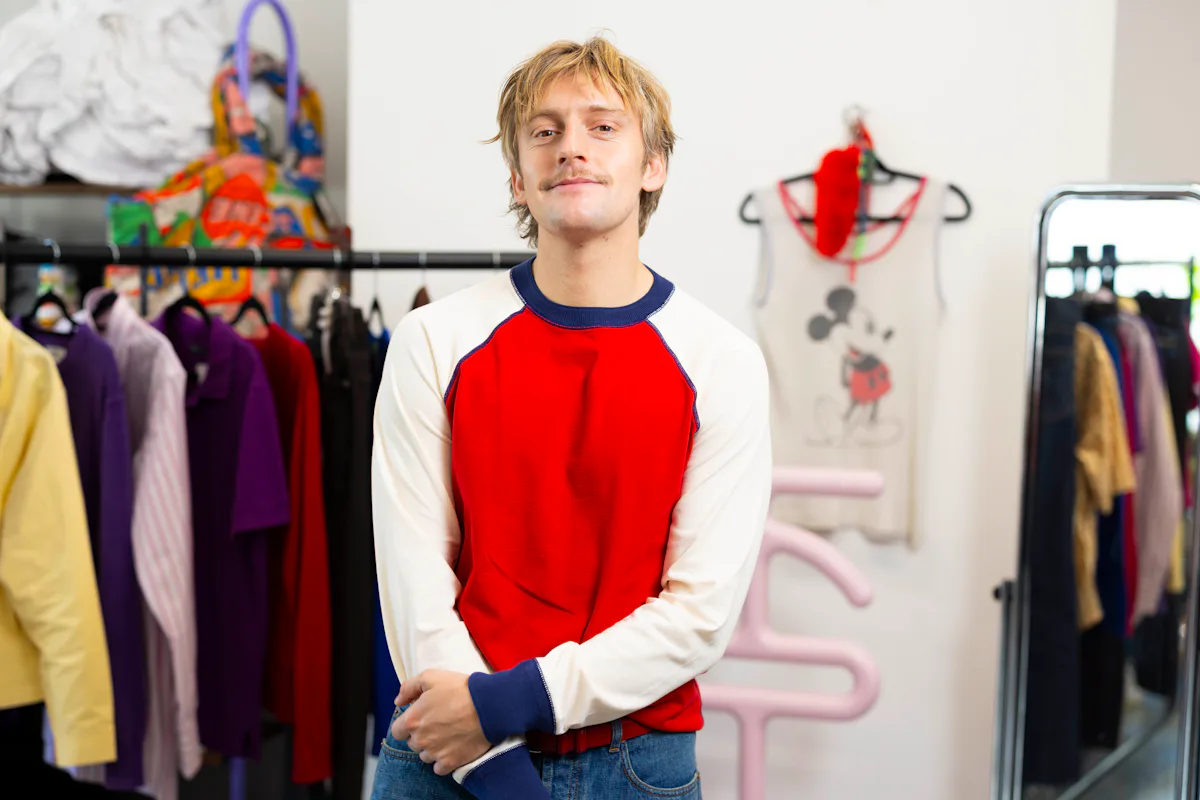
There is something quietly radical about a designer who treats the holidays not as a performance of perfection, but as an exercise in curation. Gustaf Westman understands that the most memorable tables are not the ones that match, they are the ones that tell a story. His approach to holiday decorating, which blends flea market finds with his own sculptural pieces and a new Disney collaboration, feels less like a trend report and more like a permission slip. It invites us to stop chasing a coordinated aesthetic and start trusting our own eye. This is the same quiet confidence we see in the return of Blue eyeshadow returns with quiet confidence and refined colour, a willingness to let a single, intentional choice carry the mood rather than overloading the palette. Westman's philosophy echoes that same restraint: the magic is in the mix, not the uniformity.
What makes his perspective so refreshing is its grounding in reality. He speaks openly about decorating smaller city apartments and the need to be creative with what you already own, which feels like a direct counterpoint to the seasonal pressure to buy everything new. His advice to visit the flea market for vintage textiles and unexpected objects transforms the act of decorating from a consumer transaction into a personal excavation. It is an approach that aligns naturally with the kind of elevation we champion, the idea that refinement comes from editing, not accumulating. Much like the proportions that The Denim Proportion Petite Women Trust for Instant Elevation rely on to create a silhouette that works, Westman's holiday style is built on a foundation of knowing what you love and letting that guide the composition.
His latest Disney collaboration, featuring Mickey and Minnie Mouse translated into his signature chunky, candy-colored forms, could easily have felt like a gimmick. Instead, it reads as a natural extension of his worldview. Minnie Mouse, he notes, is the character who would buy his work, a playful but astute observation that reveals how deeply he understands his own design language. These pieces are not separate from his holiday table; they are folded into the chaos, adding another layer of personality to an already layered scene. It is a masterclass in brand-as-muse energy: the product feels like a natural part of his life, not an interruption of it.
The most important takeaway here is that Westman treats the holidays as an emotional atmosphere, not a visual checklist. Candles, mulled wine, board games, these are the elements that bring the vibe, not the ornaments alone. For anyone feeling the pressure to create a picture-perfect holiday, his example offers a quiet permission to stop performing and start participating. The question is not whether your table matches, but whether it feels like yours.