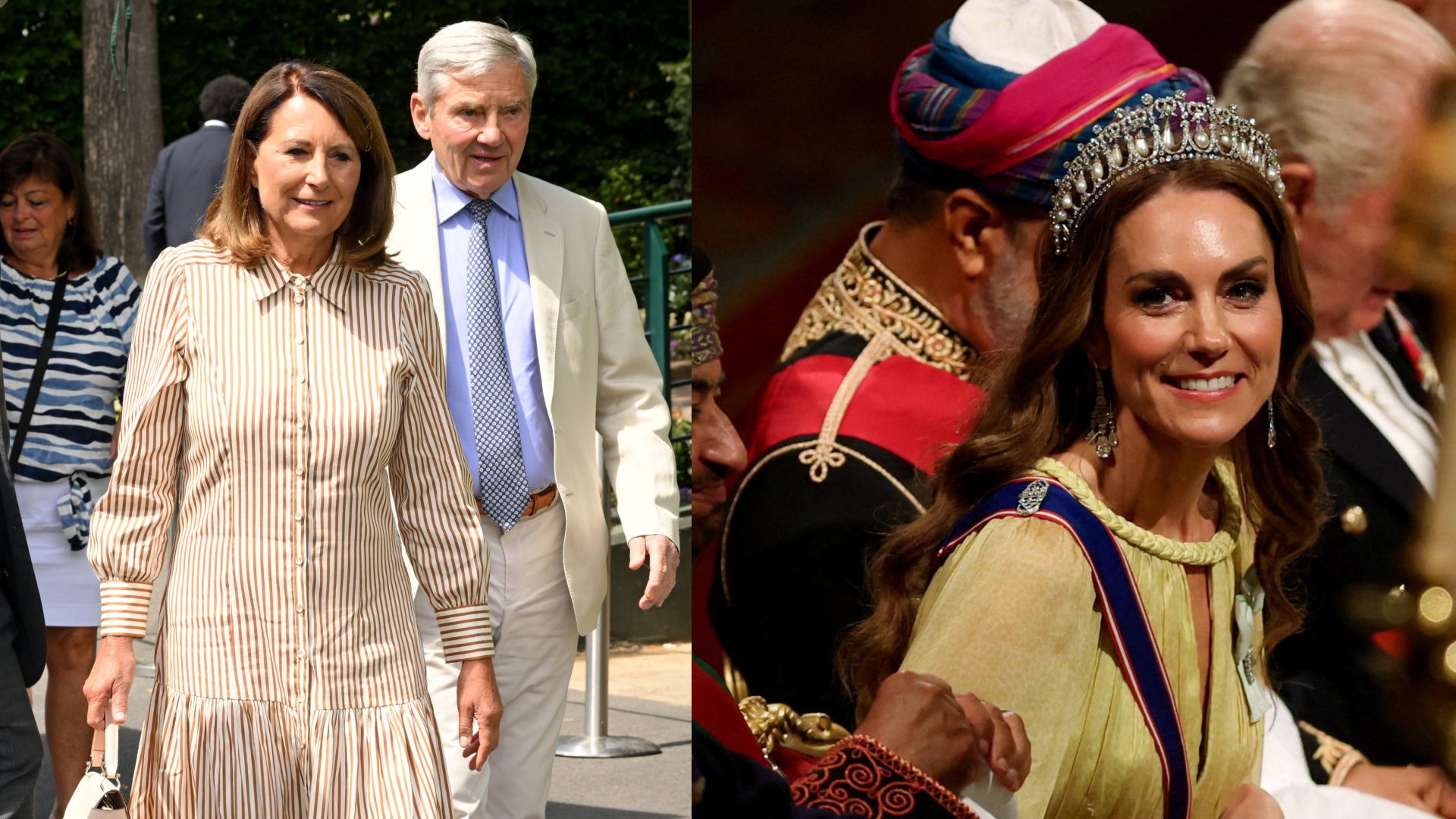
There is a particular kind of power that does not announce itself. It does not demand the room; it simply arrives, and the room adjusts. Watching the Princess of Wales at the recent state banquet for the Sultan of Oman, we are reminded that the most enduring influence is often the quietest. This is not a story about a tiara, though the Lover's Knot was magnificent. It is a story about a specific, cultivated form of strength, one that royal biographer Ingrid Seward rightly traces back to the Middleton family. They raised a princess not for the throne, but for the person who would one day occupy it.
We have written before about the quiet dignity found in other corners of royal life, Through the Lens, Lady Louise's Quiet Strength and Devotion to Royal Duty and the understated grace of Prince William on the quiet grace of a long overdue honor. What connects them is a refusal to perform for the sake of performance. Catherine's approach is no different. Body language expert Darren Stanton describes her ability to make people feel at ease as her "royal superpower," but we would argue it is something more fundamental. It is a skill honed not in a palace, but in a family home where good manners were not a social tool but a way of being. Seward notes that Carole and Michael Middleton instilled the importance of manners, and the result is a woman who can navigate a state banquet with the same grounded presence she brings to a school gate conversation. She does not need to dominate; she simply connects.
This is a deeply feminine mode of power, and one we find compelling. It is not about being the loudest voice in the room, but the most present. Catherine understands that diplomacy is not a transaction; it is a human interaction. She reads the room, senses the nerves of a visiting dignitary, and offers warmth as a form of welcome. Biographer Robert Jobson says she "gets it right every time," and we agree, but the "it" is not the dress or the earrings. The "it" is the intention behind them. She is not dressing for the cameras; she is dressing for the moment, for the people in the room. The Elie Saab gown and the Greville Chandelier Earrings are not armor; they are an extension of her self-assurance. She is comfortable in her own skin, and that comfort becomes a gift to everyone around her.
The practical takeaway for us is this: true presence is a choice, not a personality trait. Catherine's upbringing gave her the foundation, but she actively chooses to show up with curiosity rather than agenda. She does not use her position to elevate herself; she uses it to elevate the interaction. As the Waleses prepare for their future roles, this quiet ability will only become more essential. The question is not whether she will continue to sparkle, but whether we, in our own lives, can learn to read the room with the same grace.