How These Fitfluencers Share Their Love of Movement With Their Kids
Our take
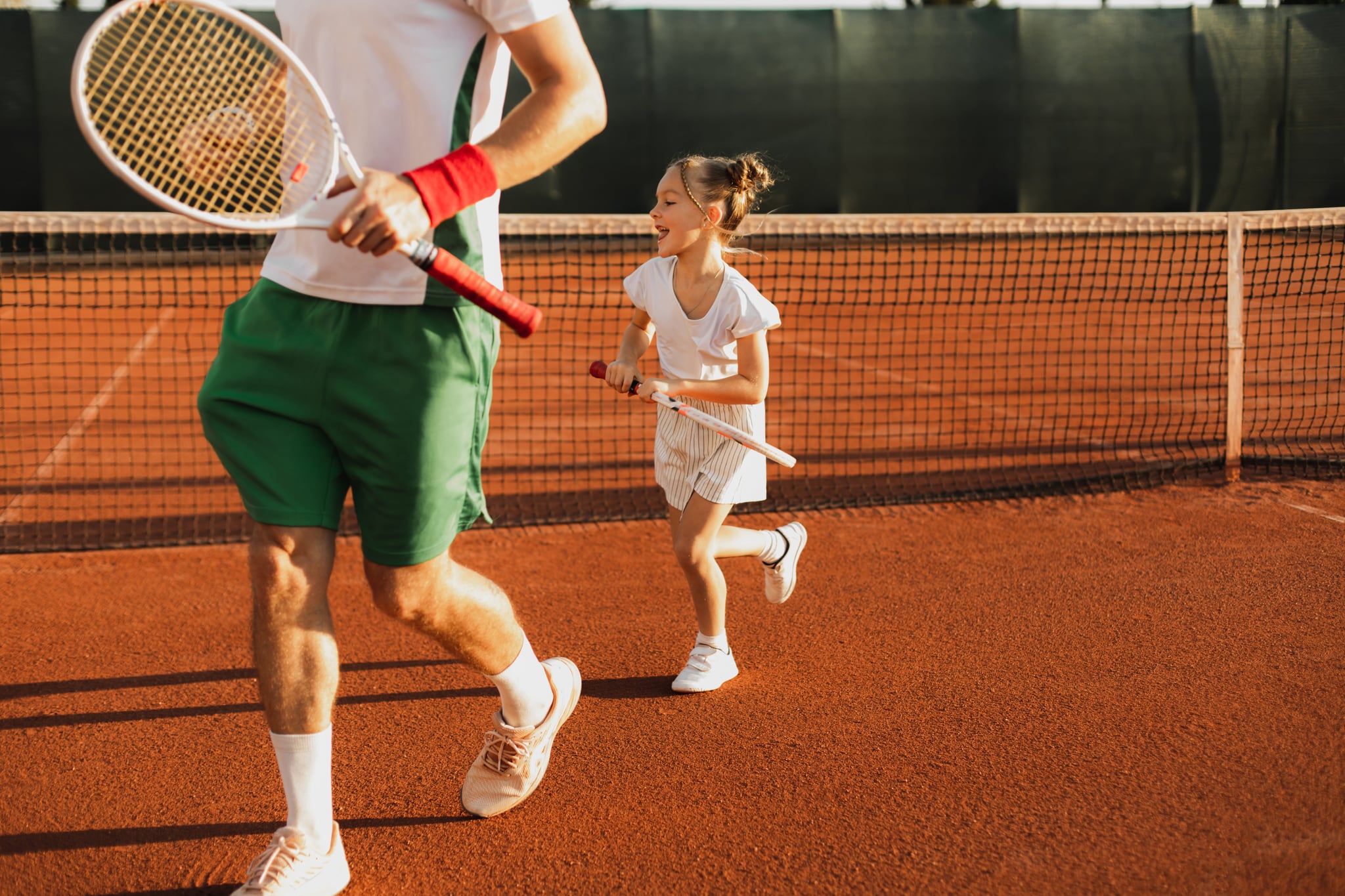
The rise of the "fitfluencer" has been a well-documented phenomenon, transforming fitness from a solitary pursuit into a shared, often aspirational, experience. But a recent piece highlighting families like Lindsey Bomgren’s, who prioritize movement and outdoor activity with their children, signals a subtle but significant shift within this space. It’s less about showcasing sculpted physiques and more about fostering a lifelong love of physical activity, demonstrating that wellness isn’t solely about personal achievement but about shared experiences and intergenerational health. This echoes a broader cultural conversation around holistic wellbeing, moving beyond purely aesthetic goals to encompass mental and emotional health – a conversation we've seen reflected in content like This 30-Minute HIIT Workout Is the Best Summer Sweat Session, which emphasizes effective, accessible workouts, and even the surprisingly inspiring dedication demonstrated by Devyn Dalton, as seen in Matt Damon's Stuntwoman Just Dropped Her Workout Routine, highlighting the discipline required for peak physical performance. The focus is broadening.
This generational shift in fitness culture is particularly compelling. For years, the fitfluencer landscape has been dominated by individuals showcasing their own transformations, often with a focus on intense training regimens and restrictive diets. While these narratives can be motivating for some, they can also be alienating and even harmful, contributing to unrealistic body image expectations. The move towards featuring families actively engaging in movement—whether it’s a simple trek to the park or a weekend cycling adventure—normalizes physical activity as a joyful, sustainable part of life, rather than an arduous obligation. It’s a powerful message, especially for children who are developing their own attitudes towards health and fitness. The experiential aspect—the shared laughter, the exploration of new environments—is presented as valuable in itself, a welcome counterpoint to the often-solitary pursuit of personal bests. Even the context of a post like I Tried 4 Different Workout Classes at a Sold-Out "Fitness Festival" reveals a growing interest in diverse fitness experiences, further supporting this trend toward broadening horizons.
The implications for the wellness industry are significant. Brands traditionally focused on selling supplements and equipment to individual consumers may need to adapt their marketing strategies to appeal to families and emphasize the benefits of shared activity. We might see a rise in products and services designed specifically for family fitness, or a shift towards campaigns that showcase the joy of movement rather than solely the pursuit of physical perfection. This also necessitates a greater emphasis on accessibility and inclusivity. Not every family has the resources for expensive gym memberships or specialized equipment. The most impactful messaging will highlight simple, affordable ways to incorporate movement into daily life, demonstrating that fitness is not a privilege but a fundamental right. The quiet confidence of this approach—the absence of aggressive marketing and the focus on authentic experiences—aligns perfectly with a brand voice that prioritizes understated elegance and emotional resonance.
Ultimately, the shift towards family-focused fitness content represents a maturation of the wellness space. It’s a move away from the often-performative aspects of the fitfluencer culture and towards a more grounded, sustainable approach to health and wellbeing. The question now is whether this trend will continue to gain momentum, prompting a wider re-evaluation of what it means to be healthy and fit in the modern world, and whether the industry will truly embrace this evolution beyond surface-level marketing campaigns. Will we see a lasting shift in how fitness is portrayed and promoted, or will the allure of individual transformation ultimately prevail?
In Lindsey Bomgren's household, weekends are for treks to the park. She and her husband will run or cycle the half mile there while their 9-year-old son, 6-year-old daughter, and 4-year-old son hop on their bikes or scooters. "My sprint intervals are, 'Can you beat me on your scooter?'" says the personal trainer behind the fitness platform Nourish Move Love.
Once they all arrive, the kids run around and play "lava monster, or whatever they play at the park," while Bomgren and her husband take advantage of any equipment that's available. They'll do push-ups and tricep dips on a bench, pull-ups on the monkey bars, squats and lunges wherever there's space. "The kids often join us in the monkey bar pull-ups — we all have pull-up goals at this point," Bomgren says. (Her two older kids can both do five, and constantly compete with each other to see who can do more, she adds.)
Bomgren began doing these park workouts when she was a new mom with virtually no time in the day to exercise on her own. But even as her kids have gotten old enough to play independently and she can find more pockets of time for herself, she's kept up the routine. Not only does everyone in the family enjoy it, but it also gives her children a chance to watch their parents work out, and join the activity in their own ways.
"We've explained to them that heart disease runs in our family, so this is how we keep our hearts healthy and stay healthy enough to keep up with you," Bomgren says. She and her husband also talk about how practice and repetition help them reach their goals. For instance, the family pull-up competitions initially grew out of their daughter's desire to do a pullover on the gymnastics bar, and Bomgren taught her to practice pull-ups as a way to build the necessary strength.
This idea of "walking the talk" is a common sentiment among parents who value fitness enough to work in the industry. Betina Gozo Shimonek is a Nike Global Trainer and mom of three kids ranging from 20 months to 5 years (with another on the way). As much as she enjoys her solo workouts, she tells Popsugar she's intentional about getting active with her kids. "For us, it's not about telling them they should work out, but instead showing them," she says. "We want to always lead by example."
Sometimes her little ones will be part of their strength workout, getting pushed on the sled in the family's home gym, or becoming a weight to lift (or a tagger to outrun). Other times, the kids will play on their own nearby while the grown-ups complete their sets and reps. "It's the sweetest thing when our kids actually ask, 'Can I work out with you?'" she says.
Of course, a workout with children around is far more chaotic than a dialed-in, solo training session. "I have to be flexible with interruptions, snacks, potty breaks," Bomgren says. "But that's when I usually try to get them involved, like, 'Let's have a challenge and see who can hold a plank longer.'"
Other parents find they simply can't avoid activity during family time, even when they crave a rest day. "Toddlers are the workout," says Peloton instructor Jess King, whose son and daughter are both very energetic 3 year olds. "They have to take up space. They have to climb." Keeping up with them means hitting 10,000 steps is the default.
In fact, King says watching her kids play has given her a new perspective on working out. "I'm noticing that the way that they're exploring movement — from crawling to walking to running to now every plane of motion — they are exhibiting the same movement patterns that we transfer into a workout and break down and essentially retrain in the adult," she says. For kids, bear crawls and planks and sprints aren't exercises; they're just part of playing.
In many ways, King's found that the best workout for her and her wife simply comes from following their toddlers' lead. "If they're on the ground, we get on the ground with them and develop that strength," she says. Other days, they might be running after their kids on the beach, or getting in the pool together when they want to go swimming.
Each of these trainers has also set up their home strategically to encourage playful movement. In their basement, Bomgren and her husband installed a bounce house for the kids alongside workout equipment for the adults. Gozo Shimonek has rings hanging in her living room that the children can swing on. King has put together a jungle gym space next to her home Peloton, with a trampoline and a climbing wall. She also has sensory swings made of looped silk fabric anchored to the ceiling in front of the TV for her toddlers to play in. "They spin around. They intertwine with each other. They're never sitting still, even when they're watching TV," she says.
But fancy equipment isn't a requirement to get active. Gozo Shimonek shares that some days, it's as simple as her husband, a former NFL quarterback, starting a game of catch that everyone joins. Bomgren, meanwhile, likes to end each workday by getting outside. "That could mean playing soccer or Wiffle ball in the cul-de-sac, or just setting up the sprinklers in the front yard," she says.
The brutal winters where she lives in Minnesota don't stop her family, either. They'll explore the woods together in the snow, walk on the frozen river behind their house, or go sledding. "Carrying your kids on a sled up a hill on slippery snow when you're fully dressed in snow gear is probably the best workout of winter there is," Bomgren jokes.
Sure, exercise might look very different when the whole family is involved. But that's not necessarily a downside. King shares that her kids have helped her remember that being active can mean so much more than "doing a workout." She says, "They've reminded me how playful movement can be — and how fun it can be."
49250065
Jennifer Heimlich is a writer and editor with more than 15 years of experience in fitness and wellness journalism. She previously worked as the senior fitness editor for Well+Good and the editor in chief of Dance Magazine. A UESCA-certified running coach, she's written about running and fitness for publications like Shape, GQ, Runner's World, and The Atlantic.Read on the original site
Open the publisher's page for the full experience