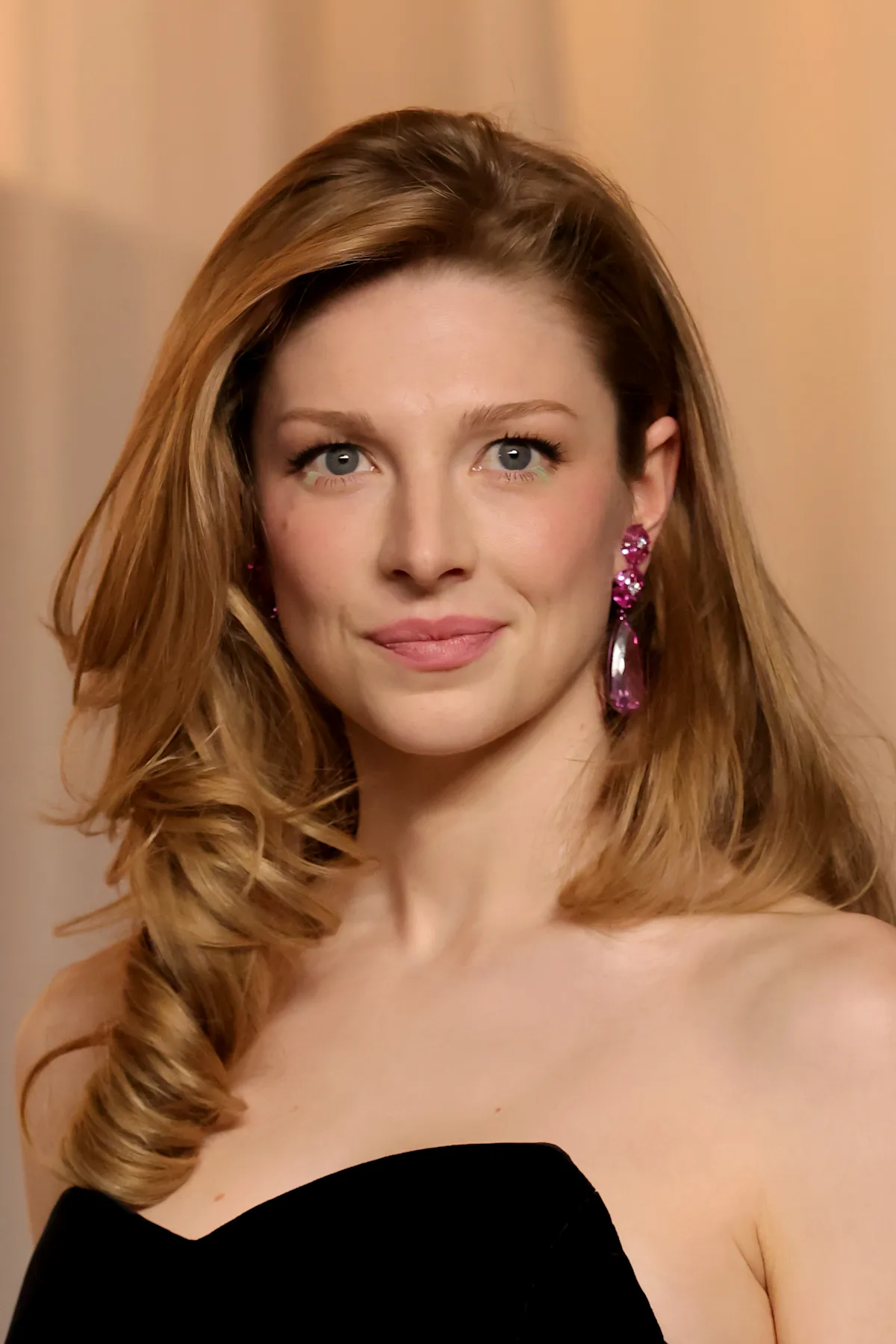
There is something deeply satisfying about a red-carpet look that understands its source material without being enslaved by it. Hunter Schafer's silver chrome uniliner for the *Blade Runner 2099* premiere is a masterclass in that quiet tension, a direct nod to Daryl Hannah's Pris, yet entirely her own. Where the original replicant's makeup was raw and confrontational, Schafer's interpretation is refined, almost meditative: a single metallic stripe drawn from temple to temple, set against a bare, luminous base. It is method glam, yes, but method glam with restraint. The look does not scream for a movie poster; it whispers for a close-up. This is the same instinct we admired in Elle Fanning Channels Effie Trinket's Whimsy Through Quiet Method Dressing, where thematic dressing became less about costume and more about character inhabitation. Schafer takes that ethos a step further by stripping away the obvious, the white face paint, the heavy black blocks, and leaving only the essential gesture.
What makes this moment significant is not the reference itself but the discipline of the execution. Makeup artist Sandy Ganzer and hairstylist Rena Calhoun understood that the line would only land if everything else receded. The chignon is undone, the lip is rosy, the base is natural. Nothing competes. That kind of restraint is rare on a red carpet that has increasingly rewarded maximalism, and it speaks to a deeper cultural appetite for precision over volume. We see this same sensibility in Dua Lipa Wraps Quiet Luxury in Charlotte Simone's Penny Lane Coat, where a single statement piece carries the entire narrative. Schafer's uniliner functions the same way: one bold, deliberate choice that asks nothing of the viewer except attention. It is confident, feminine, and intentional, not because it performs effort, but because it trusts the power of subtraction.
This particular approach to graphic eye makeup may well have a life beyond the premiere. When SZA wore a neon pink version of the same uniliner to Jean Paul Gaultier's Spring/Summer '27 runway presentation in October, the comparison to Solange's earlier "uniliner" era was immediate. The through line is clear: a single horizontal stripe across the face has become a shorthand for controlled avant-garde expression. It is wearable, repeatable, and infinitely adaptable, which is precisely why it feels poised for a broader moment. Unlike the full-face commitments of past method-dressing waves, this is a detail that can travel from red carpet to dinner to editorial without losing its edge. It asks nothing of the wearer except conviction.
What remains to be seen is whether the industry will honor the restraint or dilute it. The temptation, when a look this clean resonates, is to pile on, more colour, more texture, more references. But the power of Schafer's silver line is that it says everything by saying almost nothing. The specific consequence to watch is how stylists and makeup artists translate this for the women who are not walking a premiere carpet but still want that same quiet, assured presence. Because the most lasting influence of a look like this is not imitation, it is permission. Permission to be minimal, to be precise, and to let one perfect line do the work of a thousand.