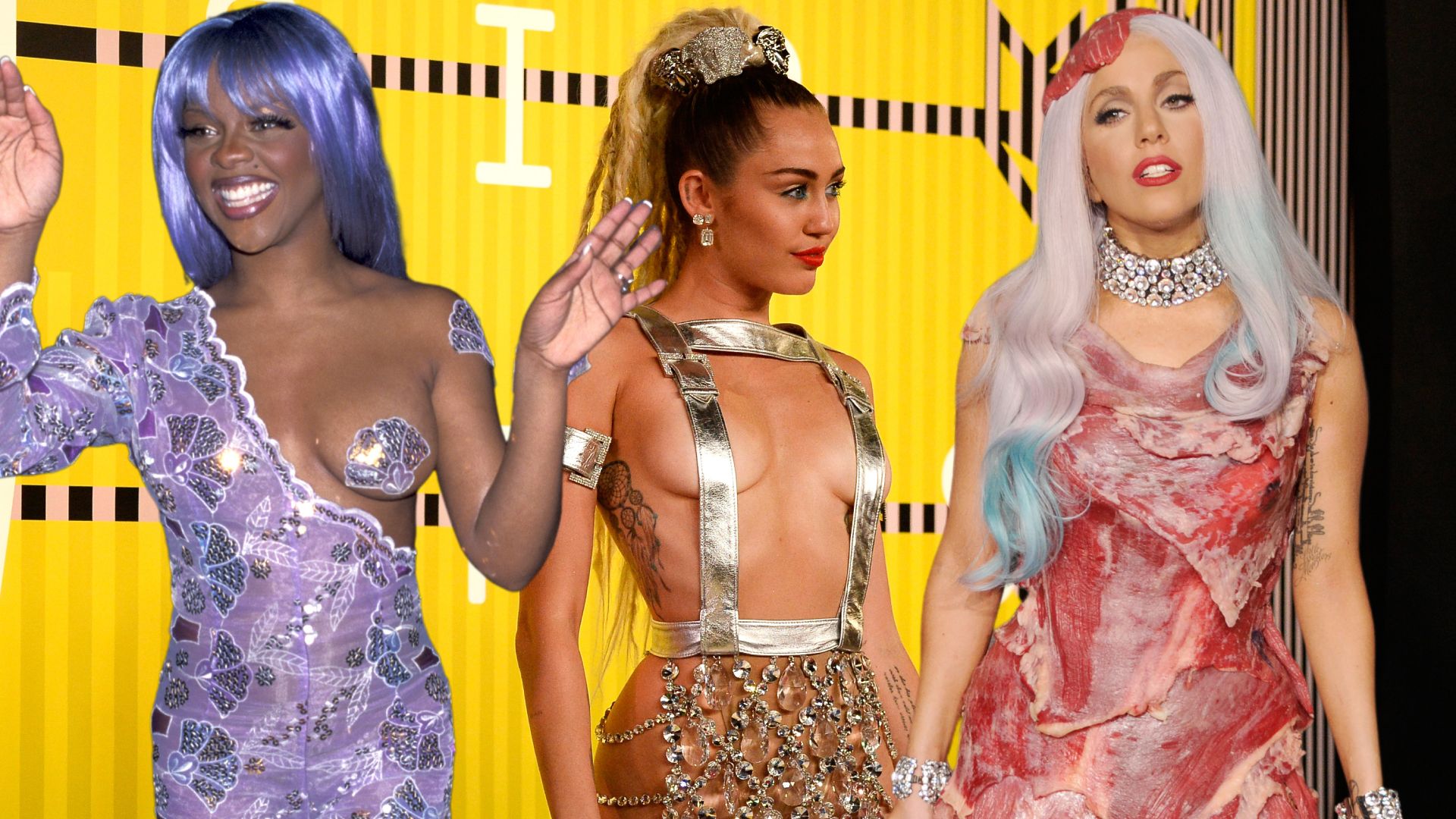
The MTV VMAs have never been a place for quiet. Since 1984, the ceremony has operated as a pressure valve for pop culture's most theatrical impulses, a space where the red carpet is less about fitting in and more about making a mark. We know the archive well: Lady Gaga's meat dress, Lil' Kim's pasty, Miley Cyrus's harness. These are not just outfits; they are cultural punctuation marks. But as we look toward the 2026 ceremony this September, we find ourselves asking a different question than the one the industry usually poses. It is not "What will they wear?" but rather, "What are we supposed to feel when they do?"
Our perspective is that the VMAs represent the last true arena of unfiltered self-expression in an era where most style has been mediated, calculated, and flattened by the algorithm. The mainstream red carpet has become a study in restraint, a place where elevated footwear and quiet tailoring dominate the conversation. It is beautiful, certainly, but it is safe. The VMAs reject that safety outright. They remind us that fashion is not merely a tool for dressing the body; it is a vehicle for announcing a state of mind. Where other events ask for polish, the VMAs demand a pulse. This is the tension we find most compelling: the push and pull between the desire to be seen and the discipline of knowing who you are when the cameras flash.
For our readers, the practical takeaway is not about replicating a meat dress or commissioning a custom harness. It is about the permission those moments grant. The through-line between a short, elegant manicure and a sharp, confident pixie cut is the same: style is a declaration of self-possession, not a plea for approval. The VMAs simply scale that logic to its most extreme, most memorable degree. The women who own that carpet are the ones who understand that confidence is not loud. It is a quiet certainty that what you have chosen to wear is an extension of your inner world, regardless of how many sequins are involved. We would tell a reader who asks us about the VMAs that the event is not a fashion show in the traditional sense. It is a mirror held up to the cultural moment, reflecting our collective appetite for boldness, for humor, and for the kind of personal expression that cannot be pinned down by a trend report.
The detail to watch this year is not the designer or the silhouette. It is the intention behind the choice. The most iconic VMA moments endure because they felt inevitable, as if the artist had no other option but to wear that specific thing at that exact moment. That is the standard we hold. Not shock for its own sake, but the audacity to be fully, unapologetically oneself. The 2026 ceremony will give us a fresh set of images, but the real question is whether the performers understand the assignment: that true style is not about the volume of the look, but the depth of the self it reveals. That is the only rule that has ever mattered.