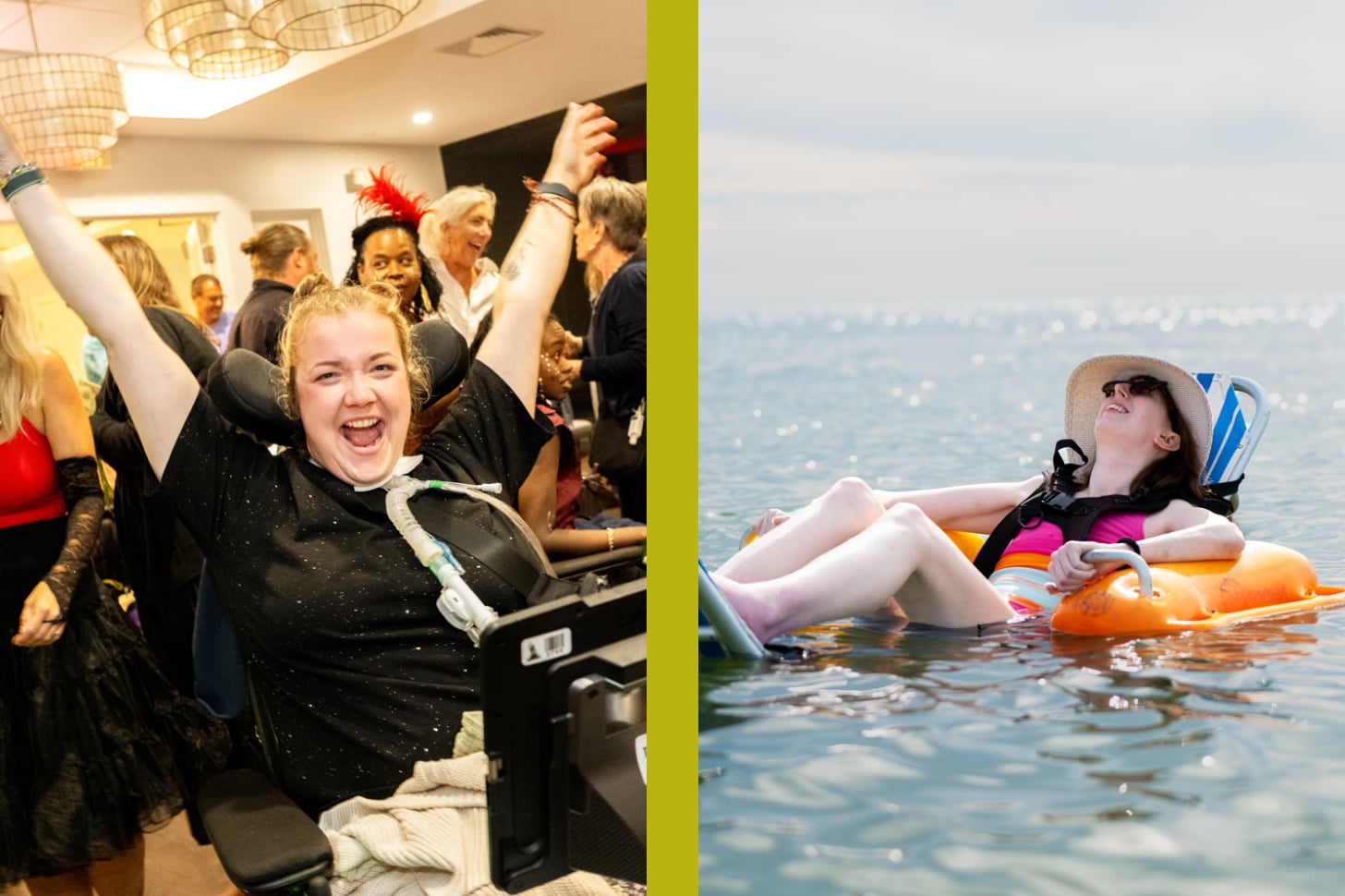
There is something quietly radical about a room full of women who have every reason to grieve, choosing instead to dance. The women of Her ALS Story gathered on Cape Cod this year, forty-one of them, for a retreat that included wheelchair races, drag shows, and late-night dancing, not as an escape from their reality, but as a deliberate act of reclamation. This is not the narrative we are conditioned to expect from a terminal diagnosis, and that is precisely why it matters. For our readers, who understand that presence is not about performing perfection but about showing up exactly as you are, there is a profound lesson here about the difference between surviving and living. The Radical Joy of Women Who Feast Without Appetite is not a headline we expected to write alongside a story about ALS, and yet the connection is undeniable: joy, when chosen intentionally, becomes its own form of resistance. Brooke Eby, who died in October at just 38, understood this better than most. After her diagnosis, she spent months in bed with a party-size bag of M&Ms, the kind of grief that is not theatrical but deeply human. Then, at a wedding, she noticed her walker matched the bride's grandmother's walker, and she started offering guests rides on the back of it. That moment of levity did not erase her diagnosis; it reframed her relationship to it. She went on to document her journey with a dark, self-aware humor that refused to let the disease define the narrative. "Guys, if I've taught you anything, it's that ALS affects hot people, too," she joked. That irreverence is not denial; it is a refusal to let the diagnosis become the only story worth telling. For the women of Her ALS Story, that same spirit animates their retreats, where the hardest moments, losing 13 members between gatherings, writing their names on dissolvable paper and sending them into the ocean, are held alongside the kind of joy that demands you show up for it. What strikes me most about this community is not the grief, though it is heavy, but the intentionality behind their joy. Kim Trautman, who has a tracheostomy and cannot speak, described the relief of being surrounded by people who do not need her to explain why she needs a feeding tube or a suction machine. That is not a small thing. For those of us who move through the world rarely having to explain our bodies, it is easy to forget how exhausting the constant translation of self can be. Monique Green, who once swore off new friends because she was tired of explaining her life before ALS, found herself at the retreat with her arms being lifted by strangers who wanted her to dance. That is the kind of belonging that cannot be manufactured. It is the quiet power of a space where you do not have to perform normalcy, where you can simply exist, and someone will hand you a straw or grab your arms and move them to the music. Refining Your Presence for a Day of Casual Advocacy takes on a different weight when the advocacy is not a polished statement but a wheelchair race across the sand. There is a specific question that lingers after reading about this retreat, and it is one I think about often in the context of how we choose to spend our limited time. Kate Nycz, the vice president of Her ALS Story, put it plainly: "It was everything looking up and moving forward." She was speaking about her own diagnosis, which came three months before her wedding, at a time when her career as a nurse practitioner was just beginning. The question is not whether grief and joy can coexist, they do, constantly, but whether we are willing to let them. The women of Her ALS Story are not pretending the grief does not exist. They honor it, write it on paper, and send it into the ocean. Then they go back to the beach and race their wheelchairs.
ALS
In the Quiet Room, Women with ALS Find Each Other
There is something quietly revolutionary about women with ALS finding each other.
4 min readPOPSUGAR
ALS isn't (just) an old man's game. After receiving an ALS diagnosis in her early 30s, Brooke Eby did what was natural: crawled into bed with a party-size bag of M&Ms. For months, all she could focus on was survival. Then, after attending a wedding with the same walker as the bride's grandmother, she started to rekindle her sense of joy. Instead of feeling ashamed for her mobility aid, Eby found herself offering guests rides on the back of it. There was still life to be lived, and she intended to give it her all. Over the next few years…