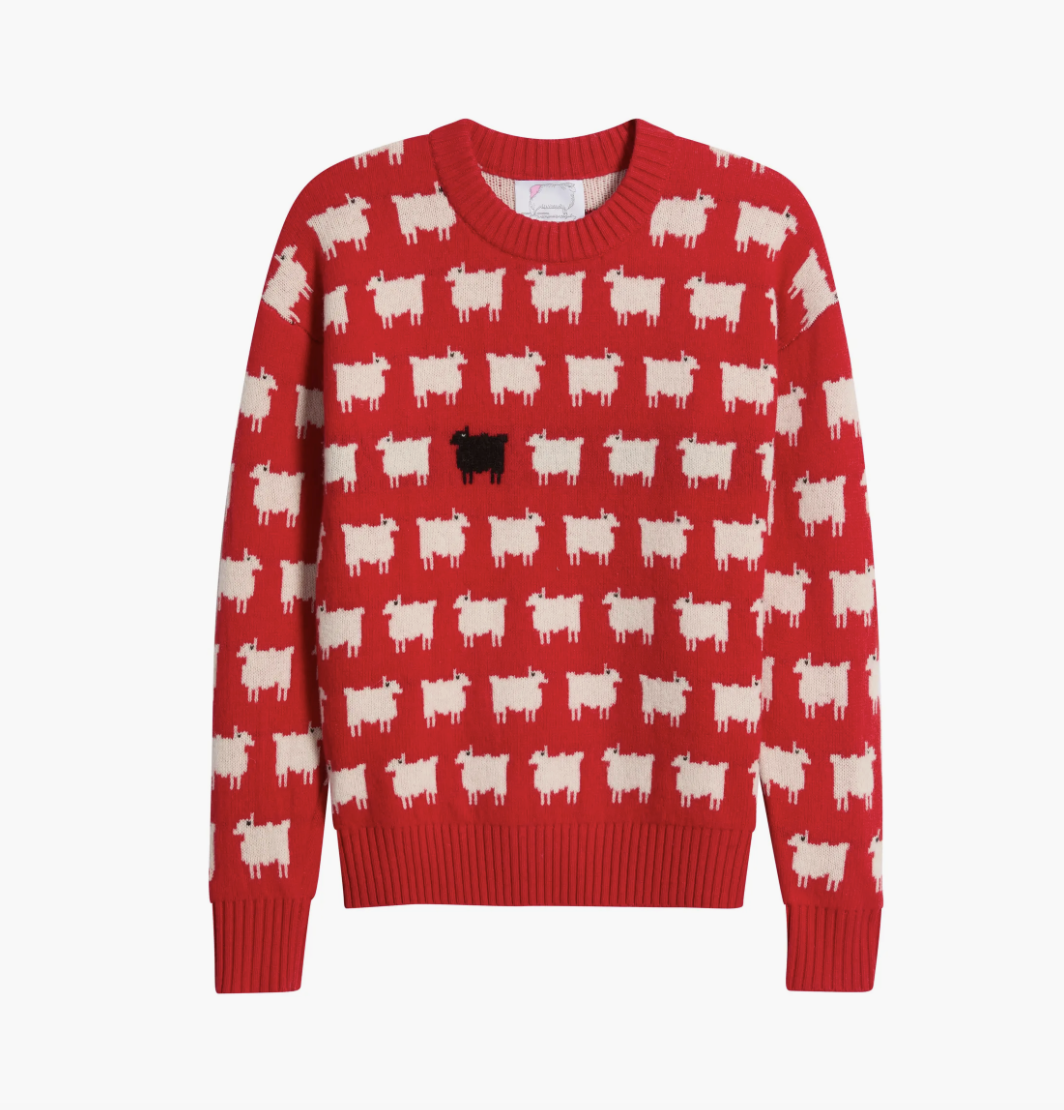
There is something profoundly moving about a sweater that refuses to give up all its secrets. The black sheep pullover, now on display at the Reagan Library in *Diana: Love Life Legacy, A Life of Giving*, is not the one that broke auction records in 2023. It is the replacement, the one Buckingham Palace sent after the original snagged on what many suspect was the princess's engagement ring. That this second sweater sat under a friend's bed for three decades before resurfacing feels less like a footnote and more like a quiet metaphor for how we relate to Diana's legacy: we think we know the story, and then a box is opened, and the story shifts. This exhibition, with 740 of its 750 pieces shown publicly for the first time, is an invitation to reconsider what we thought we understood about a woman whose image has been frozen in time. It reminds us, as we noted in our reflection on The Calm Allure of a New Neutral Competing With Leopard Print, that the most compelling style choices are often the ones that refuse to shout.
The curatorial hand here belongs to Renae Plant, whose collection of 2,700 pieces began with a single burgundy coat dress, the one Diana wore while carrying Prince William. Plant's reasoning for that first purchase was quietly strategic: she knew the coat would retain value because of its association with the young prince. That is not the language of a fan; it is the language of a keeper of memory. Her acquisition of the "Caring Dress," the very one Diana wore when a young Plant met her in Australia in 1988, adds a layer of emotional symmetry that no auction house could manufacture. This is not about accumulation for its own sake. It is about holding space for the tangible evidence of a life lived in public but experienced in private moments. The exhibition's most arresting detail may be the "Final Goodbye" dress by Jacques Azagury, the last gown Diana tried on before her death, now on public display for the first time. It sits not as a conclusion, but as an ellipsis.
What makes this exhibition feel urgent rather than nostalgic is the way it refuses to flatten Diana into a single narrative. She was the woman who danced with John Travolta in a blue velvet gown, and she was also the woman who wore a pink sweater and Hunter boots at Balmoral before her wedding. She was the princess who wrote letters by hand, and she was the woman whose "Revenge Dress" will go to auction in December. Plant is clear that she will not bid on that dress unless she wins the lottery, and there is something refreshing about that honesty. It suggests a collector who knows the difference between what she can own and what belongs to the public imagination. The Travolta dress, on loan from Historic Royal Palaces, is displayed next to Nancy Reagan's beaded white gown from the same night, reuniting two women across decades and political divides. It is a pairing that feels intentional, almost tender.
The practical takeaway here is that this collection will travel, but Plant's stated dream is for it to end in a permanent London home. She has not yet figured out how, but she is setting her intentions. That is a specific, concrete goal worth watching: whether the collection finds a resting place in the city Diana called home will determine how future generations encounter her story. For now, the sweater keeps its secret, and perhaps that is exactly as it should be.