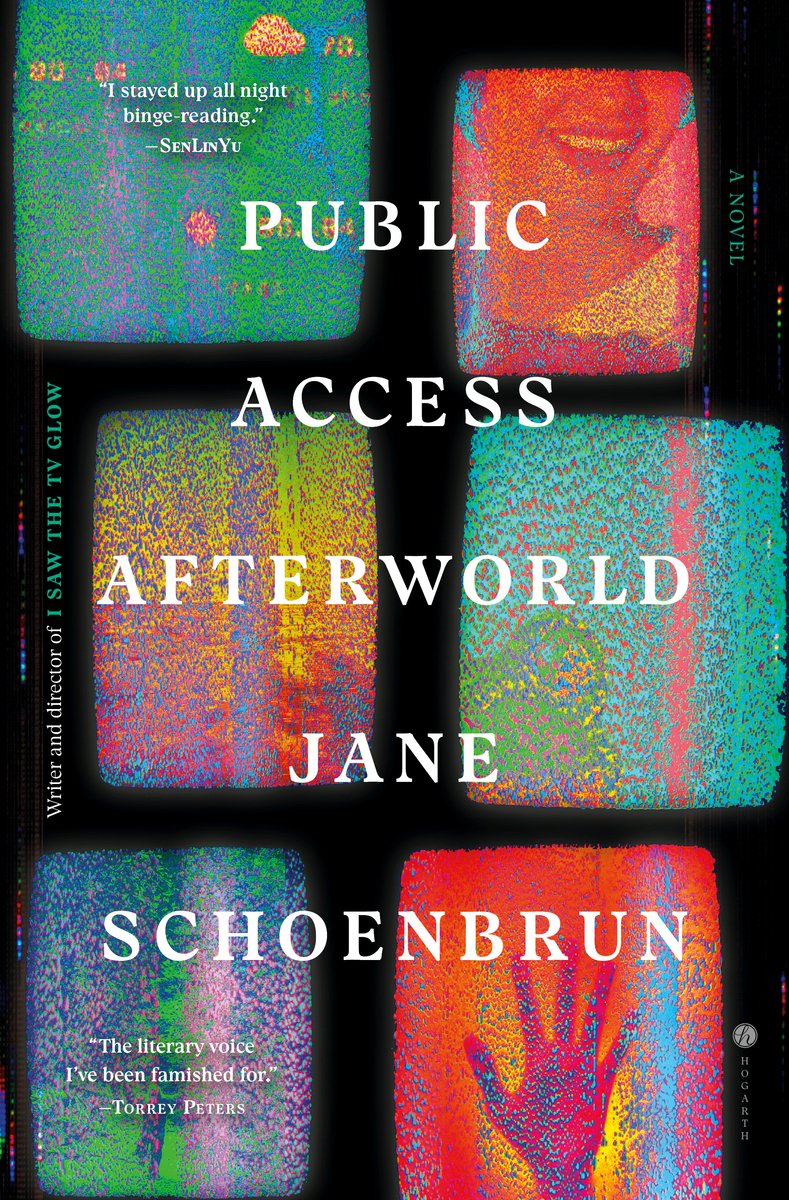
There is something quietly radical about a horror story that refuses to scream. Jane Schoenbrun's debut novel *Public Access Afterworld* does exactly that, it trades jump scares for a slow, creeping unease that settles into the bones of American suburbia and stays there. We are drawn to this work because it understands that the most unsettling thing is not the monster under the bed, but the glow of a screen that promises connection and delivers isolation instead. For our readers, the kind of women who appreciate The quiet subversion of the season's defining nail shade and who are ready to leave behind Five nail trends to leave behind for fall's quieter elegance in favor of something more intentional, this novel offers a similar kind of refined subversion. It is horror that does not announce itself, horror that lingers in the peripheral vision.
Schoenbrun describes *Public Access Afterworld* as picking up where their film *I Saw the TV Glow* left off, moving beyond the moment of self-realization into the long, messy process of becoming. The novel spans seven decades, told through ten "episodes" narrated by characters as varied as a 1940s housewife and a modern-day trans content moderator, all connected by a subterranean television network that extracts shows from the minds of "crooked" people. What we find compelling here is the restraint. Schoenbrun does not hand us a tidy mythology; they give us fragments, echoes, a sense that the conspiracy is so vast it can only be felt, not fully mapped. This is the same energy that makes their films feel like dreams you cannot shake, intimate, Lynchian, and deeply aware of how media shapes our interior lives. The writer cites Carmen Maria Machado's *Her Body and Other Parties* as an influence, particularly its use of television episode guides as a narrative structure, and we see the connection clearly: both authors treat the screen as a surface onto which we project our deepest anxieties and desires.
What makes this novel feel essential, especially for readers who have followed Schoenbrun's evolution, is the emotional honesty beneath the genre trappings. The book is a horror story, but it is also a meditation on what it means to live through the aftermath of a self-upheaval. Schoenbrun has said that their earlier films ended before the process of transition began, but *Public Access Afterworld* refuses that neat closure. It sprawls, it complicates, it asks what happens when the person you become must reckon with the person you were. This is not the kind of horror that offers catharsis; it is the kind that asks you to sit with discomfort. The takeaway here is direct: Schoenbrun has written a novel that treats transformation not as a single dramatic moment, but as an ongoing, often terrifying negotiation with the past. The question it leaves us with is not whether the television network is real, but whether we are ready to see what it broadcasts about ourselves.