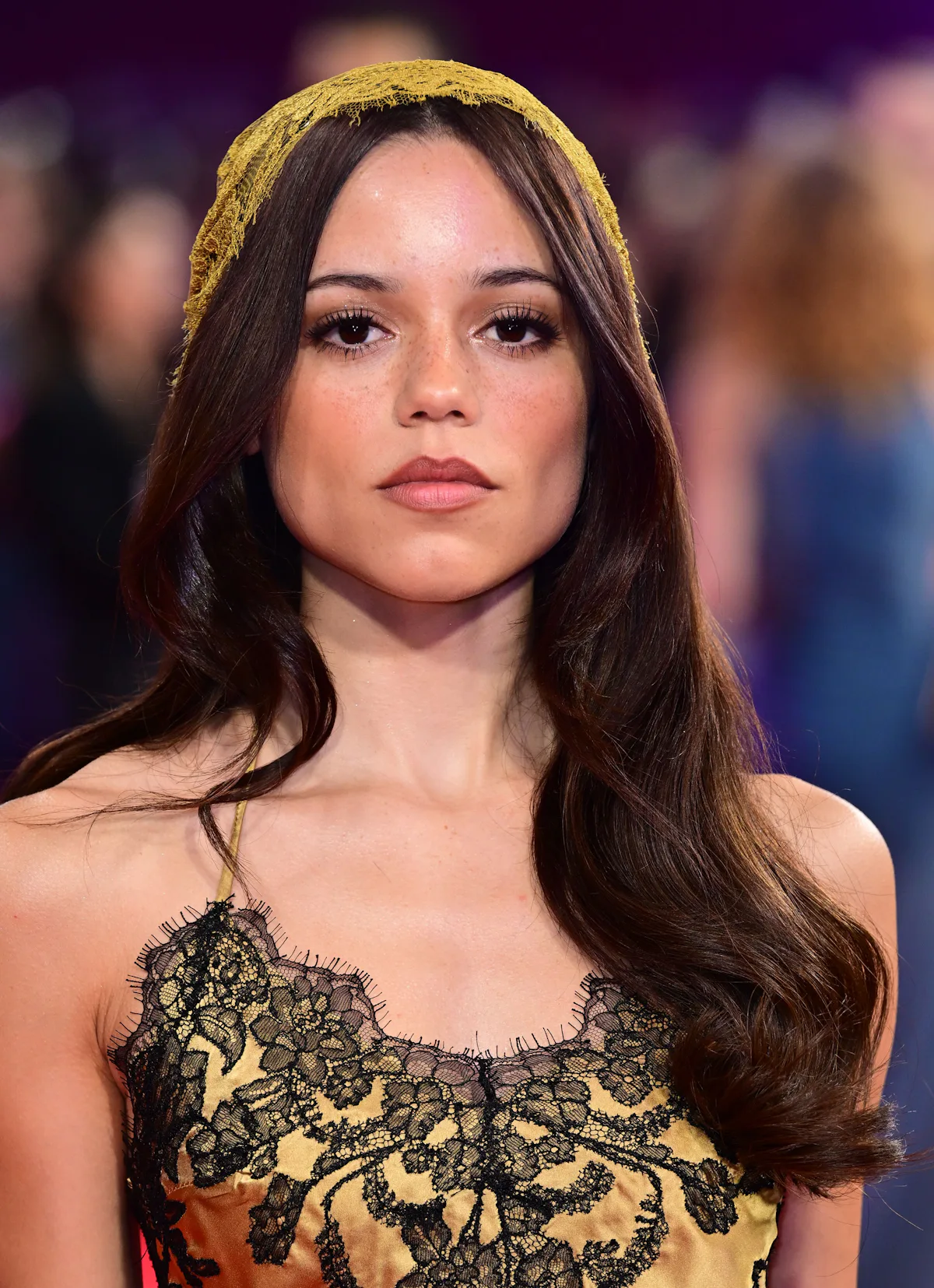
Jenna Ortega's press tour for *Klara and the Sun* is not a departure from her signature darkness but a deliberate expansion of her visual vocabulary. We see an actor who understands that method dressing need not be a costume; it can be a conversation between the self and the role, shifting from shadow to light without losing her quiet authority. For our readers, this signals something more refined than a mere trend cycle, it is a lesson in intentional self-presentation, where every choice carries emotional weight. Ortega, alongside her stylist Enrique Melendez, has translated a solar-powered character into a wardrobe of sunny yellow and gold, from vintage Pierre Cardin shifts to custom Torlowei slip dresses, proving that luminosity can be just as compelling as gothic glamour. This approach echoes the restrained elegance we recently explored in Three Women Defined the 2026 Academy Museum Gala with Quiet Elegance, where Charlize Theron, Inde Navarrette, and Taylor Swift demonstrated that understatement often speaks louder than spectacle. Ortega, too, is not shouting for attention; she is inviting us to notice the nuance.
What makes this evolution compelling is how Ortega maintains her core identity while adapting to her material. The black lace accents, moody makeup, and chunky platform boots remain, anchoring her in the aesthetic she has cultivated, even as she experiments with archival mod shapes and lingerie dressing. This is not a reinvention but a recalibration. Her look for the BFI London Film Festival premiere, a colorblocked Calvin Klein dress with subtle pops of yellow, feels like a bridge between two worlds: the familiar and the new. For women navigating their own public or private style shifts, there is a quiet lesson here: evolution does not require erasure. You can carry your past with you, letting it inform rather than define your next chapter. This sensibility aligns with the grounded, introspective approach we admired in A Tennis Pro's Daily Ritual for Growth, Inside and Out, where consistency and small, intentional acts create lasting change, not dramatic overhauls.
The most striking aspect of Ortega's press tour is how she reframes method dressing as a form of emotional intelligence rather than performance. By weaving the film's solar motif into her wardrobe without abandoning her goth-glam roots, she demonstrates that personal style can be both responsive to context and deeply authentic. This is aspirational but grounded: luxury in the details, not in the volume. Her Roberto Cavalli patchwork dress at the Rome Film Festival, fresh off the Milan runway, and her beaded fringe corset dress for the New York screening, channeling '70s-era Cher, each feel like a deliberate stanza in a longer poem. The takeaway for our readers is clear: the most compelling fashion statements are those that reflect an inner narrative, not just an external trend. As we watch Ortega navigate this sunny chapter, we are reminded that true style is never about choosing one identity over another, it is about knowing when to let the light in, and when to hold onto the shadows that made you.